
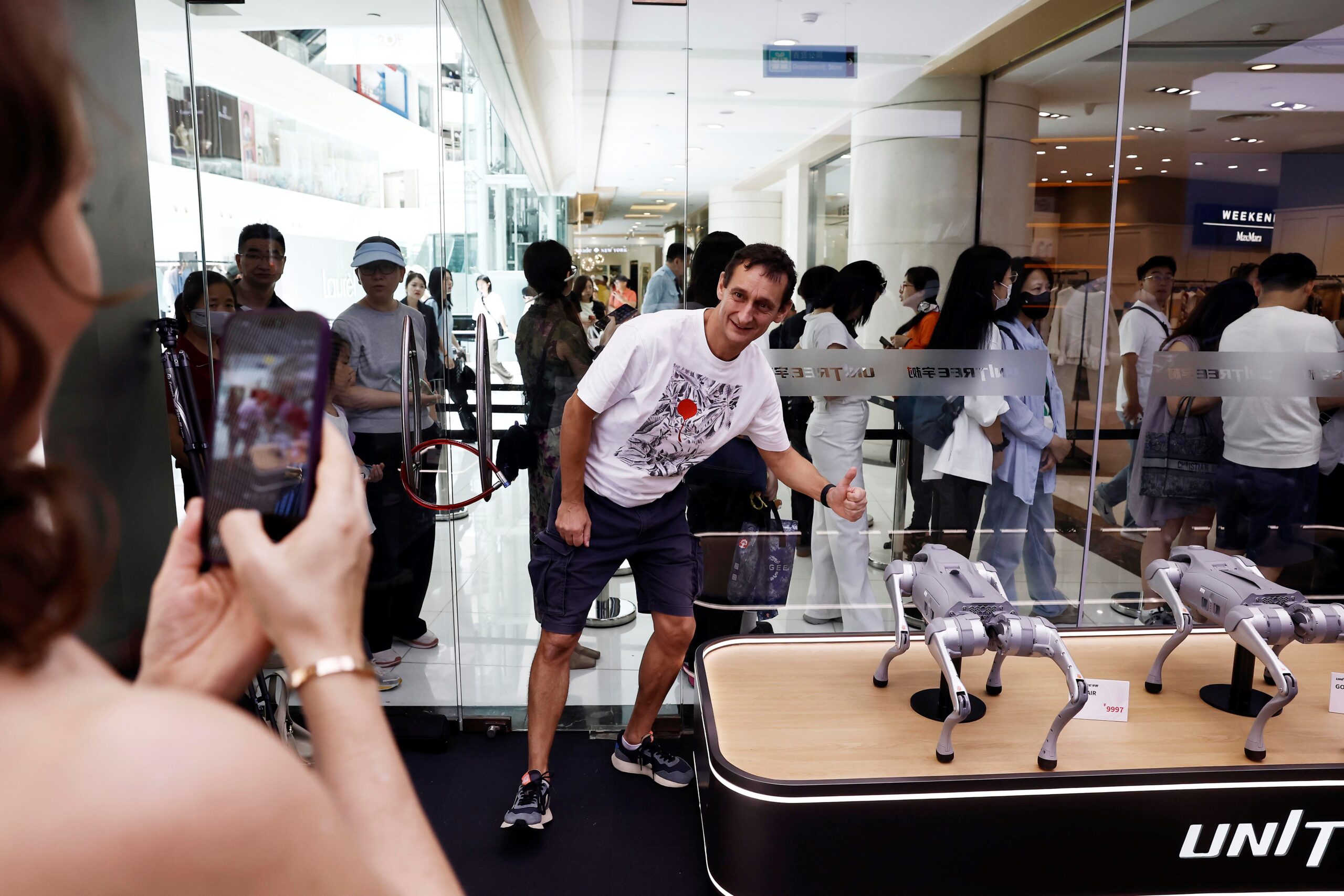

Unitree’s IPO marks a milestone for China’s humanoid robotics industry as global competition intensifies and major technology companies expand robotics initiatives.
China’s leading humanoid robot maker, Unitree Robotics, is moving closer to an initial public offering (IPO). The development comes as competition in the global robotics industry intensifies and major technology companies step up investment in embodied AI and humanoid machines.
According to HKCNA, the Shanghai Stock Exchange announced on June 1st that Unitree’s IPO application on the STAR Market had passed a key listing review. If approved, the company will become China’s first publicly listed company focused primarily on humanoid robots.
Founded in Hangzhou, Unitree has become one of China’s best-known robotics companies. It develops and manufactures humanoid robots, quadruped robots, robotic components and embodied AI technologies. In recent years, the company has expanded rapidly as demand for humanoid robots has grown.
Unitree’s IPO process has moved unusually quickly. The Shanghai Stock Exchange accepted its application on March 20th. Just 73 days later, the company passed the listing review, making it one of the fastest approvals for a hard-tech IPO in China’s A-share market in recent years.
According to the prospectus, Unitree shipped more than 5,500 humanoid robots in 2025, excluding wheeled dual-arm models. The company said this ranked first globally by shipment volume. According to Unitree, the cumulative production of its humanoid robots has reached about 11,000 units, highlighting the company’s growing manufacturing scale. In addition, cumulative sales of its quadruped robots have surpassed 30,000 units.

Humanoid Robots Drive Growth
Unitree’s financial filings show strong revenue growth over the past three years.
Revenue rose from 159 million yuan (about £16 million) in 2023 to 392 million yuan (about £40 million) in 2024. It then surged to 1.71 billion yuan (about £175 million) in 2025.
The company also returned to profitability. After reporting a net loss in 2023, Unitree posted a net profit of 94.5 million yuan in 2024. Net profit increased further to 288 million yuan (about £29 million) in 2025.
Meanwhile, humanoid robots have become the company’s main growth engine. Revenue from humanoid robots accounted for less than 2 per cent of total revenue in 2023. By 2025, the figure had exceeded 50 per cent, making it Unitree’s largest business segment.
According to the prospectus, Unitree shipped more than 5,500 humanoid robots in 2025, excluding wheeled dual-arm models. The company said this ranked first globally by shipment volume. In addition, cumulative sales of its quadruped robots have surpassed 30,000 units.
However, the company said profits came under pressure in the first quarter of 2026. Research and development spending increased significantly, while sales expenses rose as well. Unitree expects revenue to continue growing, but it plans to maintain heavy investment in technology development.
Its shareholder roster includes several major investors, including Sequoia China, Shenzhen Capital Group, Matrix Partners China, Meituan, Tencent and Alibaba.

NVIDIA Partnership Expands Global Reach
The IPO milestone comes as Unitree continues to strengthen its international profile.
On June 1st, NVIDIA announced a partnership with Unitree to develop a new humanoid robot reference platform based on NVIDIA’s Isaac GR00T ecosystem. The project combines NVIDIA’s AI computing and simulation technologies with Unitree’s H2 humanoid robot platform.
The companies said the platform is based on the new H2 Plus reference design, which combines Unitree’s H2 humanoid robot with NVIDIA’s Jetson Thor computing platform and Isaac GR00T development framework. Unitree said the product is expected to enter the market in the second half of 2026.
NVIDIA plans to offer the platform to universities and research institutions, including Stanford University, to support robotics research and education.
Unitree’s H2 robot stands about 1.8 meters tall and weighs roughly 68 kilograms. Speaking at Computex in Taipei, NVIDIA Chief Executive Officer Jensen Huang said the robot has 31 degrees of freedom, including highly dexterous robotic hands designed for complex manipulation tasks.
The project also involves Singapore-based robotics company Sharpa, which supplies robotic arm technology for the platform.
According to NVIDIA executives, the company also plans to work with manufacturers in Europe and North America on additional humanoid robot projects. The move reflects growing interest in the sector across major global markets.

Industry Activity Accelerates
Unitree’s listing effort comes amid rising activity in the global humanoid robotics sector.
The company gained public attention through a series of high-profile demonstrations, including appearances on China’s annual Spring Festival Gala television show. More recently, it unveiled an updated embodied AI model capable of organising meeting rooms and performing basic workplace tasks.
At the same time, Unitree’s robots are beginning to move beyond demonstrations and into commercial testing. Japan Airlines has launched pilot programs using the company’s G1 humanoid robot for airport ground-service operations.
Meanwhile, major artificial intelligence companies are increasing their focus on robotics.
On June 1st, OpenAI Chief Executive Officer Sam Altman announced new recruitment efforts for OpenAI Robotics. He said the company is seeking engineers specialising in hardware, machine learning and robotics systems.
Altman said OpenAI’s long-term goal is to develop robots that can assist people with a wide range of real-world tasks. The initiative builds on the company’s world-model research and reflects broader efforts across the industry to combine advances in artificial intelligence with physical robotic systems.
Tesla is also expanding its investment in humanoid robotics through its Optimus program, underscoring growing interest in the sector among major technology and manufacturing companies.
Looking Ahead
Unitree’s IPO application comes as investment in humanoid robotics continues to grow worldwide.
Alongside Unitree’s expansion, companies including NVIDIA and OpenAI have recently announced new robotics initiatives. Industry participants are exploring applications in manufacturing, logistics, research and service sectors, while universities and technology companies continue to invest in related technologies.
If approved, the IPO will provide Unitree with additional resources for research, product development and manufacturing expansion. The company’s progress is likely to attract attention from investors and industry observers as the global humanoid robotics market continues to evolve.
Written by Ronnie Yu.
If you liked this article, why not read: Unitree Reveals GD01, a Human-Carrying Transforming Robot


