
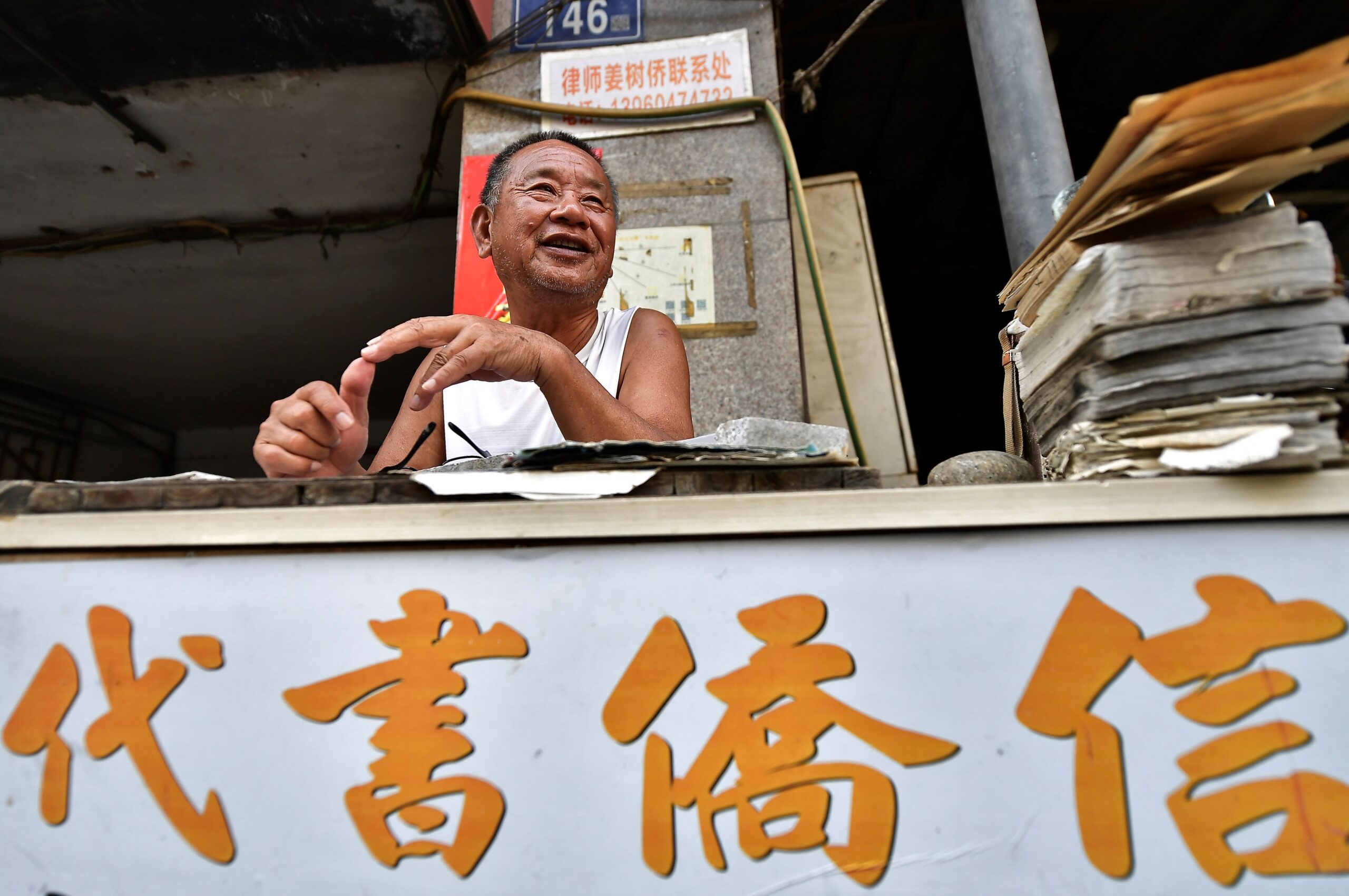

A 77-year-old man in Fujian still writes overseas letters by hand, keeping alive the fading qiaopi tradition that once connected Chinese families across oceans.
The new film Dear You has touched many viewers in China. As audiences watch letters travel between Southeast Asia and southern China, they are also rediscovering “qiaopi,” a special tradition among overseas Chinese families.
Qiaopi, also known as “silver letters,” refers to letters and remittance receipts sent home by overseas Chinese. For decades, these letters carried family news, emotions, and financial support across the sea. However, writing a proper letter was not easy for everyone. Because of this, many families relied on professional letter writers.
In Shishi, 77-year-old Jiang Mingdian still keeps the tradition alive. Shishi is widely known as a hometown of overseas Chinese. Many local families still have relatives living abroad. Because of this history, qiaopi once played an important role in daily life.
Near the entrance of a parking lot on Renmin Road, Jiang sets up a simple wooden desk every morning. A small sign reading “Overseas Letter Writing” hangs beside the stall. Old dictionaries, paperweights, and worn fountain pens rest on the tabletop. Together, they reflect nearly six decades of work.
Jiang began learning the trade from his father when he was 18 years old. Since then, he has continued writing letters for overseas Chinese families. Over the years, he has written more than 100,000 qiaopi letters.
At the height of the business in the 1960s, Jiang sometimes wrote more than 100 letters a day. Those letters travelled between Fujian and Southeast Asian countries. In this way, they connected separated families and carried hopes, worries, and everyday stories across oceans.
Today, life has changed. Smartphones and video calls have largely replaced handwritten letters. As a result, far fewer people now visit Jiang’s stall to have qiaopi letters written.
Even so, Jiang keeps the same routine. He arrives around 9 a.m. every day and stays until sunset. After closing the stall, he rides his electric scooter home, just as he has done for many years.
Recently, however, the popularity of Dear You has brought new attention to his work. Reporters, tourists, and social media bloggers have started visiting the small roadside stall. Many hope to learn more about qiaopi culture and hear Jiang’s story in person.
For Jiang, writing letters has never been only about words on paper. Instead, it has always meant helping families stay connected across distance and time.
Now, as handwritten letters continue to disappear, Jiang’s small stall stands as a reminder of an earlier era. More importantly, it keeps alive the memories of generations who depended on ink, paper, and patience to stay close to loved ones far from home.


If you liked this article, why not read: Why Has Chinese Movie Dear You Become an Unexpected Hit?


