
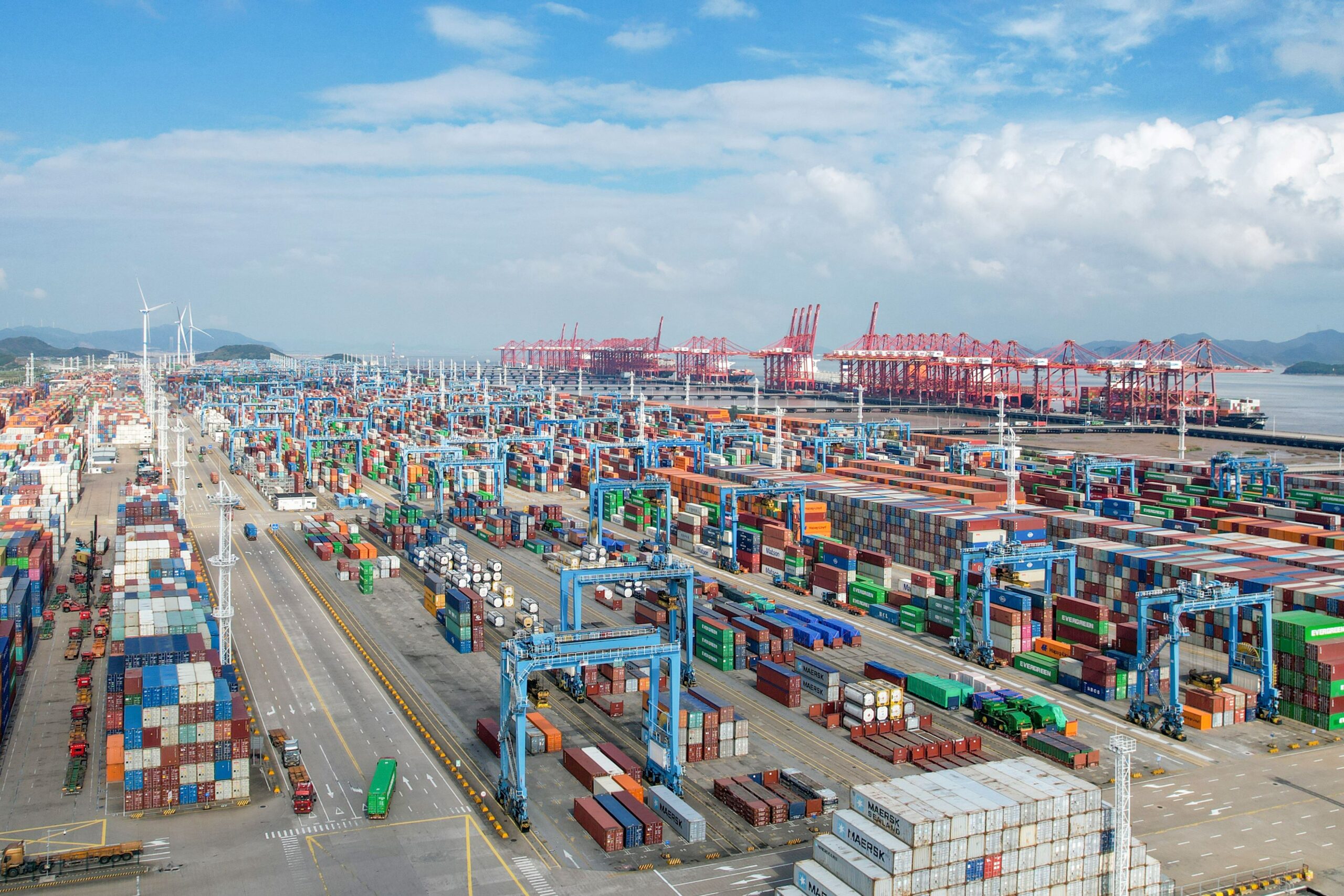

China-Europe trade is gaining a new Arctic option as a Chinese shipping company prepares to launch a regular container route to the UK and Europe.
A new shipping route is set to connect China and Europe through the Arctic, offering a shorter alternative to traditional routes via the Suez Canal.
Chinese container shipping company Sea Legend Shipping is preparing to launch its China-Europe Arctic Express service, with the first sailing originally scheduled for August 15th. The company has since adjusted the departure arrangements because of weather conditions.
The planned service will run along Russia’s Northern Sea Route, linking Chinese ports with destinations in Europe. The route is expected to take about 20 days under direct-service conditions, compared with around 40 days on traditional China-Europe routes.
For the UK, the route is particularly relevant. The service is expected to call at Felixstowe and Teesport, before connecting with other European ports including Hamburg in Germany and Gdynia in Poland.
A Shorter Route to Europe
For decades, most container traffic between Asia and Europe has followed southern routes through the Strait of Malacca and the Suez Canal.
That pattern has come under pressure in recent years. Disruptions in the Red Sea have forced many vessels to avoid the Bab el-Mandeb Strait and sail around the Cape of Good Hope instead. As a result, journeys between Asia and Europe can take significantly longer.
The Arctic route offers another option.
Sea Legend’s service will sail north from China, pass through the Bering Strait and continue westward along Russia’s Northern Sea Route. From there, ships can reach European ports, including Felixstowe in eastern England.
The company says the Arctic route can cut the transit time to around 20 days under direct-service conditions. The planned service is expected to operate eight sailings during the 2026 Arctic navigation season.
The shorter journey could be useful for businesses that need to respond quickly to European demand. Faster shipping can reduce the amount of stock held in transit and help companies manage working capital.
The service will carry a range of cargo, including new energy vehicles, power batteries and energy-storage equipment. It is also targeting manufacturers and other businesses that place a premium on delivery times.
For Chinese exporters, the appeal is therefore not simply distance. It is also about having another route when established shipping lanes face delays or disruption.
Why the UK Matters
The planned calls at UK ports give Britain a direct connection to the new Arctic service.
Felixstowe is one of the main container ports serving the UK. From there, cargo can move into the British market and connect with wider European logistics networks.
Sea Legend has also said it has cooperation agreements with terminals in Felixstowe, Rotterdam, Wilhelmshaven and Antwerp. These arrangements are intended to facilitate berthing and reduce waiting times.
The UK connection has helped make the route more visible internationally. The Telegraph’s report on August 13th described the development as a potential turning point for global trade, while the BBC focused on the launch of China’s first regular Arctic shipping route.
However, the significance of the route should not be overstated.
The Northern Sea Route remains highly seasonal. Sea ice still limits navigation, and the current service is planned around the summer and early autumn navigation window. Sea Legend has said it aims to establish about four months of stable annual operation within three to five years, with a longer-term goal of year-round navigation within five to 10 years.
The route also faces practical challenges. Arctic ports have limited infrastructure compared with major global shipping hubs. Weather and ice conditions can change quickly, while emergency response and rescue facilities remain more limited than along established shipping corridors.
Environmental concerns are another consideration. Retreating Arctic sea ice has made seasonal navigation more feasible, but increased shipping also brings greater pressure to one of the world’s most sensitive ecosystems.
Another Option, Not a Replacement
The Arctic route is therefore unlikely to replace the Suez Canal in the near term.
Its current scale remains small compared with established Asia-Europe services. Instead, its immediate significance lies in diversification.
The Northern Sea Route has seen growing commercial interest in recent years. It recorded 23 container-ship transits last summer, up from 15 in 2024, according to figures cited by the Financial Times.
Sea Legend’s planned service takes that development a step further by introducing fixed sailings and a regular container schedule.
That matters because global shipping has become increasingly sensitive to disruptions at major maritime chokepoints. The Red Sea crisis has shown how quickly a problem in one region can affect delivery times and freight costs far beyond it.
The Arctic cannot remove those risks. It can, however, provide another option.
For China-Europe trade, the emerging route offers a new link between the two markets, with the UK among its most important European destinations. For businesses, its value will ultimately depend on whether it can maintain reliable schedules, competitive costs and safe operations beyond the initial seasonal service.
Additional reporting by HKCNA, Sanliheren, Global Times.
If you liked this article, why not read: What Happens When AI Runs One of China’s Busiest Ports?


