
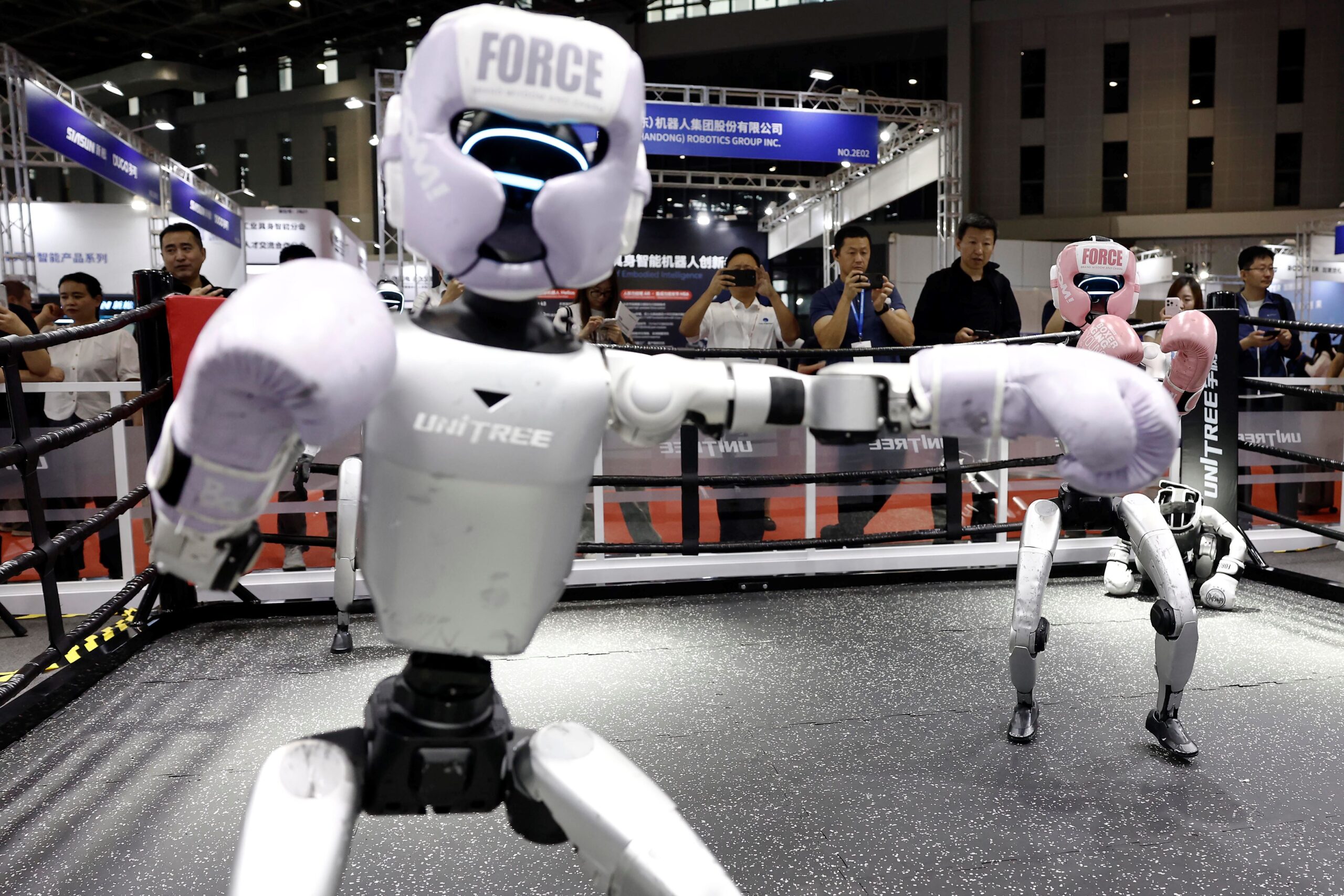

Unitree surged 460% on its Shanghai debut, highlighting strong investor interest in China’s fast-growing humanoid robotics industry and hard-tech market.
Chinese robotics company Unitree made its debut on the Shanghai Stock Exchange’s STAR Market on August 19th, with its shares surging 460.34% on their first trading day.
Unitree shares closed at 845 yuan (about £91) per share, giving the company a market value of more than 340 billion yuan (about £36.8 billion). The stock opened at 1,100 yuan (about £120), up 629.44%, before the gain narrowed during the trading session.
The strong debut came as China’s humanoid robot industry continues to attract attention from investors and companies.
A Fast-Growing Robotics Company
Founded in 2016, Unitree develops, produces and sells humanoid robots, quadruped robots, robotic components and embodied-intelligence models.
The company reported revenue of 1.699 billion yuan (about £184 million) in 2025, with net profit excluding non-recurring items of 591 million yuan (about £64 million). It shipped more than 5,500 humanoid robots last year, ranking first globally, according to publicly available company information.
Meanwhile, Unitree’s business continued to grow in the first half of 2026. The company reported revenue of 1.152 billion yuan (about £125 million), up 48.54% year on year.
However, its net profit excluding non-recurring items came under pressure. Net profit excluding non-recurring items fell 19.34% year on year, mainly because research and development, sales and other operating expenses increased.
Unitree said it continued to increase investment in robot hardware and structural design, embodied-intelligence models and motion-control algorithms. Its research and development expenses rose by 82.04 million yuan (about £8.9 million) year on year in the first half.
The company also reported total assets of 3.845 billion yuan (about £417 million) as of June 30, up 19.85% from the end of 2025.
Unitree’s listing also gives China’s emerging embodied-intelligence sector a new reference point in the public market. China is now home to about 28 unicorn companies in the sector, with a combined valuation of more than 350 billion yuan (about £38 billion). Eighteen of them, including some companies focused on industrial robotics, have started the process of preparing for a stock-market listing.
The IPO also highlights a shift in competition beyond robot hardware. Unitree plans to direct 48.13% of the 4.202 billion yuan (about £456 million) it raises from the IPO towards research on intelligent robot models. As the industry develops, companies are increasingly seeking to combine robot hardware with AI models, real-world applications and data.
A Spotlight on China’s Hard-Tech Market
Unitree’s listing also highlights the growing role of the STAR Market in financing technology companies.
The STAR Market was established as part of China’s registration-based IPO reform. It has since become a major financing platform for hard-tech companies.
As of August 18th, the market had 614 listed companies, with a combined market value of more than 18 trillion yuan (about £2 trillion).
Recently, hard-tech companies in areas such as semiconductors and robotics have continued to enter the market. Unitree’s IPO adds a high-profile name from the emerging humanoid robotics sector.
Analysts said the listing could help Unitree strengthen its research and production capabilities while supporting the development of China’s robotics industry.
At the same time, the company’s debut shows the market’s expectations for the future of humanoid robots. In recent years, investors have increasingly focused on technology depth, industrial positioning and future growth potential when assessing hard-tech companies.
Unitree has also continued to develop new products. On August 17th, it previewed its new humanoid robot, “Superman”. The company said the robot can jump more than two metres from a standing position and reach a top speed of 12.66 metres per second.
For Unitree, the stock-market debut marks a new stage of development. For the wider industry, its strong first-day performance offers a glimpse of the growing attention that China’s humanoid robotics sector is receiving from the capital market.
Written by Ronnie Yu, additional reporting by Zhimiao.
If you liked this article, why not read: China’s Unitree Heads for IPO as Global Competition Heats Up


