
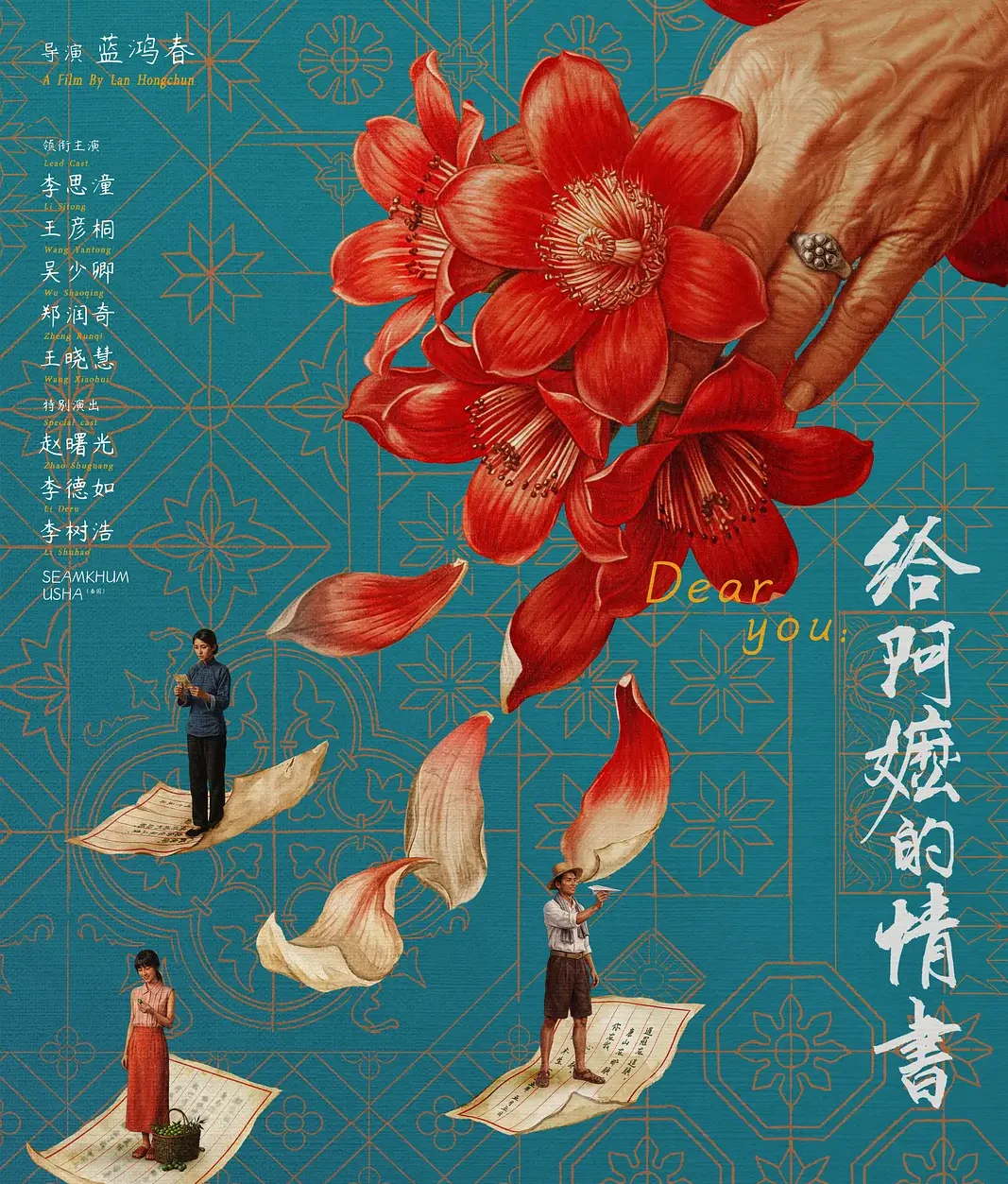

A Chinese box office hit, Dear You, has unexpectedly resonated with audiences through its portrayal of family bonds and the forgotten tradition of “Qiaopi,” handwritten letters sent by overseas Chinese across oceans.
During China’s recent May Day holiday box office season, a small film unexpectedly stood out. Dear You became a surprise hit, rising as a true “dark horse” in a crowded market. With a modest budget, a largely non-professional cast, and a strong use of the Chaoshan dialect, the film broke through commercial expectations. It has already earned more than 64 million yuan (about £6.6 million) at the box office, and projections suggest it may surpass 100 million yuan. On Douban, it received a 9.0 rating from over 53,000 users, making it one of the highest-rated Chinese theatrical films of the year so far.
The success goes beyond the numbers. The film is deeply rooted in Chaoshan culture in southern China. It was shot across multiple locations, including Shantou, Chaozhou, and Jieyang. Landmarks such as Shantou’s Old Town, Longhu Ancient Village, the Chaozhou Kaiyuan Temple Thai Buddha Hall, and Lianhua Street in Jieyang all appear on screen. The film also uses about 95% Chaoshan dialect dialogue, along with local traditions such as Gongfu tea, olive vegetables, Yingge Dance, and traditional folk performance elements. The result is a film deeply tied to local life and memory.

What moved audiences was not simply the regional setting, but the emotions beneath it.
At the heart of Dear You is the idea of “Qiaopi.” These were letters and remittance documents sent by overseas Chinese back to their families in China. For more than a century, from the 19th century through the late 20th century, qiaopi served as a fragile but vital connection between families separated by oceans. They carried money, but also carried words, memory, and trust. In many cases, one letter passed through multiple hands, sometimes read aloud by intermediaries for those who could not read. Because of this, messages could be altered, delayed, or even lost. And yet, they remained the only bridge between distant lives.
In the film, Qiaopi becomes more than a narrative device — it becomes a way of preserving memory across generations. The story spans decades and connects China with Southeast Asia. An elderly Chaoshan woman, Ah Ma Ye Shurou, waits her entire life for letters from her husband, who went to Southeast Asia. Her grandson later travels abroad to uncover the truth behind those letters. What he discovers is not a simple story of separation, but a complex chain of identity, substitution, and silent protection across generations.

The director, Lan Hongchun, explained that many details in the film come directly from real stories of overseas Chinese families. For example, some characters in the film wrote letters on behalf of others for decades. Others sent goods like dried meat or bicycles along with messages. These details reflect how qiaopi combined remittances with personal letters, connecting financial support with emotional ties across long distances. The film also includes the idea that many stories were passed down orally, sometimes distorted over time, which creates emotional misunderstandings that feel natural for cinematic adaptation.
One key creative choice was the use of non-professional actors. The actress playing the elderly Ah Ma had personal family ties to Southeast Asia migration history. During filming, she reportedly reacted to qiaopi scenes with real emotion rather than performance. These moments gave the film a sense of authenticity that many viewers recognised immediately.
At the same time, Dear You is not only about Chaoshan culture. The director has been clear about this. While the film uses local language and customs, its emotional core is universal. It speaks about family separation, long-distance care, and the quiet persistence of love across time. This is also why audiences outside Chaoshan, and even outside China, can still respond to it.
For younger Chinese viewers, there is another layer of resonance. In a world of instant messaging and constant digital contact, qiaopi represents something very different. It belongs to an era where communication was slow, costly, and uncertain. A single letter might take months to arrive. Yet precisely because of this delay, every message carried weight. In contrast, modern communication often feels fast but emotionally thin. Watching Dear You, many viewers rediscovered a form of emotional seriousness that feels rare today.
Beyond the film itself, its success also brought attention back to Chaoshan culture. Local cuisine, dialect, and traditions have gained renewed visibility. More importantly, it highlights how regional stories in China are increasingly reaching national audiences without losing their identity. Instead of being diluted, local specificity becomes the source of emotional strength.

Finally, the story of Qiaopi extends beyond cinema. In 2013, UNESCO inscribed Qiaopi and Yinxin Correspondence and Remittance Documents from Overseas Chinese on its Memory of the World Register. The archives document a unique system of communication and financial support between overseas Chinese and their families back home. This recognition reflects their historical value, not only for China but for global migration history. They represent one of the earliest and most sustained systems of transnational family communication in modern history.
Seen in this light, Dear You is not simply a film about one family or one region. It is a reconstruction of a forgotten communication world, where paper carried emotion across oceans. And more importantly, it is a reminder that even in an age of instant communication, the emotions carried in those letters still feel powerfully resonant today.

Written by Chen Wang, additional reporting by CNS, Nanfang Daily, China Youth Daily.
If you liked this article, why not read: Beijing International Film Festival Opens in Style with Rain, Stars, and Cinema


