
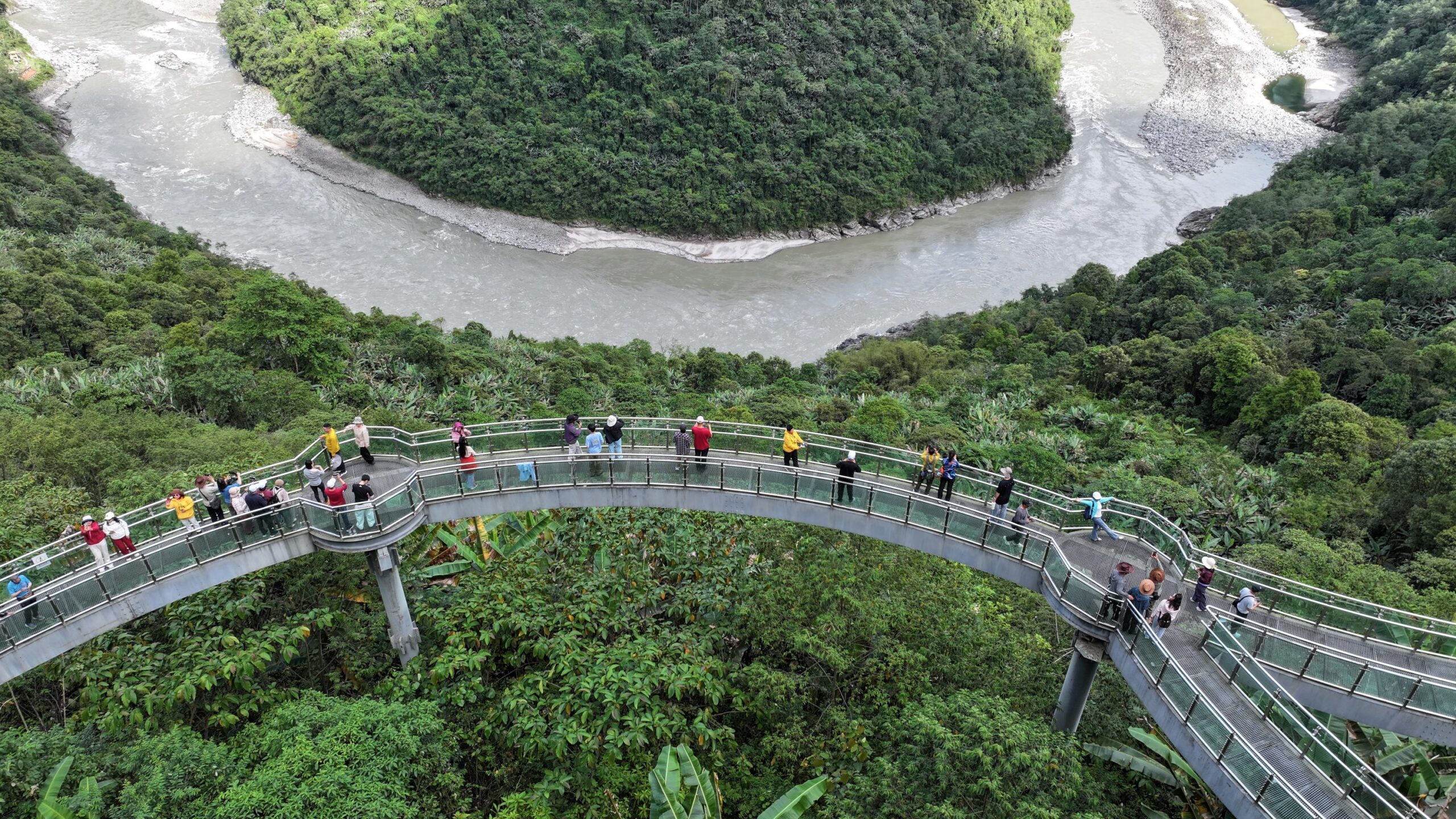

Improved highways across Tibet are driving a surge in self-drive tourism, from RV road trips to electric vehicle journeys across the plateau.
As dusk fell over a campground in Lhasa, dozens of RVs stood side by side at a park. Some travellers cooked dinner outside their vehicles. Others talked about their route across the Tibetan Plateau.
RV Travelers on the Plateau
Among them was 64-year-old Mu Jing’an, who had driven thousands of kilometres from south China’s Hainan Province to Tibet.
“I left Hainan in April and travelled through Guangdong, Guangxi and Yunnan before entering Tibet,” Mu said. “After arriving in Nyingchi, I also visited Chayu and Medog.”
In recent years, better roads across the plateau have made self-driving travel more popular. RV tourism, in particular, has become a growing trend among Chinese travellers.
Mu once worked for the China Association for Scientific Expedition. Over the years, he often heard stories about remote trekking routes such as Medog and the Yarlung Zangbo Grand Canyon.
“Back then, travelling to Tibet sounded difficult,” he said. “It always felt like a dream destination.”
After retirement, he finally made the journey. “The roads were much better than I expected,” Mu said. “And the scenery was stunning.”
He now travels in a two-wheel-drive camper van, but plans to return next year with a four-wheel-drive vehicle.

Family Road Trips and RV Freedom
Nearby, 39-year-old Wang Tao and his wife prepared a hotpot meal outside their RV. They had ordered ingredients through a delivery app earlier that day.
The couple spent about 580,000 yuan (about £63,000) on a four-wheel-drive RV for the trip.
“We first drove from Xi’an to Chengdu,” Wang said. “Then we entered Tibet along the Sichuan-Tibet Highway.”
Along the way, they passed through winding mountain roads in eastern Tibet. Wang described the scenery as dramatic and unforgettable.
“The scenery was breathtaking,” he said.
For Wang, RV travel offers something traditional tours cannot.
“The best part is the freedom,” he said. “We can stop by a lake, stay overnight, and watch the stars.”

Electric Vehicles Enter the Plateau
Younger travellers are also joining the trend.
Qian Licheng, born in the 1990s, drove an electric vehicle from Yancheng in Jiangsu Province to Tibet with his wife. After reaching Yunnan, they continued into Tibet along another major highway route.
“We brought camping gear,” Qian said. “At night, we sleep in the car. It’s simple, but convenient.”
Sometimes, they also stay in hotels to shower or do laundry.
Qian said driving an EV into Tibet has become easier than many people expect.
“My car can travel about 500 kilometres on a full charge,” he said. “So far, we haven’t had trouble finding charging stations.”
He plans to continue west to Shigatse and Ngari before heading toward Xinjiang.
“We prepared carefully,” he said. “Some remote areas have limited services, but other travellers have shared useful experiences online.”

Roads Reshaping Travel in Tibet
Behind the growing popularity of self-drive travel lies Tibet’s steadily improving transport network.
By the end of 2025, Tibet’s highway network had reached 125,200 kilometres, including 110,000 kilometres of graded roads. About 95 per cent of national highways now meet Grade-3 or higher standards.
As a result, road trips across Tibet have become more accessible than before.
For many travellers, the journey is no longer just about reaching Tibet. Instead, it is about the road itself — camping beside alpine lakes, crossing mountain passes, and moving across the plateau at their own pace.
Translated by Ronnie Yu, additional reporting by CNS.
If you liked this article, why not read: The “Sweet Palace” in Tibet Gets Its Annual Makeover of Milk and Honey


