
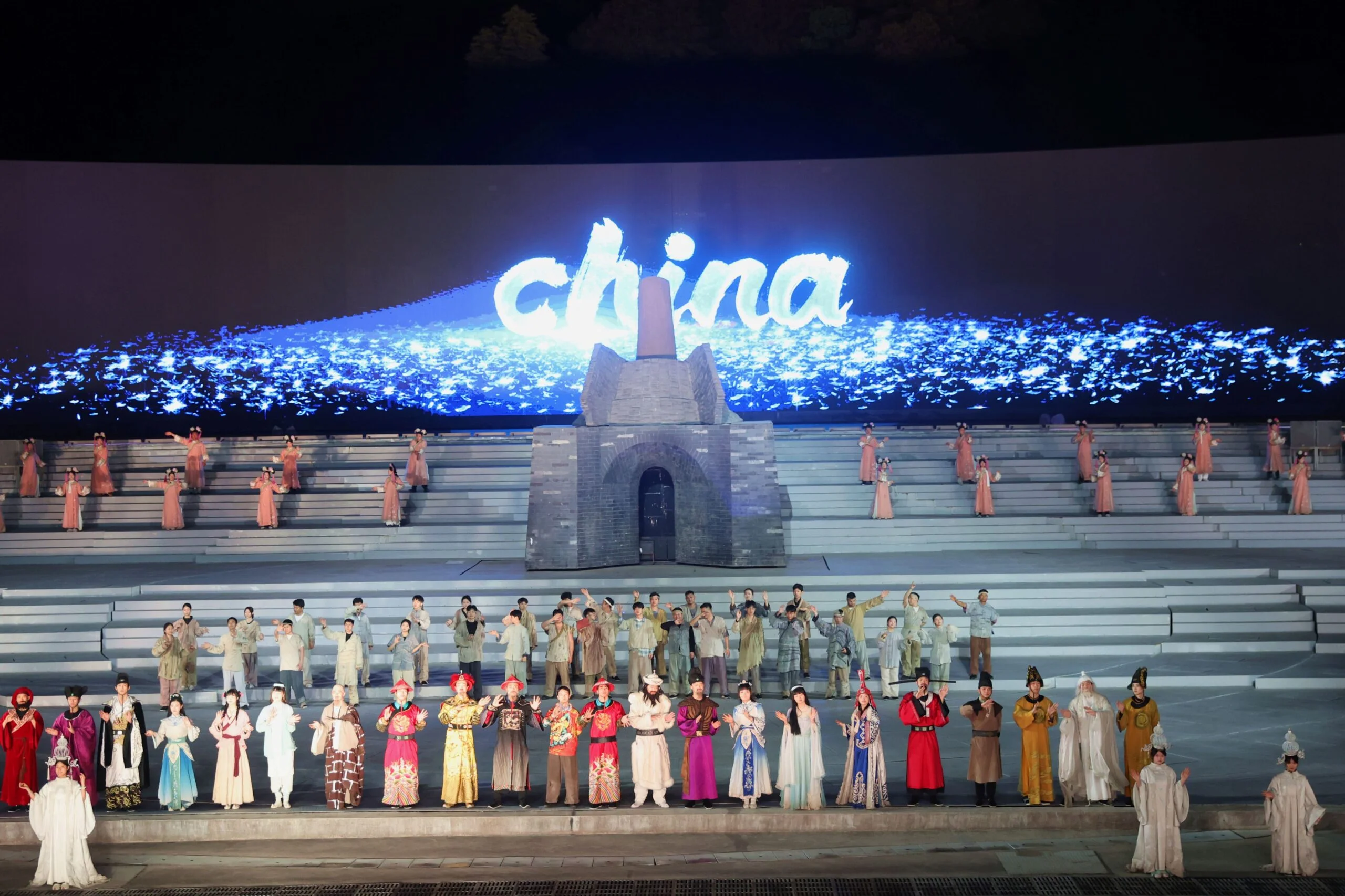


Discover how Jingdezhen became the world’s first UNESCO World Heritage site dedicated to porcelain and how tradition continues to inspire innovation.
China’s porcelain capital has entered a new chapter. On July 25th, UNESCO inscribed the Jingdezhen Manual Porcelain Heritage on the World Heritage List, making it the world’s first World Heritage property dedicated to porcelain. The inscription also brought China’s total number of World Heritage sites to 61, tying Italy for the highest worldwide.
The recognition marks more than an international honour. It highlights how a centuries-old craft continues to shape culture, creativity and global exchange today.
Where Porcelain Changed the World
Located in northeastern Jiangxi Province, Jingdezhen preserves a complete manual porcelain production system dating from the 10th to the 19th century. The Jingdezhen Manual Porcelain Heritage includes five key areas: the urban porcelain production centre, the Hutian Ancient Kiln Site, the Gaoling Kaolin Mine Site, the Changling Porcelain Stone Mine Site, and the Jiaotan Firewood Production Area.
Together, these sites reveal how Jingdezhen developed porcelain-making techniques, ceramic art, and industrial organisation over generations. They also show how Chinese porcelain technology influenced ceramic production and cultural exchange around the world.
UNESCO highlighted Jingdezhen’s authenticity and integrity, noting its ability to absorb, refine and advance ceramic technologies over nearly a millennium. The Committee also described its blue-and-white porcelain as an important vehicle for cultural exchange and a symbol of Eastern art.
The inscription also draws global attention to one of the world’s most sophisticated pre-industrial manufacturing systems and offers new ideas for heritage conservation.
A Tradition Reimagined Through Innovation
Yet Jingdezhen is not simply preserving its past. Across the city, new technologies and creative industries are giving traditional craftsmanship a contemporary identity.
Through VR, AI and digital exhibitions, Jingdezhen is transforming centuries of ceramic history into immersive experiences that attract younger audiences.
Jingdezhen also transforms traditional ceramic culture into modern creative industries. Its Ceramic Art Toy Town brings together more than 800 designer toy brands and original characters, creating a complete creative industry chain with an annual output value exceeding 150 million yuan.
The city has launched many ceramic products that combine traditional aesthetics with contemporary design. Products such as the Spring Bowl and Fu Ma Welcomes Spring have appeared on China Media Group’s Spring Festival Gala for three consecutive years. Their popularity shows how cultural heritage can inspire new forms of consumption.
Meanwhile, Jingdezhen has developed cultural marketplaces such as Taoran Market and Lotte Market, creating a year-round network of creative spaces.
Today, weekend ceramic markets have become one of Jingdezhen’s defining attractions. Young visitors browse handmade pottery, meet independent artists and even try making their own ceramics.
A Global Home for Ceramic Artists
For many international ceramic artists, Jingdezhen is no longer just a destination. It is home.
The city has built friendly exchange relationships with more than 180 cities in over 70 countries. It also attracts ceramic artists, designers, and entrepreneurs from more than 50 countries and regions. Many of them choose to live and work in Jingdezhen and become known as “Yang Jing Piao.”
Artists from the United States, South Korea, Japan, the United Kingdom, Italy, and other countries regard Jingdezhen as their second home. They learn traditional skills such as wheel throwing, glaze preparation, and blue-and-white decoration while creating works that reflect their own cultures.
American ceramic artist and Alfred University professor Wayne Higby first visited Jingdezhen in 1992 and has returned almost every year for more than three decades.
As a co-founder of the Sanbao International Ceramic Art Village, Higby has watched international artists gather in Jingdezhen to learn, collaborate, and create. He believes Jingdezhen keeps its traditions alive while embracing new ideas from around the world. Instead, the city keeps traditional craftsmanship alive while welcoming new ideas from around the world. In his words, Jingdezhen is not only the “Porcelain Capital” but also “a city of possibilities.”
The kilns of Jingdezhen still burn today. But they fire more than porcelain. They spark new ideas, connect cultures and show how heritage can continue shaping the future.
Written by Sha Liu, charts created by Di Wang, additional reporting by CNS, Ecns.cn, and Xinhua.
If you liked this article, why not read: Beyond UNESCO: Discover the Living Porcelain City of Jingdezhen


