
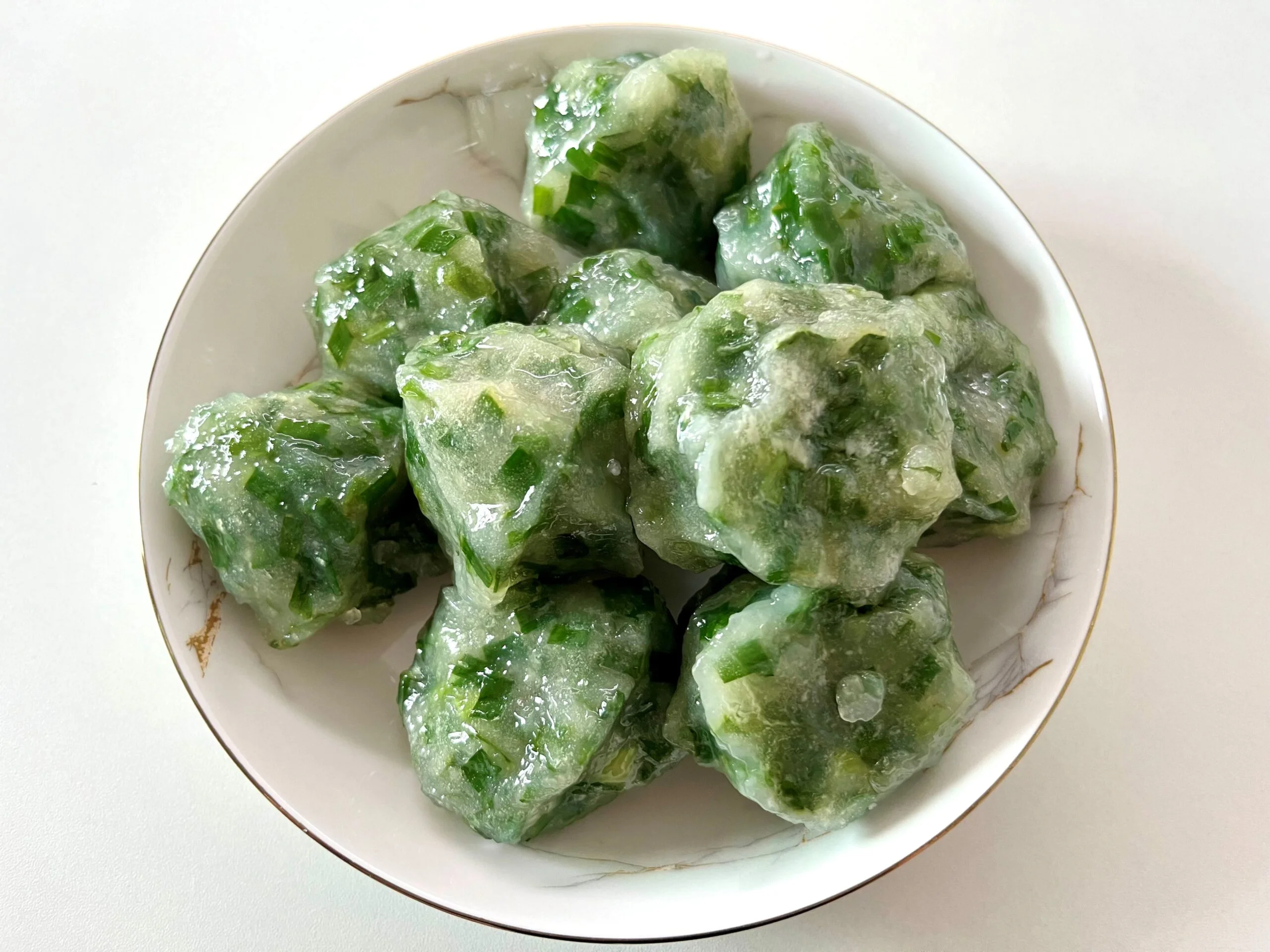

A hit film has brought new attention to the Teochew chive dumpling, a traditional Chaoshan snack with a unique story and growing popularity.
A humble snack from south China’s Chaoshan region has found an unexpected place in the spotlight.
Following the success of the film Dear You, more people have started searching for wumiguo, a traditional Teochew chive dumpling. According to a major Chinese food delivery platform, searches for the snack have increased nearly tenfold compared with the same period last year.
For many visitors, the film has become the starting point for discovering one of Chaoshan’s best-loved local foods.
A Snack Born from Necessity
Known locally as wumiguo, or literally “rice-free dumpling”, the snack is made with a wrapper of sweet potato starch instead of rice. Traditional fillings come in both savoury and sweet varieties. Chives, potato and taro are among the most common savoury fillings, while sweet versions often use mashed taro or red bean paste.
Legend has it that the dumpling was created by a woman who had no rice at home when guests arrived. Instead, she ground sweet potatoes into starch, made a wrapper and filled it with chives. The simple dish later became a local favourite, giving rise to the name “rice-free dumpling”.
Today, many family-run shops continue to make the snack by hand.
“The dough needs repeated pounding to become soft and chewy,” Li Yebin told CNS, a vendor in Shantou. He learned the craft from his parents and has been making wumiguo since he was 16. After the dumplings are steamed, they are cooled and pan-fried until the outside turns golden and crisp.
“The contrast in texture is what people enjoy most,” he said.
At another stall in Jiexi County, Guangdong Province, vendor Wang Guodan said she sells 300 to 400 dumplings every day. The chive-filled version remains her best seller.
From Chaoshan to Southeast Asia
The film has inspired many people to taste the snack for the first time.
“It’s crispy outside and soft inside. The chive filling is fresh and juicy,” said Wang Zihang, a tourist from east China’s Zhejiang Province. He even bought vacuum-packed dumplings to take home for family and friends.
Meanwhile, recipe videos and discussions about different fillings and cooking methods have attracted growing attention on Chinese social media.
Beyond China, wumiguo has travelled with generations of Teochew migrants. It can now be found in countries including Malaysia, Singapore and Thailand, where local communities have adapted the filling with regional ingredients such as yam bean and pumpkin while preserving the traditional cooking method.
Back in China, the popularity of Dear You has also drawn more diners to Chaoshan restaurants, where many are trying wumiguo, salted pork and other regional specialities featured in the film.
Today, the Teochew chive dumpling is more than a local snack. It reflects the flavours of Chaoshan and the journey of a regional tradition that has travelled well beyond its place of origin.
If you liked this article, why not read: ‘Dear You’ Film Props and Qiaopi Exhibition Opens in Beijing


