
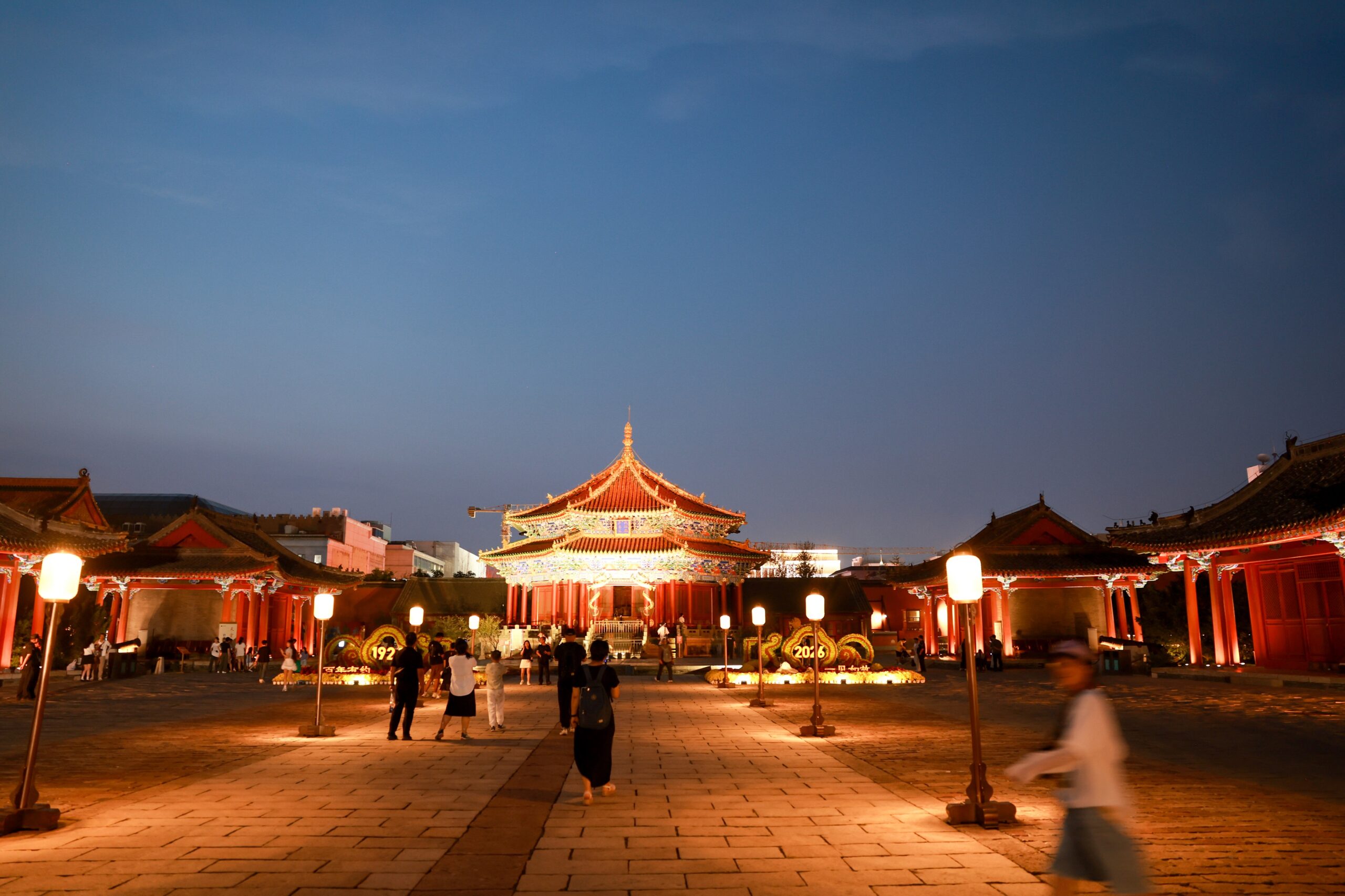

As summer temperatures rise, more attractions across China are opening after dark, making night tourism a popular way to beat the heat.
As Europe endures another summer of extreme heat, China is facing a similar challenge. Across the country, more attractions are extending their opening hours, inviting visitors to swap scorching afternoons for cooler evenings.
From zoos and museums to science centres and historic sites, night-time experiences are becoming one of this summer’s biggest travel trends. For many families, the change offers more than relief from the heat. It also gives visitors a chance to experience familiar places from a new perspective.
Zoos Offer a Different Experience After Dark
“Once night falls, and the zoo closes, this is the animals’ home. We are the guests, so please keep your voices down.”
That is how staff welcome visitors to the new night tour at Jinan Zoo in east China’s Shandong Province.
The zoo, which has been open for more than 60 years, launched its first evening programme this summer. Small groups of families follow keepers and science educators through selected areas after sunset. Along the way, they watch predators become more active, learn why Père David’s deer’s eyes appear to glow in the dark, and discover how many animals behave differently at night.
“We only open areas that are suitable for evening visits, based on the animals’ natural routines,” said Guo Ling, a staff member at the zoo. “Our keepers and educators join every tour to help visitors understand the animals while ensuring they are not disturbed.”
For many families, the experience feels very different from a daytime visit.
“There were fewer people, and we saw things we had never noticed before,” said Zhang Yong, who joined the tour with his child.

Museums and Science Centres Join the Night Tourism Trend
Night-time experiences are spreading well beyond zoos.
In Shanghai, tickets for the upgraded overnight zoo programme have proved highly popular. In Hangzhou, a wildlife park has introduced immersive role-playing adventures, while a zoo in Nanning combines animal viewing with live performances.
Meanwhile, museums and science centres are also welcoming visitors after dark.
At the Shenyang Palace Museum, evening visitors can explore the historic complex through live performances and role-play guided tours. The Chengdu Natural History Museum offers overnight dinosaur-themed programmes, while the Binhai Science and Technology Museum in Tianjin has introduced interactive mystery-solving games.
According to the Shenyang Palace Museum, the evening programme combines historical knowledge with storytelling and audience participation to create a more engaging cultural experience.
Hu Sen, a visitor from Hebei Province, said the atmosphere made the visit especially memorable.
“It really felt like travelling back in time,” he said. “My child was fascinated by the stories about imperial cuisine. It was fun, and we learned a lot.”

Night Tours Grow as Summer Temperatures Rise
The popularity of night-time travel reflects changing summer travel habits across China.
As temperatures remain high during the day, more people are choosing to travel after sunset rather than during the hottest part of the day. In response, attractions are extending opening hours and introducing programmes designed specifically for the evening.
He Zeya, a professor of cultural and tourism studies at Shandong University, said night tours offer a quieter setting that helps visitors feel more immersed in their surroundings. The slower pace also encourages families to spend more time exploring and interacting with exhibitions, performances and educational activities.
Written by Ronnie Yu, additional reporting by CNS.
If you liked this article, why not read: Why China’s Caves Are Becoming Adventure Hotspots


