
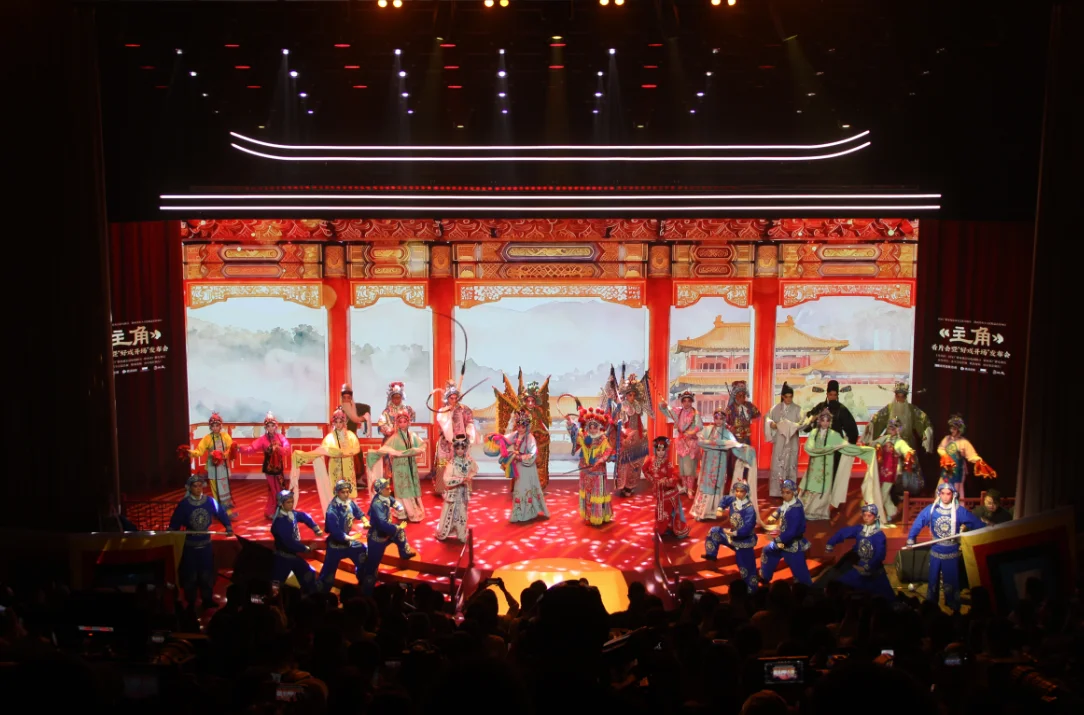

Known as China’s “Shouted Opera,” Qinqiang is experiencing a revival as young audiences and international visitors discover its powerful music, rich storytelling and cultural heritage.
Recently, a group of teachers and students from Northern Ireland visited Xi’an and experienced the Qinqiang opera, one of China’s oldest and most distinctive operatic traditions.
UK Students Encounter Qinqiang Art
They visited the Xi’an Yisu Society and explored the Qinqiang Opera Museum. They also tried on traditional opera costumes, learned the art of “water sleeves”, and painted opera facial makeup, experiencing firsthand the unique charm of Qinqiang opera.
The exquisite costumes and stunning artistry of Qinqiang deeply impressed Thomas, one of the accompanying teachers. “Through the performers’ graceful movements and superb performances, I truly caught a glimpse of the profound and vivid spirit of Chinese history,” he said. In this simple remark lies the cross-cultural appeal and emotional power of Qinqiang opera.
Before departure, the students stuck name stickers bearing their English names on the lintel of Yisu Society. One girl wrote in the guest book: “Today I have learned not just opera performing, but also how to tell stories with my whole body.”

Qinqiang Revival Fueled by a Hit Drama
Qinqiang opera has recently surged in popularity across China, partly fueled by the hit period drama The Protagonist.
The Protagonist is adapted from the novel of the same name by Chinese writer Chen Yan, which won the Mao Dun Literature Prize. Since its release, the drama has received growing acclaim and attracted a wide audience. It has also brought Qinqiang, a millennia-old art rooted in northwest China’s Loess Plateau, back into the public spotlight.
The Protagonist tells the story of Yi Qin’e, a legendary Qinqiang performer, and the ups and downs of her life over half a century. In the drama, she begins as a shepherd girl from the Loess Plateau and, through sheer perseverance and stubborn determination, grows into a master of Qinqiang. Through her lifelong dedication, she embodies what it truly means to be the protagonist on the stage.
Described as China’s “Oldest Rock Music”
Qinqiang is one of the oldest forms of traditional Chinese opera and is regarded as the origin of Bangzi-style opera. Dating back to the Qin folk melodies of the Zhou and Qin dynasties, it has evolved over thousands of years. Widely popular across northwest China, including Shaanxi, Gansu, Ningxia, Qinghai and Xinjiang, Qinqiang stands as a shared cultural memory for people in the region.
Qinqiang is also often described as “Shouted Opera”. Its tunes are sonorous, solemn, bold and unrestrained, echoing the wind sweeping across the Loess Plateau. The powerful vocals convey both impassioned fervour and tender emotions, earning it the nickname “China’s oldest rock music” among netizens. In 2006, Qinqiang was inscribed on the first batch of China’s National Intangible Cultural Heritage List.
Unlike the refinement of Peking Opera or Yue Opera, Qinqiang carries a strong sense of everyday life and earthy vitality.
In places such as Shaanxi, it was customary to set up a stage and invite an opera troupe to perform during weddings, funerals, and major celebrations. These Qinqiang performances serve as living folk chronicles. They pass down values such as loyalty, filial piety, morality, and devotion from one generation to the next.
As the series gained widespread popularity, classic Qinqiang scenes featured in the drama quickly went viral online.
With its distinctive style, Qinqiang has won over many young audiences and attracted a growing number of overseas fans.
On short-video platforms, increasing numbers of young people are imitating Qinqiang singing styles and “water sleeve” movements. Related clips, quotes, and topics have gained significant traction online, while offline performances are attracting more Gen Z attendees.
What was once a niche and highly regional art form has now broken through traditional boundaries, transcending differences in age and geography. Today, Qinqiang opera is being revitalised with renewed energy.
Written by Sha Liu, additional reporting by CNS, People’s Network, Xi’an Civilisation Website and Xi’an Evening News, etc.
If you liked this article, why not read: Why a Tibetan-Language Hamlet Resonates in the AI Era


