
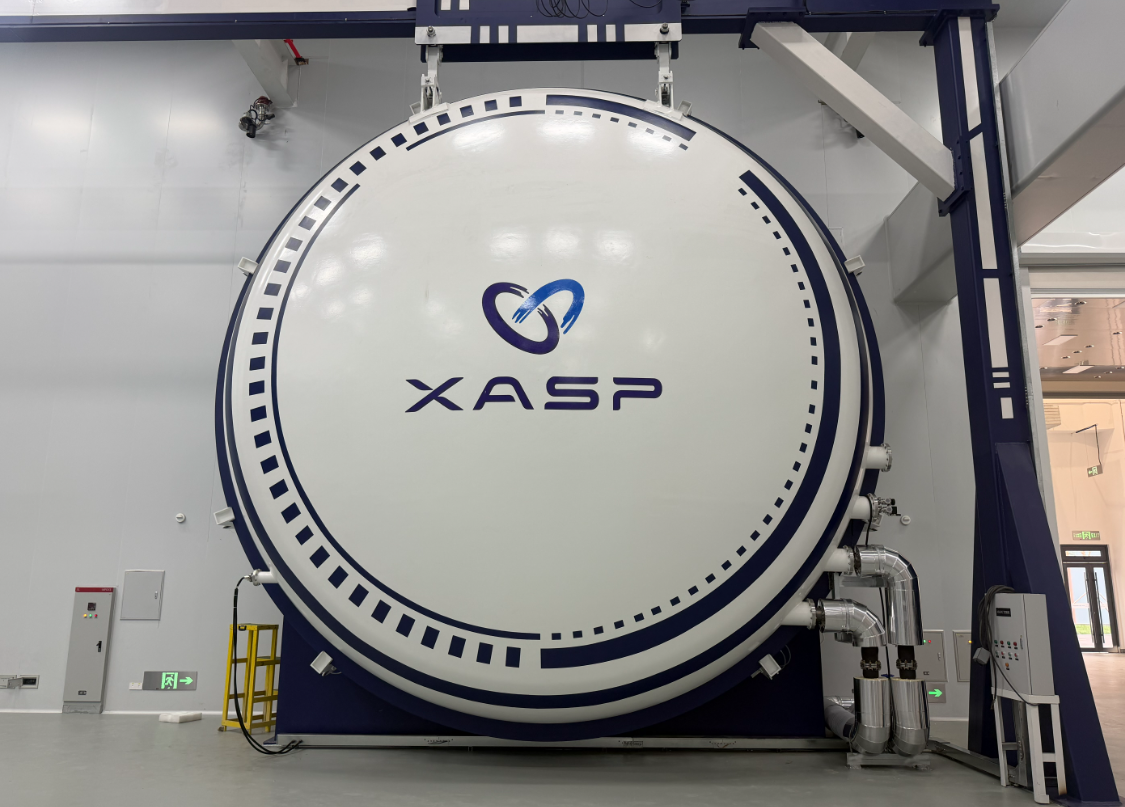

China has cut commercial satellite production from months to just over 20 days with a smart production line in Wuxi.
Can you believe it? Building a commercial satellite in China no longer takes half a year.
In the past, manufacturing a commercial satellite usually took 4 to 6 months. Even after optimisation, the process still required 1 to 2 months. But today, the fastest production cycle has been shortened to just over 20 days, thanks to the launch of a pulse-style batch production line.
Located in the commercial satellite intelligent park in Wuxi, Jiangsu Province, the satellite production line belongs to Jiangsu Guoyu Starry Sky Technology Co., Ltd., a wholly owned subsidiary of MicroNano Starry Sky.
The production line integrates satellite research and development, assembly, manufacturing, and strict testing, specialising in producing 200–500 kilogram commercial satellites. It is now among the largest and most advanced commercial satellite mass-production bases in Jiangsu.
Smart Production Line Creates Mass-Production Era
So, how did Wuxi achieve such a dramatic increase in satellite production speed?
Traditional satellite manufacturing was slow because of unstable supply chains, limited testing resources, and complex customised processes, according to Shi Changfu, Deputy General Manager of Jiangsu Guoyu Starry Sky Technology.
Wuxi’s pulse-style intelligent production line has changed this traditional model. By coordinating equipment, workers, manufacturing processes, and production capacity in advance, it enables standardised and large-scale satellite manufacturing.
In June this year, six satellites for the Huantian Constellation were completed and delivered. The milestone marked Wuxi’s shift from customised satellite production toward commercial satellite mass production.
AI-Powered Satellites Unlock Everyday Applications
These satellites are not only built faster — they are also becoming smarter.
The new generation of commercial remote-sensing satellites is equipped with AI computing modules. Unlike traditional satellites that simply capture images and send all data back to Earth for processing, intelligent satellites can analyse information directly in orbit.
They can autonomously identify targets, collect data, and process information before transmitting valuable results back to Earth, greatly improving efficiency.
In the future, these intelligent satellites could support everyday applications such as satellite-to-phone communication, high-precision positioning, and disaster monitoring.
With a complete ecosystem covering satellites, rockets, networks, and applications, Wuxi is emerging as an important hub for China’s commercial aerospace industry.
From “months to build one satellite” to “one satellite every 20 days,” China’s commercial space industry is entering a new era of faster production, smarter technologies, and large-scale manufacturing.
Written by Sha Liu, additional reporting by Ecns.cn.
If you liked this article, why not read: SMILE Satellite Launch Marks a New Phase in China–Europe Cooperation


