
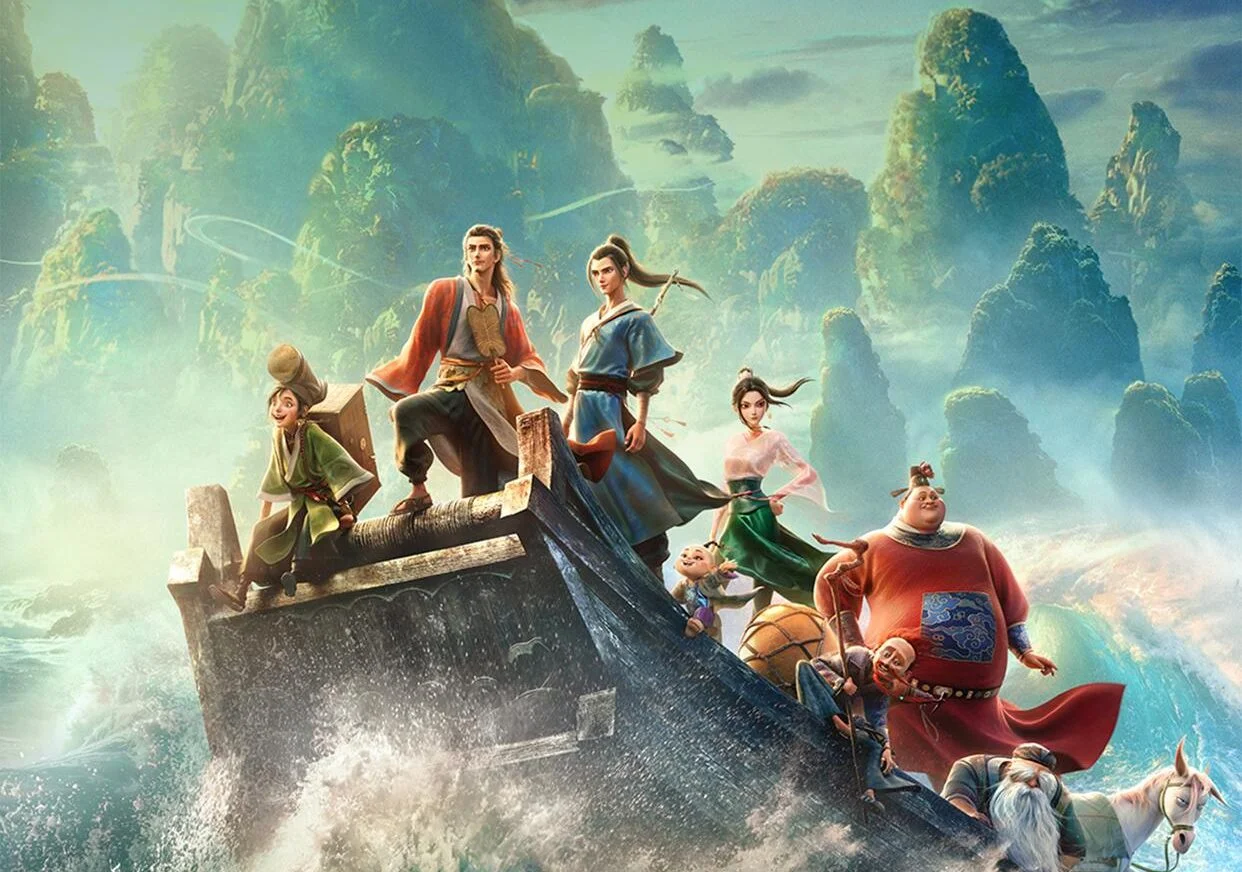

China’s animated film All Wishes Come True reimagines the Eight Immortals as ordinary people, highlighting a new trend in Chinese animation.
For generations, Chinese audiences have grown up with stories about gods, heroes and mythical creatures. However, a new trend in Chinese animation is bringing these legendary figures closer to everyday life.
Instead of focusing only on powerful immortals or heroes with extraordinary abilities, more filmmakers are exploring their human side — their doubts, struggles and personal growth.
The latest example is All Wishes Come True (Baxian!, “八仙!”), an animated film that reimagines one of China’s most famous folk legends: the Eight Immortals.
Released on July 18th, the film has quickly become one of the highlights of China’s 2026 summer box office. It ranked among the top-performing films during the holiday season and received positive feedback from audiences, with a Douban rating of 8.3.
From Immortals to Ordinary People
The story of the Eight Immortals is widely known in China and across many Chinese-speaking communities. The phrase “The Eight Immortals crossing the sea” has long been part of popular culture.
However, traditional legends never provided a detailed answer to one question: how did these eight figures become immortals?
That missing chapter gave the filmmakers room to create a new story.
Rather than presenting the Eight Immortals as flawless supernatural beings, All Wishes Come True begins before they gain their legendary status. They are ordinary people with different personalities, weaknesses and ambitions.
In the film, the future immortals form a temporary team while trying to make a living. They pretend to be divine figures and open a temple, leading to a series of unexpected adventures.
This approach changes the traditional image of immortals. The characters are no longer distant figures from mythology. They face practical problems, personal conflicts and everyday challenges.
The film also creates a unique world where immortals have rules, responsibilities and even pressure. By combining ancient mythology with modern humour, it has developed a storytelling style that appeals to younger audiences.

Why Humanised Heroes Resonate
The idea of giving legendary figures a more human identity has become increasingly common in Chinese animation in recent years.
For example, Ne Zha challenged the traditional image of Ne Zha by portraying him as a rebellious teenager searching for his identity. Chang An focused on the friendship, ambitions and emotions behind historical figures rather than simply presenting them as distant icons.
Similarly, All Wishes Come True centres on a group of imperfect characters who gradually discover their courage and sense of responsibility.
Culture commentator Li Yan told HKCNA that the film’s appeal comes from its distinctive characters and complete storytelling. He said the Eight Immortals already have a broad audience base because they are deeply rooted in Chinese folk culture.
At the same time, the film combines traditional themes with modern narrative techniques. Its adventure structure and comedic style reflect influences from global cinema while maintaining a strong Chinese cultural identity.
The success of these films suggests that audiences are looking for more than familiar characters. They also want stories about personal choices, emotions and growth.

Finding Modern Meaning in Traditional Stories
According to director Mou Zhengyang, the most attractive quality of the Eight Immortals is their “ordinary human spirit”.
Unlike many traditional gods who appear distant and untouchable, the Eight Immortals have always carried a strong sense of everyday life. In folk culture, they are often seen as “wandering immortals” rather than perfect figures separated from the human world.
Their diversity is also part of their appeal. The group includes different ages, genders and social backgrounds. For Mou, this combination reflects the hopes and values of ordinary people throughout history.
That is why the film chooses to focus on their lives before they became immortals.
“They have weaknesses, confusion and difficulties,” Mou said. “But when ordinary people stand up at critical moments, their courage becomes truly moving.”
The film also adds local cultural elements to the story.
Producer Cao Linlin said the film combines Chinese aesthetics with modern animation technology. The team visited locations including Shanxi’s Yongle Palace, Sichuan’s Qingcheng Mountain and Hunan’s Zhangjiajie to develop its visual style.

Can Chinese Legends Find a Global Audience?
The popularity of All Wishes Come True comes as Chinese animated films continue to explore new ways of presenting traditional culture.
In the past, many adaptations focused mainly on familiar myths and spectacular visual effects. Today, creators are paying more attention to character development and emotional connections.
Following its success in China, All Wishes Come True has announced overseas release plans. The film will arrive in Australia, New Zealand, the United States, Canada, the United Kingdom, Ireland and several European markets from August.
For international audiences, the appeal of the Eight Immortals may not come only from Chinese mythology. Themes such as friendship, courage and perseverance can cross cultural boundaries.
Additional reporting by Xinhua, CNS, Beijing Evening News.
If you liked this article, why not read: Why Has Chinese Movie Dear You Become an Unexpected Hit?


