
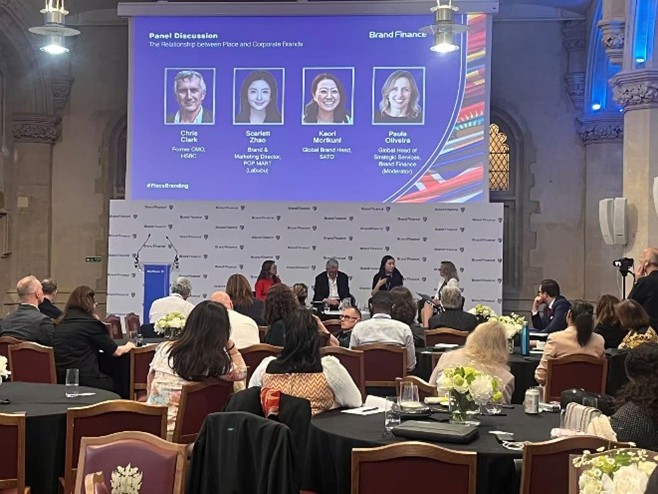

Brand China was the main attraction at the Brand Finance Place Brand Forum 2026 at Guildhall in London on May 21st.
The forum brought together global brand leaders, diplomats, and policymakers to explore how national brand image influences a country’s competitiveness. At the forum, the 2026 Nation Brands Value Report was also officially released.
China’s increasing national brand value and soft power performance was one of the forum’s central topics, highlighted by the released report, in speeches, and through conversations among the audience.
China’s Brand Value Grows Against the Trend, Soft Power Continues to Lead
The Nation Brands Value Report is a way to put an estimated monetary value on a country’s brand. According to the newly released 2026 Nation Brands Value Report, China was the big winner.
The total value of global nation brands declined by 6% overall, with major Western countries among those seeing decreases. The United States saw its brand value fall from an estimated $37.3 trillion last year to around $34.7 trillion this year.
China bucked the trend with 7% growth, adding approximately $1.49 trillion in value, bringing its 2026 total valuation to around $22 trillion. It remained in second place but closed the gap with the US.
Cultural Brands Going Global: Pop Mart as a Breakthrough Case Study
Chinese designer toy brand Pop Mart was invited to participate in a roundtable dialogue at this forum as a representative example of a Chinese cultural brand reaching the world. Pop Mart has rapidly gained popularity in European and American markets through IPs such as Labubu. In January of this year announced that it would establish London as its European headquarters, opening multiple stores across the UK and directly creating more than 150 jobs.
In his keynote address, Brand Finance founder, chairman, and CEO David Haigh noted that the world is currently at a turning point in the global brand landscape. Chinese brands are rising across the board, much as American culture drove American brands onto the world stage after World War II, the continued spread of Chinese culture over the next 20 years will be the core driving force behind Chinese brands going global.

Soft Power Marketing: The Story of China’s Cities Has Yet to Be Fully Told
As well as brand power, soft power has also seen China improve. In Brand Finance’s 2026 Global Soft Power Index, released in Davos in January, China was the only country in the top ten to see its soft power score rise.
Haigh highlighted this soft power growth at the Forum too, speaking highly of the historical depth and cultural richness of Chinese cities, while also highlighting the challenges they face in communicating their brand to the outside world. External audiences, he observed, more readily perceive China’s economic scale and technological strength, yet often overlook what local residents value most: green spaces, safety, healthcare, culture, and a sense of community. “Hard power travels easily”, he said, “while soft power is too often lost in translation”.
For city brand marketing, this gap represents both a challenge and an opportunity. Haigh called on Chinese cities to shift their narrative language, not only talking about industrial planning and large-scale projects but also telling the stories of everyday life on the streets, trustworthy public services, and tangible cultural memory. These, he argued, are the true foundations of a city’s long-term appeal.
Brand Finance was founded in 1996 and is a world-leading brand valuation consultancy. Its annual reports are widely regarded as important benchmarks for measuring national brand value and soft power. This forum builds on and upgrades the ‘Global Soft Power Summit’, reflecting the international community’s growing attention to national brand strategy.
Written by Shuhan Li. If you like this article, why not read: Why Has Chinese Movie Dear You Become an Unexpected Hit?


