
About 7,000 global participants gather in Hong Kong for the Global Talent Summit, exploring how artificial intelligence is reshaping skills, talent development, and the future of work.
The Global Talent Summit opened on March 18th at the Hong Kong Convention and Exhibition Centre. Around 7,000 participants from across the world attended to discuss how artificial intelligence is reshaping talent development, CNS reported.
Participants widely agreed that the traditional definition of talent—centred on specialised knowledge and experience—is being redefined. In the AI era, soft skills such as learning agility, decision-making, and curiosity are becoming increasingly important.
Hong Kong Chief Executive John Lee Ka-chiu said in his opening remarks that, as of February 2026, the city had approved more than 410,000 applications under various talent admission schemes. More than 270,000 people have already arrived in Hong Kong. This, he noted, reflects strong global confidence in the city.
He added that artificial intelligence, digital innovation, and technological transformation are reshaping industries. In the future, competitiveness will depend less on capital or physical infrastructure and more on human creativity and adaptability.
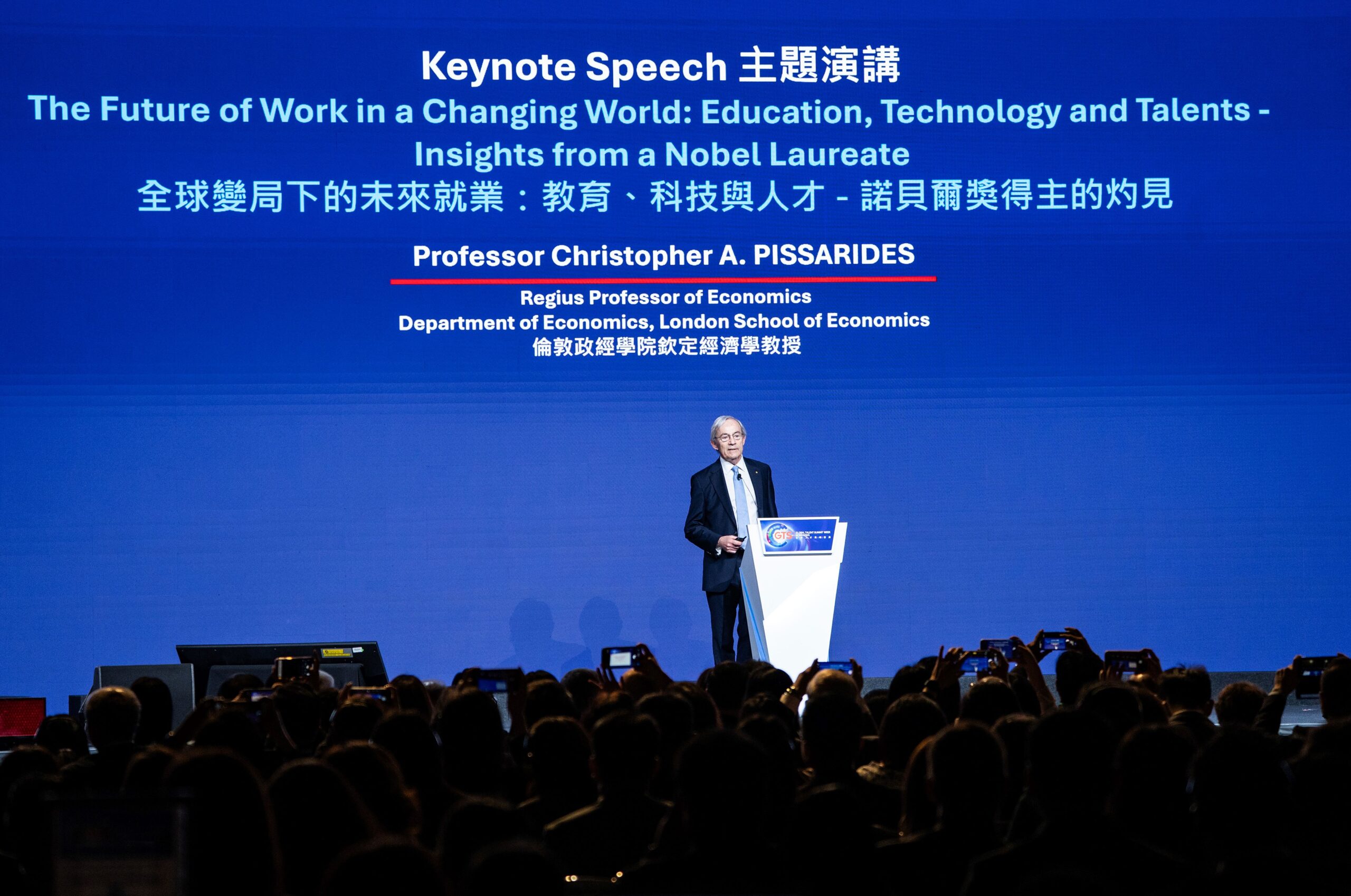
In a keynote speech, Christopher A. Pissarides, a Nobel laureate in economics and professor at the London School of Economics, said that while technological disruption is not new, the current wave of AI is different. Instead of eliminating jobs, it is transforming the nature of work.
He emphasised that future workers will need strong data interpretation skills. They must be able to understand AI-generated information and turn it into clear communication and effective decisions.
During panel discussions, industry representatives noted that the definition of talent is shifting from “what you know” to “how you learn.” Employers are placing greater value on adaptability, curiosity, and innovation. They are also looking for individuals who can ask new questions, collaborate across disciplines, and effectively use AI tools to turn ideas into reality.
If you liked this article, why not read: Top 3 All Taken: Hong Kong Dominates THE University Ranking