
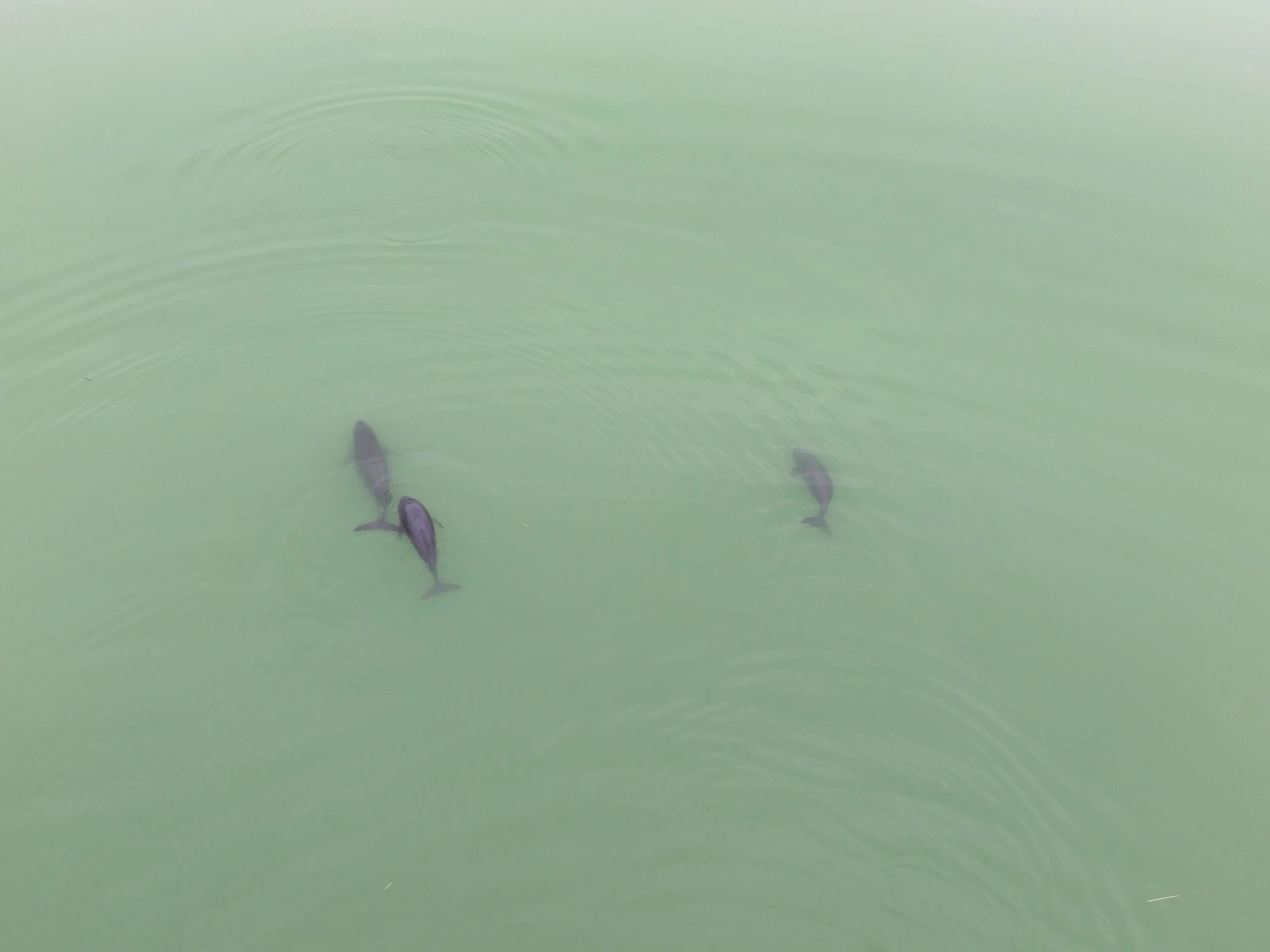

Yangtze finless porpoise populations are rebounding in China’s Yangtze River after years of conservation efforts, signalling improving river ecosystem health.
In early spring, groups of finless porpoises were spotted in unusual numbers in the Dongting Lake area.
“Such large gatherings are rare,” said Li Jianzhi, deputy secretary-general of the Hunan Wildlife Protection Association. He added that the animals have been returning to the area more regularly in recent years.
Water quality in South Dongting Lake has improved, and biodiversity is increasing. Against this backdrop, the Yangtze finless porpoise is appearing more frequently across the lake and in connected rivers.
Return of the Yangtze’s Finless Porpoises
The Yangtze finless porpoise is the only freshwater porpoise in the river. Its population is widely regarded as an indicator of the river’s ecological health.
A 2025 survey put the population at 1,426, up from 1,249 in 2022. The increase marks a continued recovery after decades of decline.
Sightings have also become more common. In river sections near Wuhan and Nanjing, the animals are once again seen swimming in open waters.
Fishing Ban and Conservation Measures
China introduced a 10-year fishing ban in key parts of the Yangtze River in 2021. Since then, authorities across 15 provincial-level regions have stepped up enforcement. As fishing pressure has eased, habitats have begun to recover.
At the same time, relocated populations have expanded. More than 150 porpoises now live in protected reserves, where births are recorded each year.
Researchers have also made progress in breeding technologies and have established a genetic resource bank for freshwater cetaceans.
The wider ecosystem is showing signs of improvement. Between 2021 and 2025, monitoring recorded 351 fish species in the Yangtze River, an increase of 43 compared with the period before the fishing ban.
Urban Protection and Next Steps
Meanwhile, efforts to restore other species, including the Chinese sturgeon, have continued, with early signs of natural reproduction.
In Wuhan, the porpoise has taken on a more public role. On April 9th, it was named the city’s official mascot.
Local authorities have expanded monitoring systems and established a conservation centre. Digital platforms now stream live footage of the animals, while public campaigns aim to raise awareness.
Officials say further efforts will focus on habitat protection, monitoring, and public engagement.
Written by Ronnie Yu, additional reporting by CNS, Xinhua.
If you liked this article, why not read: China’s Next Stage | Yangtze River Economic Belt: Redefining Green Growth


