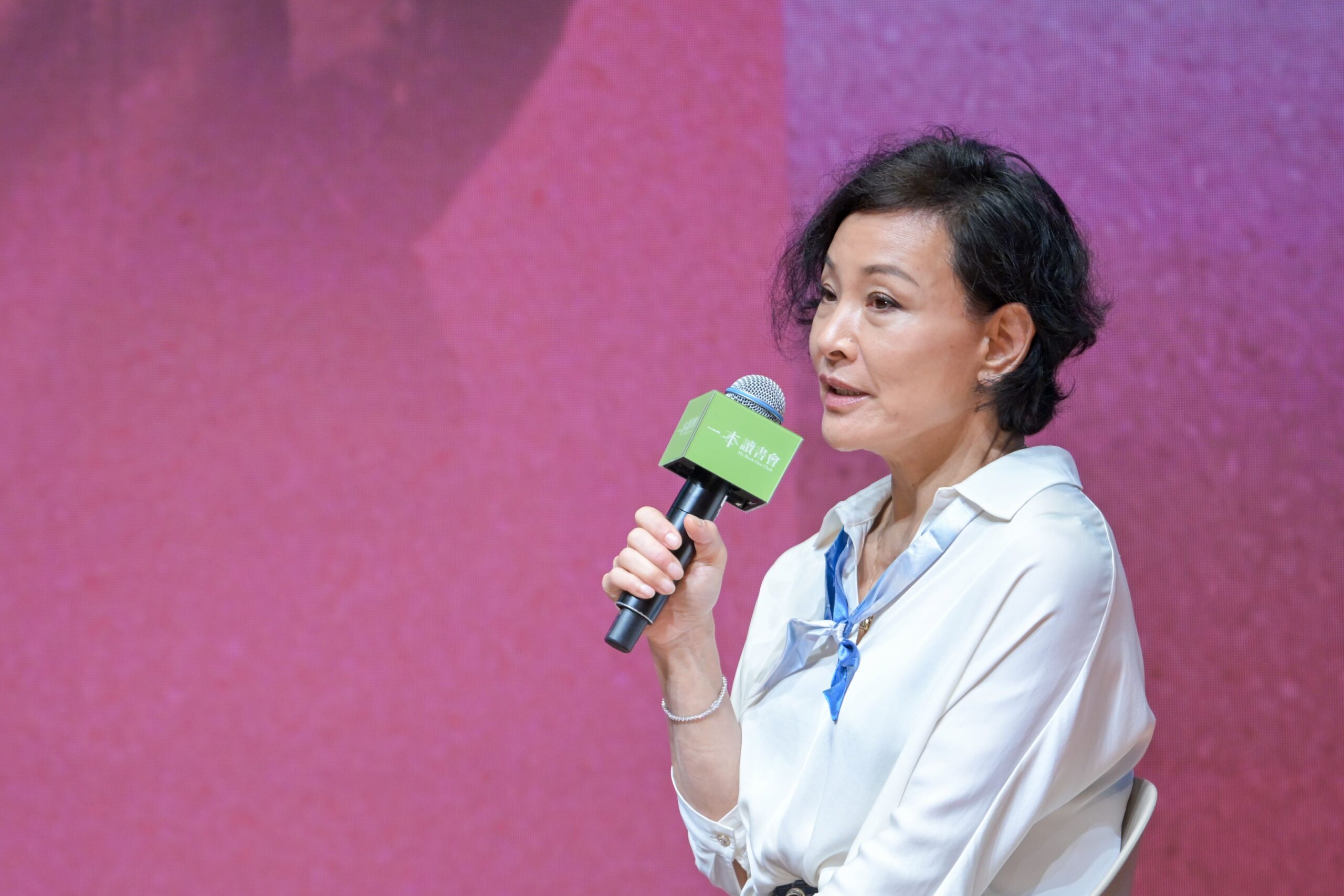

Discover Joan Chen’s journey from Chinese cinema to Hollywood, her candid memoir “Catfish”, and her reflections on life, love, identity, and creativity.
Hong Kong narrowly escaped a typhoon on September 18. That evening, nearly a thousand seats were filled at the Grand Hall of the Lee Shau Kee Lecture Centre at the University of Hong Kong. The crowd came to see Joan Chen—renowned actress, director, and writer—present her new memoir-in-essays, Catfish.
Life as Creative Material
“Life itself is material,” Chen told the audience in a conversation with Chinese writer Xu Zhiyuan. She believes that every joy and struggle can nourish creativity. “Suffering, suppressed desires—everything becomes part of your work,” she said.
Chen’s career has spanned continents. She rose to fame in China with films like Little Flower, then won international acclaim in Bernardo Bertolucci’s Oscar-winning The Last Emperor. Later, she ventured into directing, with her debut film already winning awards. In Catfish, she weaves together intimate memories: her Shanghai family history, her parents’ wartime refuge in Chongqing, and her own leap from China’s film laurels to Hollywood, where she confronted cultural shock and prejudice against Asian faces.
The book is strikingly candid. Chen opens up about her marriages, love affairs, and desires, using deeply personal stories to reflect on shifting emotions across different stages of life.

Rethinking Identity in the AI Era
During the Q&A, a student asked how she balances truth with privacy. Chen replied that she never sought prior permission from family members, even her mother. “As long as it doesn’t harm anyone, it should be presented truthfully,” she said. “Writing is already hard enough.”
Besides, her reflections went beyond film and memory. At one point, she questioned the nature of identity in an AI-driven age. “We are constantly being trained by machines,” Chen said. “When you see a beautified version of yourself, it’s only a copy. Yet we are tricked into believing in these replicas. What, then, does it mean to be human?”
A Winter with Beautiful Snow
Finally, the inevitable question arrived: what comes next? Chen smiled and used the seasons as a metaphor. “If life is like four seasons, I am in winter. But it’s not a gloomy winter. It’s a winter with beautiful snow. I may never retire,” said the 64-year-old, adding that she hopes to spend more time with the ‘morning sun’ of younger generations.
Written by Chen Wang, Additional reporting by Zhuoyi Chen.
If you liked this article, why not read: Jean-Jacques Annaud: Bridging Cultures Through Film