
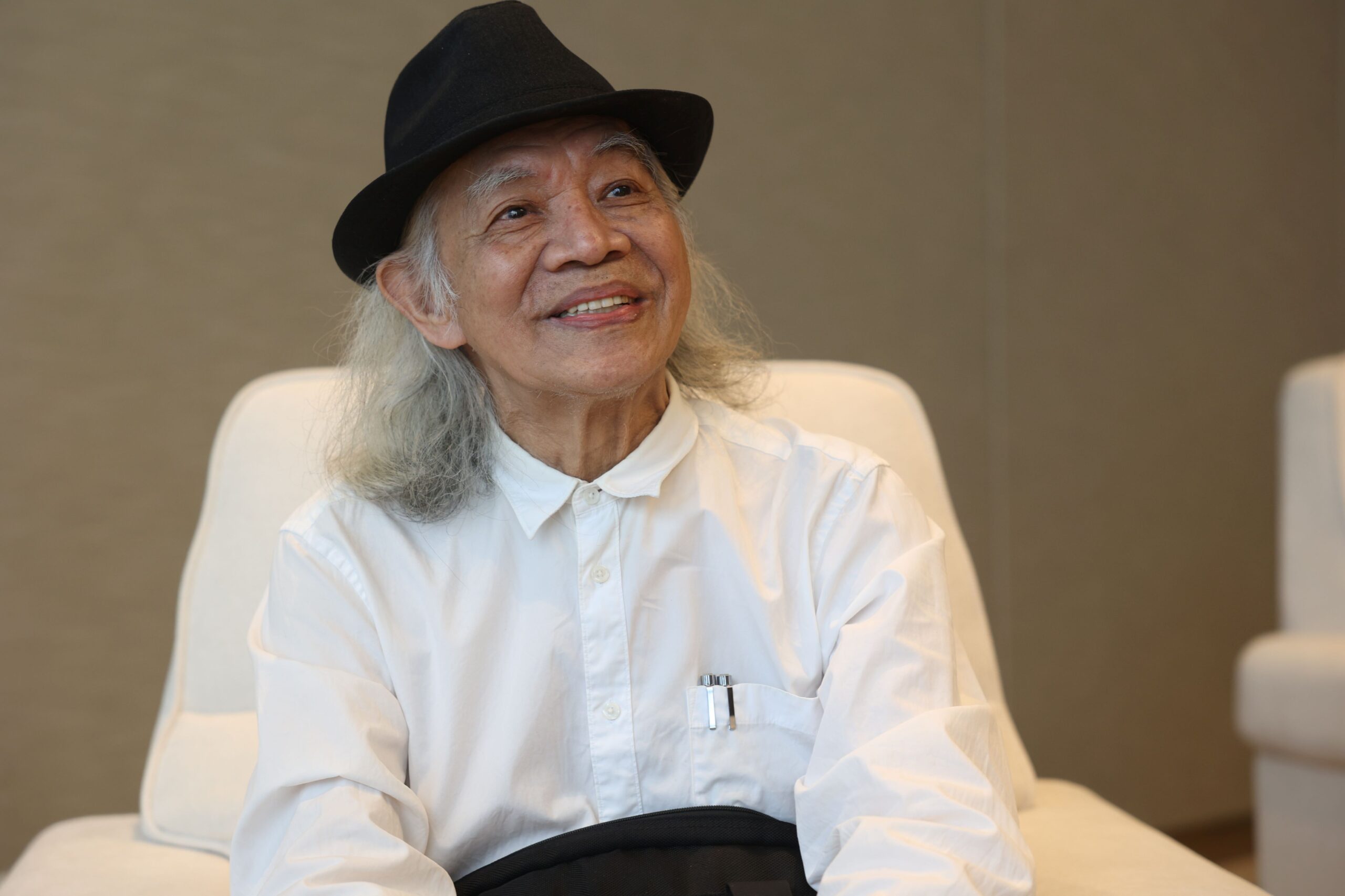

Tsai Chih-Chung, a cartoonist from Taiwan, has spent decades turning Chinese classics into comics. At the ongoing Beijing International Book Fair, he introduced a new bilingual comic edition of the I Ching and met readers at a launch and signing event.
The event attracted large crowds. Tsai also sketched illustrations for readers on the spot.
“I only want to devote my life to Chinese studies and culture,” he said in a recent interview with CNS.
For decades, Tsai has used simple lines and visual storytelling to reinterpret Chinese classics. His comic adaptations of works such as the Analects, Laozi, and Zhuangzi are now available in 27 languages and in dozens of countries and regions.
Among the many classics he has adapted, Tsai considers the I Ching one he simply had to draw.
He first started the project in 1989 after moving to Canada. At the time, he tried to approach the text through its divination system and methods of interpretation. However, he later felt that he had not truly understood the book and decided to stop.
More than 20 years later, he finally gained a new understanding of the text. In 2011, while attending an event in Xiamen, Tsai gained a new understanding of the I Ching and completed the project he had left unfinished for decades.
In his view, the book remains relevant because it explores how change shapes the world. It encourages people to face change, understand it, and find hope within it. Therefore, he believes, the I Ching still resonates with readers thousands of years after it was written.
Tsai drew on interpretations by ancient scholars such as Confucius and Shao Yong. He then focused on the core ideas of the classic and presented them in a more accessible way.
“I choose the most important, most engaging and most meaningful parts to draw,” he said. “My role is to serve as a bridge and help readers enter the world of the classics.”
This ability to translate ancient wisdom into accessible language is closely linked to his own upbringing.
Born in Changhua County, Taiwan, Tsai grew up in a society where traditional customs, family values and cultural practices were passed down through generations. Even after many years abroad, he remained committed to Chinese cultural traditions.
Tsai began drawing at the age of four and started creating original works when he was nine. He became widely known in his youth through comics such as Old Master Q. Later, he shifted his focus to Chinese classics, guided by the belief that popular trends may last for a decade, while culture can endure for centuries.
In 1986, his comic adaptation of Zhuangzi was published in Taiwan and quickly became a bestseller. The following year, he expanded the project with a broader series on Chinese philosophers and thinkers.
In 1992, Tsai began working with Princeton University Press to publish English editions of key titles from his comic adaptations of Chinese classics. Since 2018, many of these works have been collected in the “Illustrated Library of Chinese Classics” series. The bilingual I Ching comic is the latest addition.
According to Tsai, the project is an attempt to help readers around the world better understand Eastern wisdom through an innovative format.
Now based in Hangzhou, he continues to work on new adaptations. He plans to bring more Chinese classics, including the Classic of Mountains and Seas and the Compendium of Materia Medica (Bencao Gangmu), to contemporary audiences through accessible and reader-friendly storytelling.
If you liked this article, why not read: Liu Yong’s ‘Poetic Years’ Goes on Show in Beijing


