
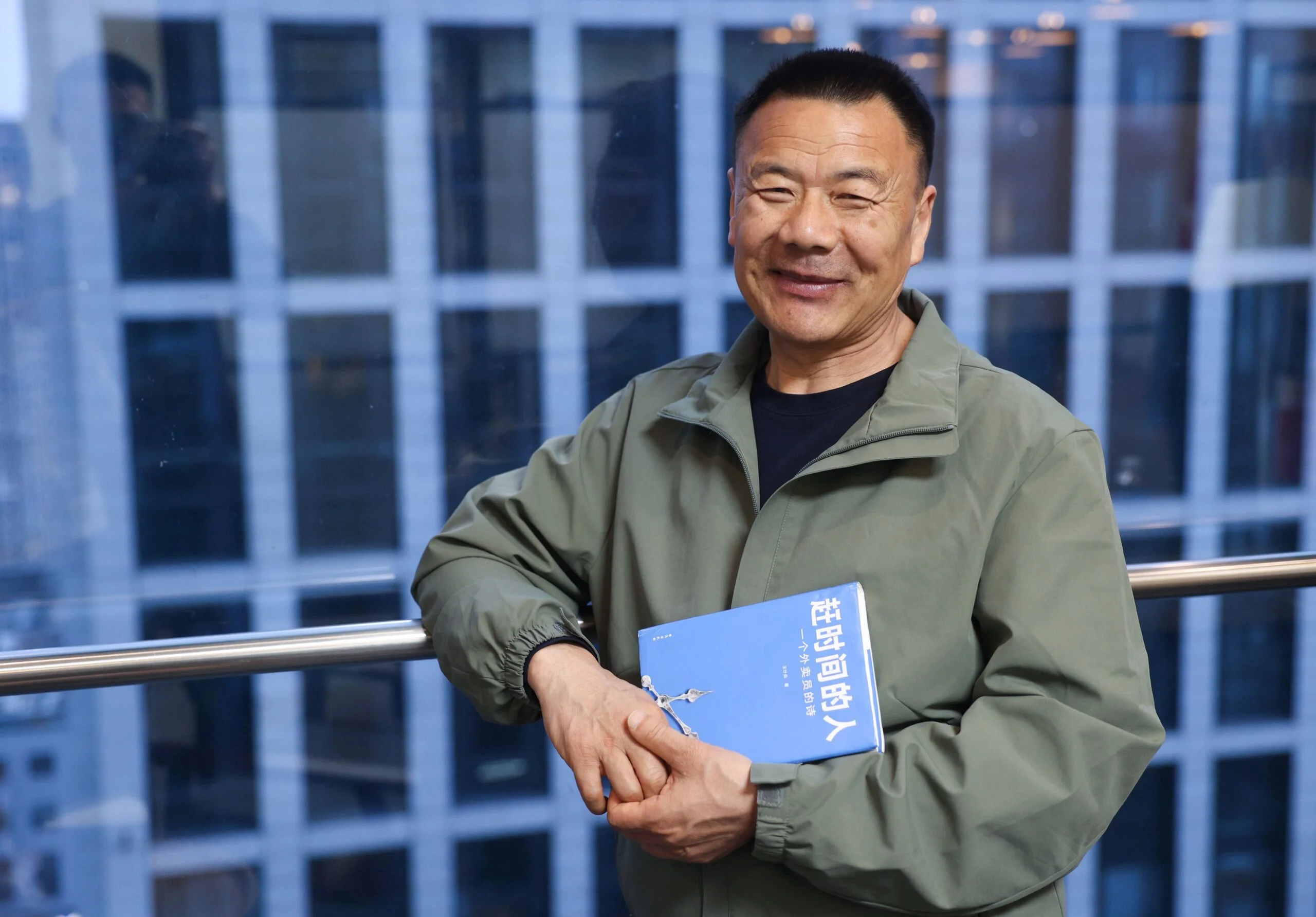

China’s “delivery poet” Wang Jibing talks about winning the Lu Xun Literature Prize, his poetry collection Flying Low and writing about ordinary lives.
When Wang Jibing learned that he had won one of China’s highest literary honours, his first feeling was relief, followed by joy.
Known across China as the “delivery poet”, Wang won the poetry award at the Ninth Lu Xun Literature Prize for his collection Flying Low (低处飞行). Speaking after the announcement on July 15th, he said the pressure he had felt in recent weeks had finally lifted.
“After that came calmness, and then happiness,” he said.
For Wang, being shortlisted had already meant a great deal.
“As a writer representing a new generation of everyday creators, I was already satisfied to be nominated,” he said.
Throughout the day, messages from friends, readers and journalists kept arriving.
Writing From Lived Experience
Published in February 2024, Flying Low is Wang’s third poetry collection. An English edition is scheduled for publication in the United States this December.
“Every poem in the book has a story behind it,” he said.
To complete the collection, Wang interviewed about 140 delivery riders and offered small payments from his own pocket to encourage them to take part. In the end, he collected dozens of valid questionnaires.
He wanted the poems to reflect the everyday lives of delivery riders as truthfully as possible.
“I am one of them,” he said. “I face pressure, and I have moments when I break down.”
Drawing on those experiences, the collection goes beyond describing a profession. Instead, it explores the emotions, challenges and aspirations of ordinary people navigating life in today’s cities.
When asked about the book’s literary value, Wang chose not to judge it himself.
“I can’t evaluate its artistic value,” he said. “But I hope readers can feel the sincerity and respect behind it.”
Giving Ordinary Lives a Voice
In recent years, more grassroots writers have entered the public eye in China as online literature, community writing and other new forms of literary expression continue to grow.
Wang believes these changes have created more opportunities for people from different backgrounds to tell their own stories.
“The times have created opportunities,” he said. “The development of new grassroots literature has provided a better platform for more creators.”
For him, the journey from delivery rider to award-winning poet is not simply about personal recognition. It shows that more people from different backgrounds are finding opportunities to share their stories.
“The award is like a signpost,” he said. “It doesn’t mean ordinary people have to become poets. It means every genuine life has the chance to be expressed and understood.”
Still Writing Everyday Life
Wang is now preparing a collection of essays, which he hopes to publish next year.
“I hope readers can read one piece every evening,” he said. “Like light rain, without feeling any pressure.”
He is also working on a novel.
So far, Wang has published seven books and continues to write around 1,500 to 2,000 Chinese characters a day.
Looking ahead, he plans to keep writing about the people and experiences he knows best.
“I know where my thoughts are. I know where my dreams are. And I know where I belong,” he said.
“For a writer, winning an award is only the beginning of a new journey.”
Additional reporting by Chenhui and Guoqing.
If you liked this article, why not read: László Krasznahorkai: Newly Nobel Literature Winner Who Looks to the East


