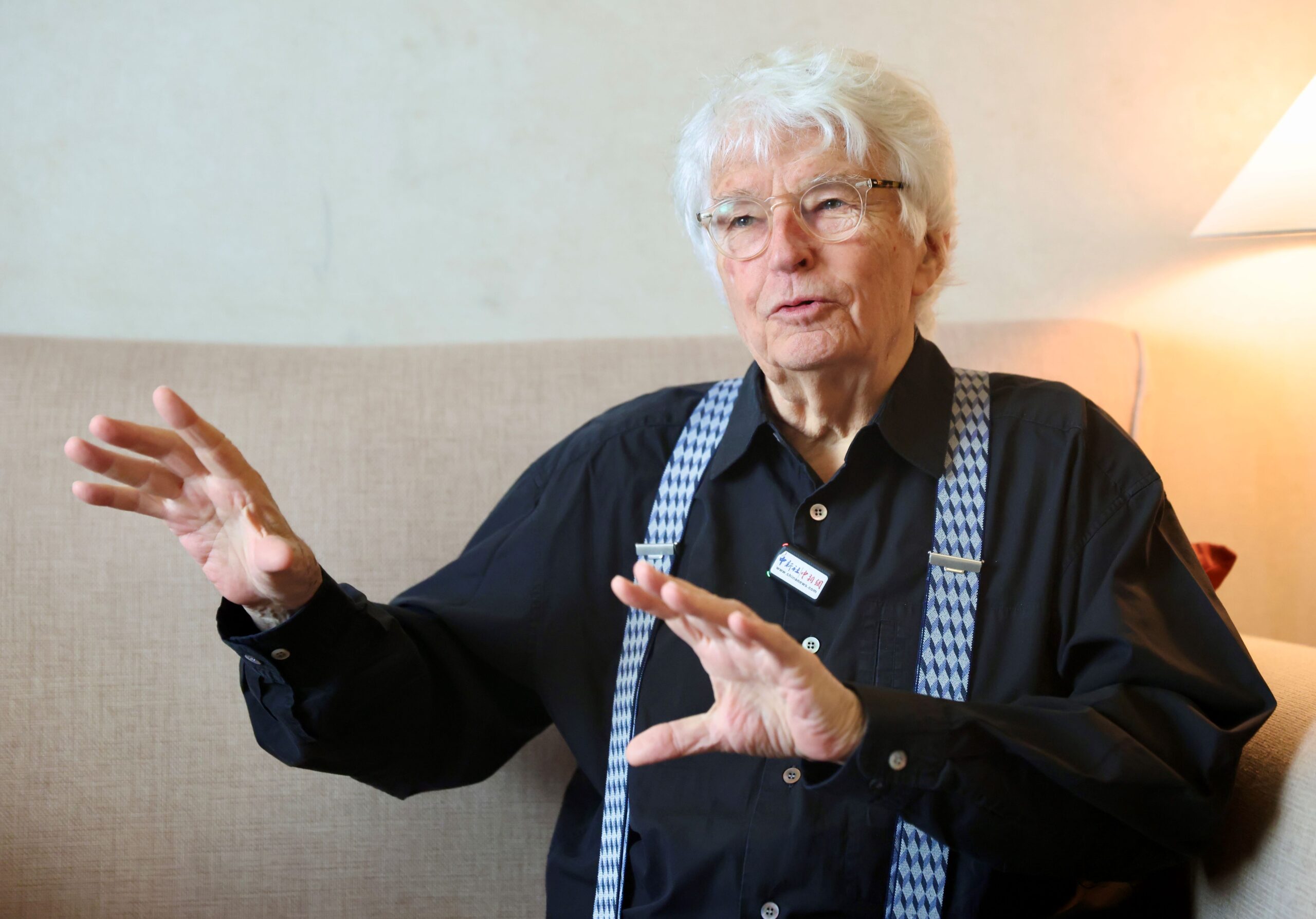

French director Jean-Jacques Annaud shares his experiences directing “Wolf Totem”, working in China, and his views on AI in filmmaking.
French director Jean-Jacques Annaud, known worldwide for classics like Enemy at the Gates and Quest for Fire, has a deep connection with China. He also directed the Sino-French co-production Wolf Totem, spending nearly six years immersed in Chinese landscapes and culture. For Annaud, film is more than visual art—it is a gentle force that crosses cultural boundaries.
Annaud’s fascination with China began in his childhood. In his Paris home, he often read a beautifully illustrated book about China that belonged to his grandfather. “I never wanted to just be a tourist. I wanted to experience daily life. Making films became my way to explore the culture,” he recalls.
During the making of Wolf Totem, Annaud led a team of 609 people—600 Chinese and 9 French—travelling between Beijing and the Inner Mongolian grasslands. He vividly remembers meals in yurts, listening to the wind, and sharing local drinks with the Mongolian cast. “It was not just filming a story. It was a process of understanding nature and respecting culture,” he says.
When creating films across cultures, Annaud focuses on emotion rather than nationality. “I don’t think of myself as a typical French director. Film is about feelings. If it’s sincere, audiences anywhere—China or Europe—will connect.” He emphasises respect and passion for the culture, rather than calculating market trends.
Annaud was also an early adopter of 3D IMAX technology. On the rise of AI in filmmaking, he is cautious but open-minded. “AI is a tool. It can make special effects cheaper and easier, but it has no soul. Film is about creating dreams. If everything becomes too easy, the work may lose life.”
Regarding Chinese cinema in the global market, he notes both opportunities and challenges. “Audiences need to understand and empathise with the story. Some Chinese films focus too much on historical costume dramas. Characters can look similar, and voices are hard to distinguish. That can confuse viewers,” he explains.
Annaud encourages more international collaboration. “French directors should come to China, and Chinese directors should work in Europe. Co-productions help us understand each other. Film has no borders. If it moves audiences in China, it can touch viewers in Southeast Asia, Japan, or Europe.”
Additional reporting by CNS.
If you liked this article, why not read: From Yurt to Stage: The Young Keeper of Manas