
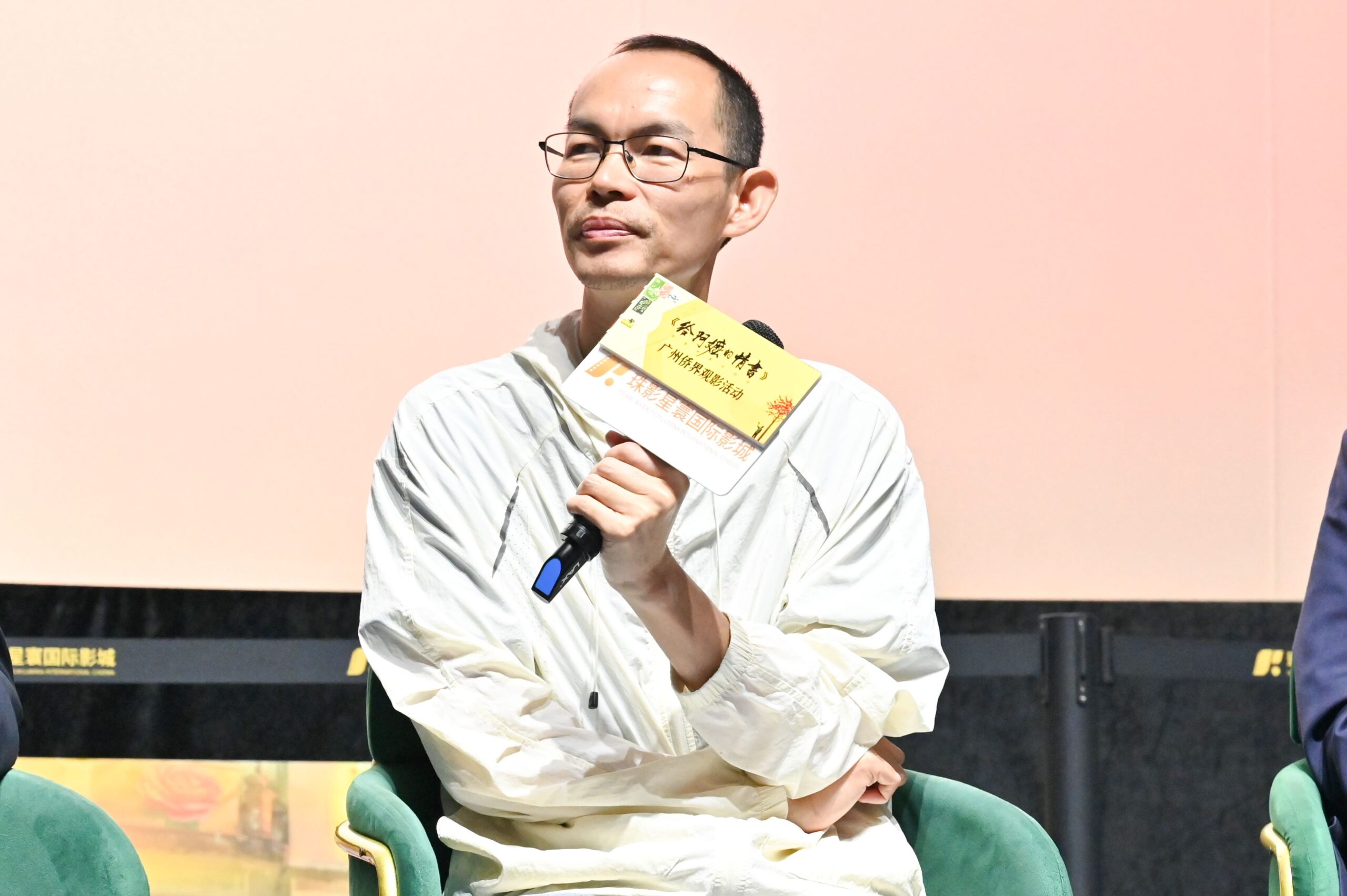

Director Lan Hongchun discusses Dear You, the Teochew dialect film that became a box office surprise in China, and explains why authenticity, field research, and emotional truth guide his filmmaking process.
“We kept asking ourselves: are the stories we are telling truly coming from the heart? If they move us first, then they do not go against the most basic principle of creation,” said director Lan Hongchun at a symposium in Beijing on May 17th.
He was speaking about Dear You, a small film made without star actors and performed entirely in the Teochew dialect. The film quietly became one of the surprises of China’s 2026 May Day holiday box office. It ranked fifth in the holiday chart. Despite limited screenings, it recorded strong occupancy rates and one of the highest proportions of group audiences among all releases. In total, it has earned more than 500 million RMB (about £55 million) at the box office. On Douban, its rating rose to 9.1, driven by strong word of mouth.
At first glance, the success of Dear You may look sudden. However, Lan’s work is rooted in years of local storytelling and emotional research in the Chaoshan region. Back in 2018, he directed his first Teochew-language film, Proud of Me, which received a warm response in Guangdong. That project gave him the confidence to continue exploring stories from his hometown culture.
Later, in 2019, Lan began work on the documentary Four Seas Teochew Taste. Through this project, he followed overseas Teochew communities across Southeast Asia. During hundreds of interviews, he came across a historical communication system known as “Qiaopi,” letters and remittances sent by overseas Chinese families across borders. These letters often passed through multiple hands before reaching their destination. As Lan recalled, one message of longing could move through several intermediaries, and sometimes families lost contact completely.
From these fragmented memories and historical traces, the early idea of Dear You began to take shape. The story focuses on two women who never meet in person, yet become connected through letters that were never originally meant for them.
Unlike his earlier films based on personal experience, Dear You is set about 70 to 80 years in the past. Lan said the team understood early on that they could not rely on imagination alone. After the first draft of the outline, they spent more than half a year doing field research in Southeast Asia. They visited archives, spoke with elderly overseas Chinese, and collected materials that are rarely available online.
These firsthand accounts changed the way the story was written. “We saw materials that you cannot find on the internet. We listened to elderly overseas Chinese recall how letters were written and delivered. Many small details touched me deeply,” Lan said. Because of this, the team committed to a strict approach of realist storytelling.
Moreover, they insisted that the story must stay grounded in real life, no matter how distant the setting. This principle guided the entire production process. The script stayed in active revision until the film was fully edited. No scene was considered final until it was cut into the film. The team also chose many non-professional actors to better reflect the authenticity of the story world.
According to Lan, this approach reflects what he calls the “first principle” of creation. It includes sincerity, observation, and emotional truth. “We can adjust the scale of production,” he said, “but we cannot change the principle of seeking truth and staying close to real life.”
At the symposium, industry observers described this slow and research-driven method as a valuable model for grounded storytelling. It shows how careful fieldwork, cultural understanding, and emotional sincerity can produce stories that travel beyond language and region. In the case of Dear You, the film suggests that authenticity, rather than scale or spectacle, can still connect deeply with audiences.
Additional reporting by Gao Kai.
If you liked this article, why not read: Why Has Chinese Movie Dear You Become an Unexpected Hit?


