
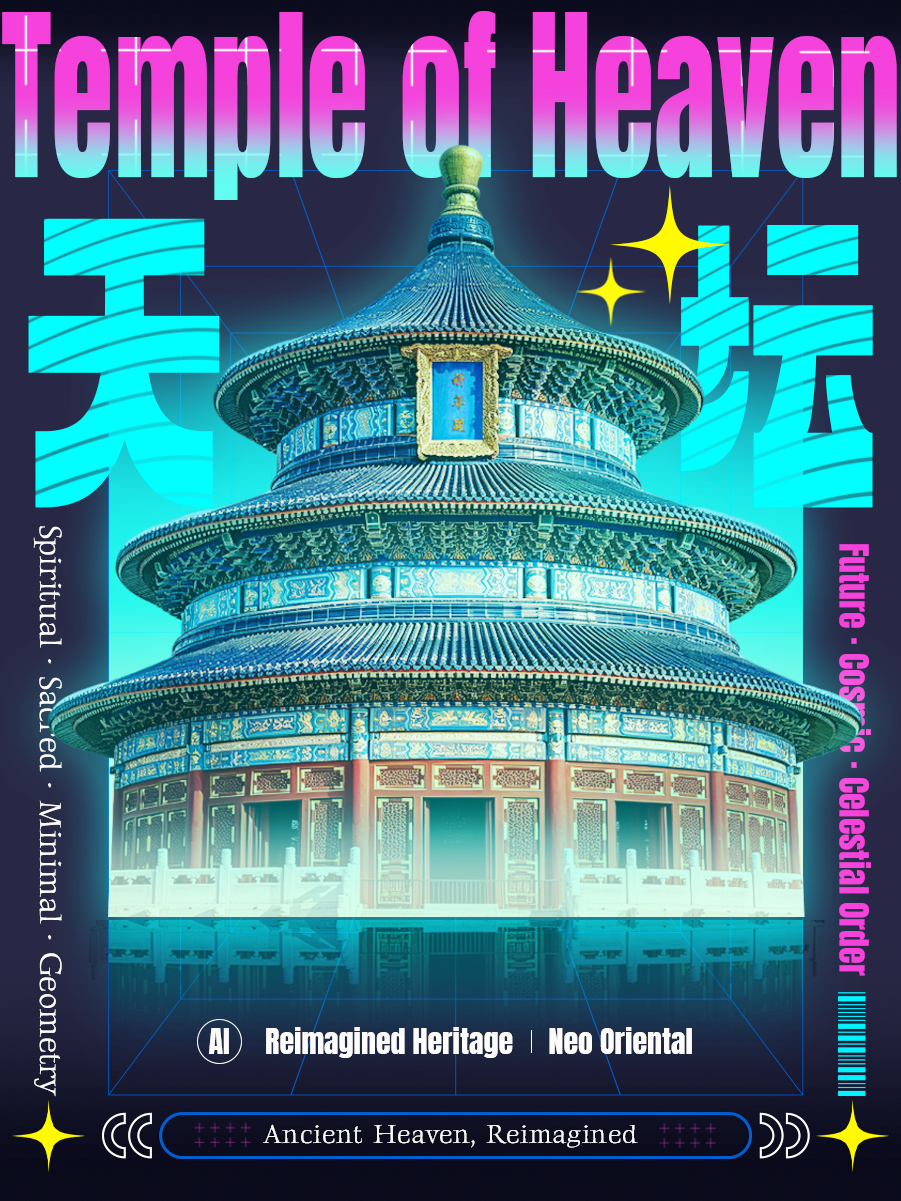

Why is the Temple of Heaven a key stop for global leaders? Explore the history, cultural symbolism and diplomatic significance of this iconic UNESCO World Heritage Site.
As US President Donald Trump visits China this week, one stop on the diplomatic itinerary has once again drawn global attention: Beijing’s Temple of Heaven. Located in Beijing, the Temple of Heaven is a UNESCO World Heritage Site with a history of over 600 years. It is not only a symbol of traditional Chinese culture but also an important platform for cultural exchange between China and the world, integrating history, culture and modern life.
A Royal Sacred Site Rooted in Chinese Cosmology
As US President Donald Trump is on a state visit to China, a special visit to the Temple of Heaven was arranged as part of the itinerary on May 14th. This arrangement continued the tradition of incorporating traditional culture into diplomatic events.
During the visit, Trump paused in front of the Temple of Heaven’s iconic Hall of Prayer for Good Harvests to pose for photographs. “Great place, incredible,” Trump said. “China’s beautiful.”
First built in 1420 during the Ming Dynasty, the Temple of Heaven has a history of over 600 years. It is a national key cultural relic protection unit and a UNESCO World Heritage Site. In ancient times, it was an exclusive royal venue for emperors to worship heaven. Every year, emperors would hold grand ceremonial rites here to pray for good harvests and national peace.
The Temple of Heaven is also regarded as a masterpiece of ancient Chinese architecture. Its core structures include the Hall of Prayer for Good Harvests, the Circular Mound Altar, and the Imperial Vault of Heaven. Among them, the Hall of Prayer for Good Harvests, with its iconic blue-glazed tiled roof, is the most recognisable structure and a must-visit attraction for many foreign tourists visiting Beijing.
More than a royal ritual site, the Temple of Heaven reflects how ancient Chinese civilisation understood the relationship between humanity, nature and the cosmos. The architectural design of the hall perfectly embodies the ancient Chinese cosmological concept of “Heaven is round, Earth is square,” reflecting the traditional philosophy of the “unity of Heaven and humanity.”
A Cultural Landmark Welcoming the World
The Temple of Heaven has long been an important venue for receiving foreign leaders, witnessing numerous Sino-foreign cultural exchanges.
In 1971, before the normalisation of China–US relations, Kissinger’s secret visit to China helped pave the way for diplomatic rapprochement between the two countries, and the Temple of Heaven was one of the sites specially arranged on his itinerary. Over the following decades, Kissinger visited the Temple of Heaven fifteen times throughout his life, showing a deep affection for this historic place where ancient architecture and centuries-old trees coexist harmoniously.
In 1973, Pompidou, the first Western leader to visit China after the normalisation of Sino-French relations, visited the Temple of Heaven, marking an important moment in cultural exchanges between China and France.
In 1986, Queen Elizabeth II of the United Kingdom visited the Temple of Heaven during her China trip and highly praised its architectural art. As the first reigning British monarch to visit China, Queen Elizabeth II’s visit carried important cultural and diplomatic significance.
According to reception staff, the Queen lingered after visiting the Hall of Prayer for Good Harvests and even turned back for another glance. She reportedly described it as a “beautiful, great, round hall,” expressing genuine admiration for traditional Chinese architecture.
In addition, leaders such as Gerald Ford, Angela Merkel, George W. Bush, and Vladimir Putin have all visited the Temple of Heaven, making it an important platform for Sino-foreign diplomatic exchanges.
A Living Heritage Site in Modern China
Today, the Temple of Heaven is no longer an exclusive royal venue but an open public space. Every morning, many residents come here to exercise, practise tai chi, sing, dance and socialise, making the site an active part of everyday life in Beijing.
Meanwhile, the Temple of Heaven is embracing modern technology. Through technologies such as 3D scanning and digital modelling, comprehensive digital archives have been established to enable the precise preservation of its architectural heritage.
In addition, the Temple of Heaven hosts regular flower exhibitions featuring chrysanthemums, Chinese roses and bougainvillaeas all year round, alongside cultural lectures and themed displays to enrich visitors’ experiences.
Today, young Chinese people are discovering the charm of the Temple of Heaven in trendy new ways. Earlier this year, the “lying-down check-in” trend went viral on social media. Tourists casually lie on the stone pavement in front of the Hall of Prayer for Good Harvests to take photos, with strangers often joining in spontaneously.
The playful trend blended contemporary social media culture with one of China’s oldest imperial landmarks, giving the centuries-old heritage site a fresh presence among younger generations.
The Temple of Heaven, which has gone through 600 years of change, perfectly integrates traditional culture with modern life, continuing to showcase the enduring vitality of Chinese civilisation.
Written by Sha Liu, charts created by Di Wang.
If you liked this article, why not read: Photo Essay: Celebrating Mid-Autumn Festival Across China


