
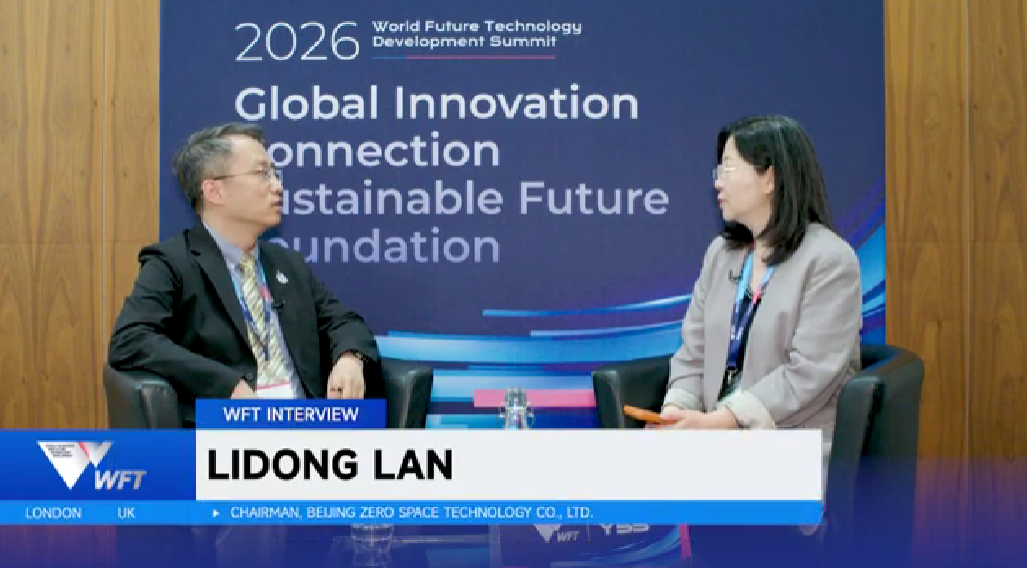

At the World Future Technology Development Summit held in London in June 2026, Dr. Lan Lidong, founder and chairman of ZeroG Lab, delivered a speech comparing the development model of China’s commercial space industry to “Chinese kung fu”. He noted that China’s commercial space sector has already formed a complete industrial chain comprising more than 3,000 companies, making it the second-largest space industry ecosystem in the world.
Lan argued that the greatest risk in today’s technology sector is not the prospect of “artificial intelligence running out of control,” but rather the extreme concentration of technological resources. He described this phenomenon as “tech feudalism”—a system in which a small number of technology conglomerates control data, computing power, and traffic gateways, leaving ordinary people seemingly free while in reality dependent on specific platforms and systems.
Regarding space resources, he stated unequivocally that “outer space belongs to all humanity and should not become the private estate of a handful of corporations”. He warned that if orbital resources were monopolized, the resulting dominance could surpass the monopolies seen among today’s internet platforms. As he put it: “There cannot be only one Musk in the world.”
Lan believes that China’s commercial space industry is transitioning from a stage of “competing through courage” to one of “competing through capability.” In his view, independent innovation and international cooperation are not contradictory: core technologies must remain under one’s own control, while the broader industrial ecosystem should be built with the participation of global partners.
He concluded with a fundamental question for the future of technological development: the key issue is not what technology can achieve, but whom those capabilities will ultimately serve.


