
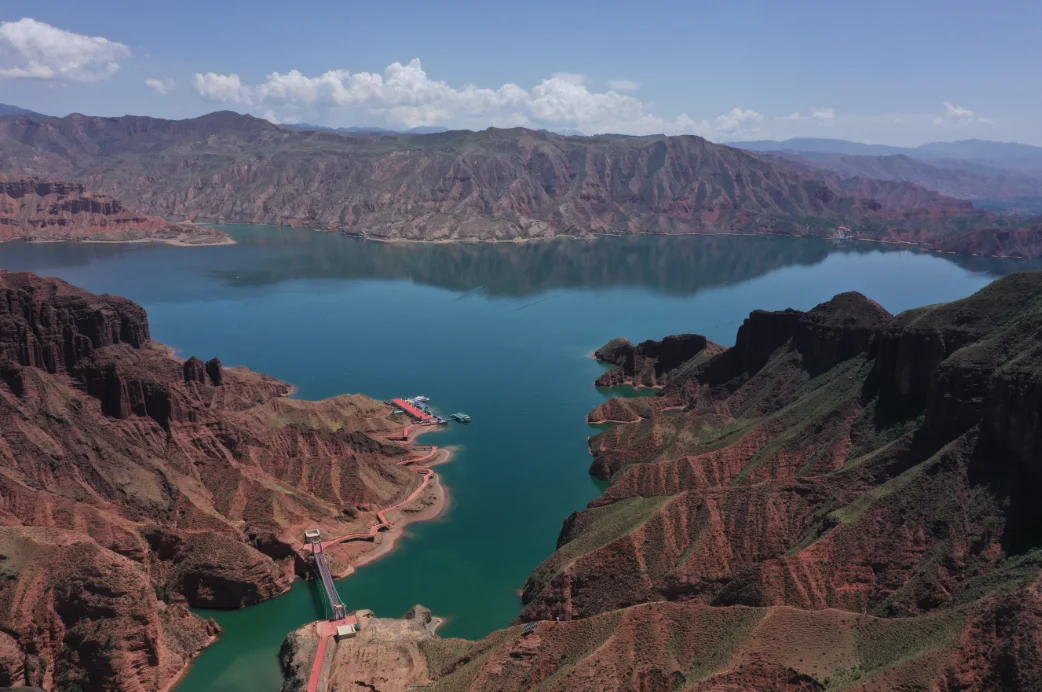

Qinghai’s Kanbula Global Geopark officially opened to the public, offering great choices for sightseeing, geological study and folk experience.
The Qinghai branch of the 2026 China Tourism Day and the “Clear Yellow River” tourism activities kicked off at Kanbula Global Geopark in Jianzha County, Huangnan Tibetan Autonomous Prefecture, Qinghai, on May 19th.
On the same day, the Kanbula officially opened to the public. This park was awarded the UNESCO Global Geopark on April 11, 2025, becoming the second geopark in Qinghai of its kind after Kunlun Mountain Global Geopark.
Covering an area of 3149.34 square kilometres, Kanbula lies on the northeastern edge of the Qinghai-Tibet Plateau and the terrain transition zone of China. It preserves complete rock formations of three major geological periods and records of ancient volcanic activities. The rock sections along the Longwu River are regarded as vital geological materials for global geological research.
The park perfectly integrates Regong art and Qiang-Tibetan folk customs. It adopts an integrated protection mode for geology, ecology and local culture. As a rare comprehensive geopark worldwide, it supports professional geological research, cultural experience and plateau ecological protection.
The scenic area began trial operation on May 1 this year. This once research-only hidden land is now open to ordinary tourists for the first time.
Over the past year, the park has only improved infrastructure such as walking paths, viewing platforms and service centres. It well keeps original natural landscapes with little human damage.
Crystal Yellow River, red Danxia hills, forests and Tibetan villages coexist beautifully here. It caters to sightseeing, geological study and folk custom experience with the authentic plateau scenery.
Written by Sha Liu, additional reporting by CNS.
If you liked this article, why not read: Tibetan Antelope Migration Begins as Population Rises in Qinghai


