
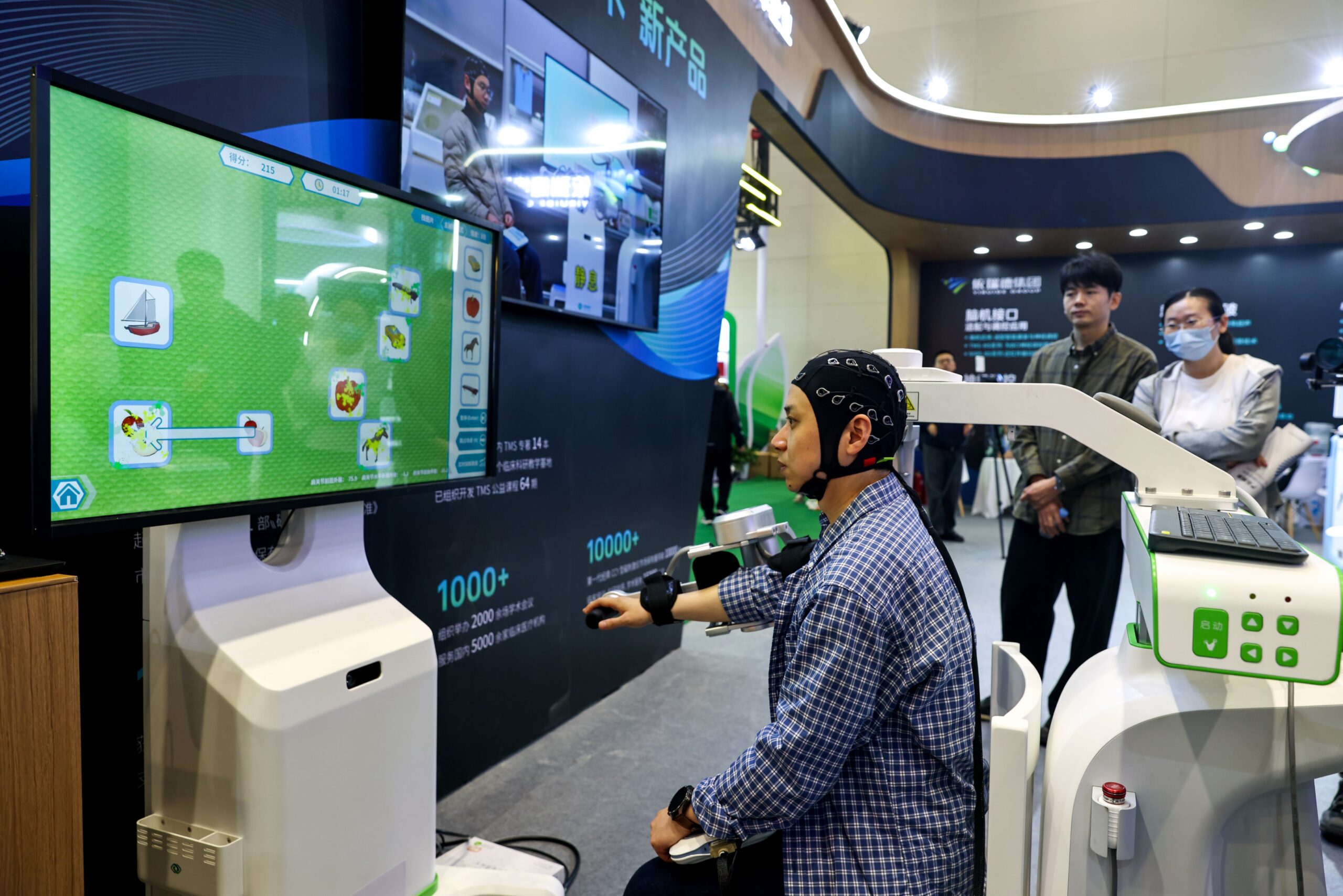

China launched its first multi-centre clinical trial of a 128-channel fully implantable brain-computer interface system for patients with spinal cord injuries.
China launched its first multi-centre clinical trial of a 128-channel fully implantable brain-computer interface (BCI) system on May 18th, marking a new step in the clinical application of domestically developed invasive BCI technology.
The invasive BCI system used in the study includes two main components: an intracortical flexible electrode array and a highly integrated, fully implantable neural signal acquisition device.
Researchers said the flexible electrodes use ultra-thin biocompatible materials that help reduce immune responses after implantation. The electrodes can also record single-neuron action potentials with high spatiotemporal resolution. This allows the system to decode fine neural signals in real time with high precision and improve the information transfer rate for human-machine interaction.
The fully implantable signal acquisition device uses a wireless design. It includes a medical-grade rechargeable battery and supports wireless charging. The device can collect and transmit high-channel-count neural signals without external wired connections.
The clinical trial plans to enrol 32 patients with quadriplegia caused by spinal cord injuries. So far, 11 medical institutions have joined the study. Researchers expect to complete patient enrolment within six months.
After surgery, patients will first undergo about one month of recovery and neural adaptation. The system activation time will vary depending on each patient’s condition. After activation, patients will receive around two months of training to optimise neural decoding performance.
According to the research team, patients are expected to first achieve brain-controlled cursor operation. With the support of rehabilitation training devices, they may then begin assisted hand movement training.
Researchers will also conduct a 180-day postoperative observation period. The evaluation will cover electrode performance, impedance changes, neurological recovery and psychological indicators. The team aims to verify the safety and effectiveness of the 128-channel system through the trial.
Additional reporting by HKCNA, CCTV.
If you liked this article, why not read: China Pushes Ahead in Brain-Computer Interface Technology


