
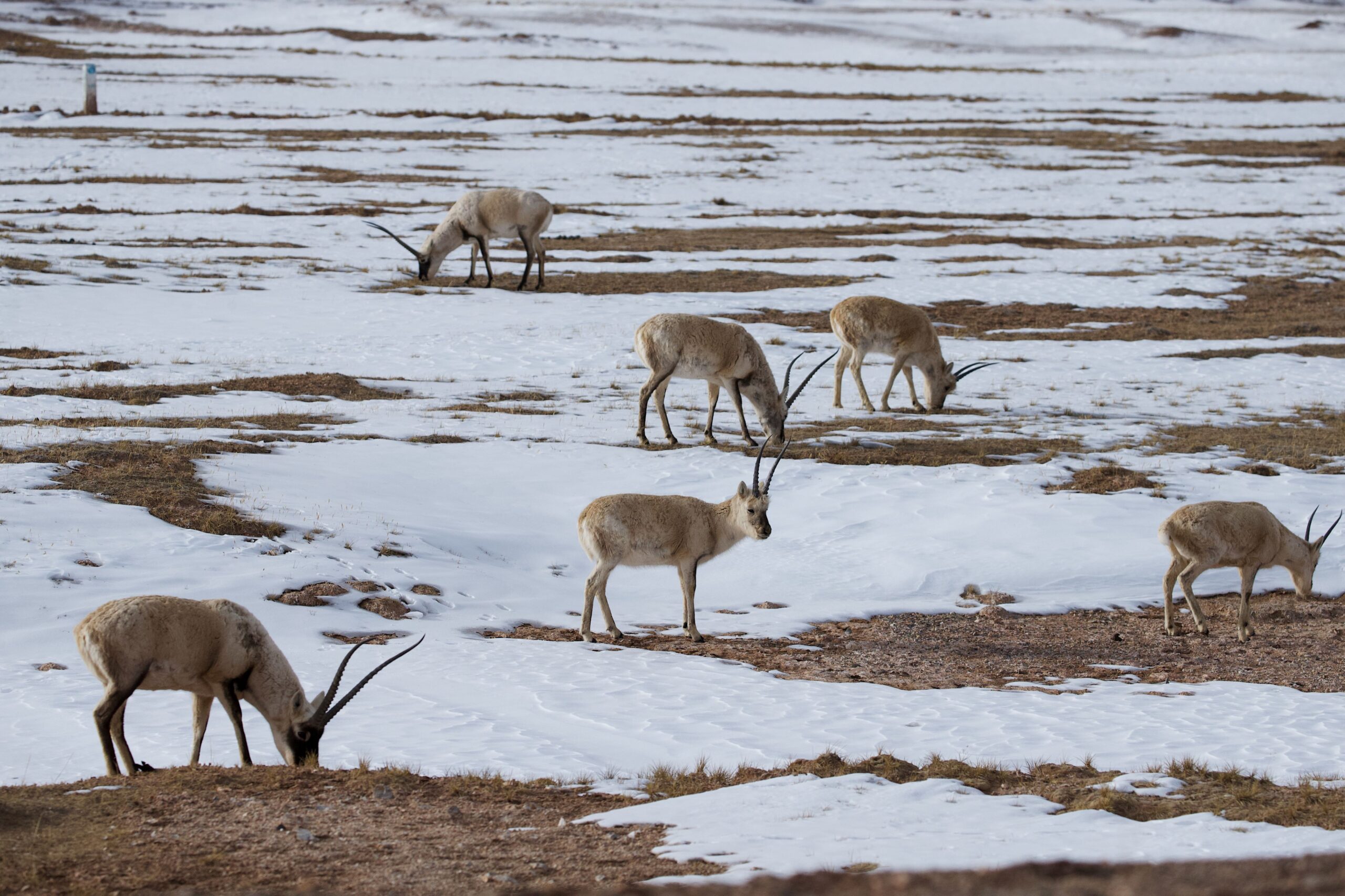

Tibetan antelopes have begun their annual migration across Qinghai’s Hoh Xil in China, as conservation efforts have supported a population recovery to 70,000 antelopes.
On May 7th, the first group of 158 Tibetan antelopes began their annual migration across Hoh Xil in the Sanjiangyuan National Park. Despite snow and strong winds, the herd moved steadily across the Qinghai-Tibet Plateau, according to CNS.
Compared with last year, the number of antelopes in the first migrating group increased by nearly 100 individuals. This rise points to a continued recovery of the species in the wild.
Every May, female Tibetan antelopes travel from regions including Sanjiangyuan in Qinghai, the Changtang area in Tibet, and the Altun Mountains in Xinjiang. They gather and move toward Zhuonai Lake in Hoh Xil, a key calving ground in Qinghai’s Yushu Tibetan Autonomous Prefecture.
After giving birth in July or August, the animals return to their original habitats with their newborn calves.
Today, more than 70,000 Tibetan antelopes live in Hoh Xil. As a result, their migration has become one of the most remarkable large-scale ungulate migrations in the world.
Meanwhile, local authorities have strengthened protection along the migration route. At the Shensongdang Ecological Police Station in the Kekexili area, officers increased patrols along the Qinghai-Tibet Highway (G109). They also maintain 24-hour monitoring to manage traffic and reduce disturbances.
In addition, police guide vehicles passing through the area and promote awareness of wildlife protection. These efforts help ensure that human activity does not interrupt the migration.
As the migration season continues, conservation teams expect more herds to arrive in the coming weeks.
If you liked this article, why not read: Meet the Robot That Runs With Tibetan Antelopes


