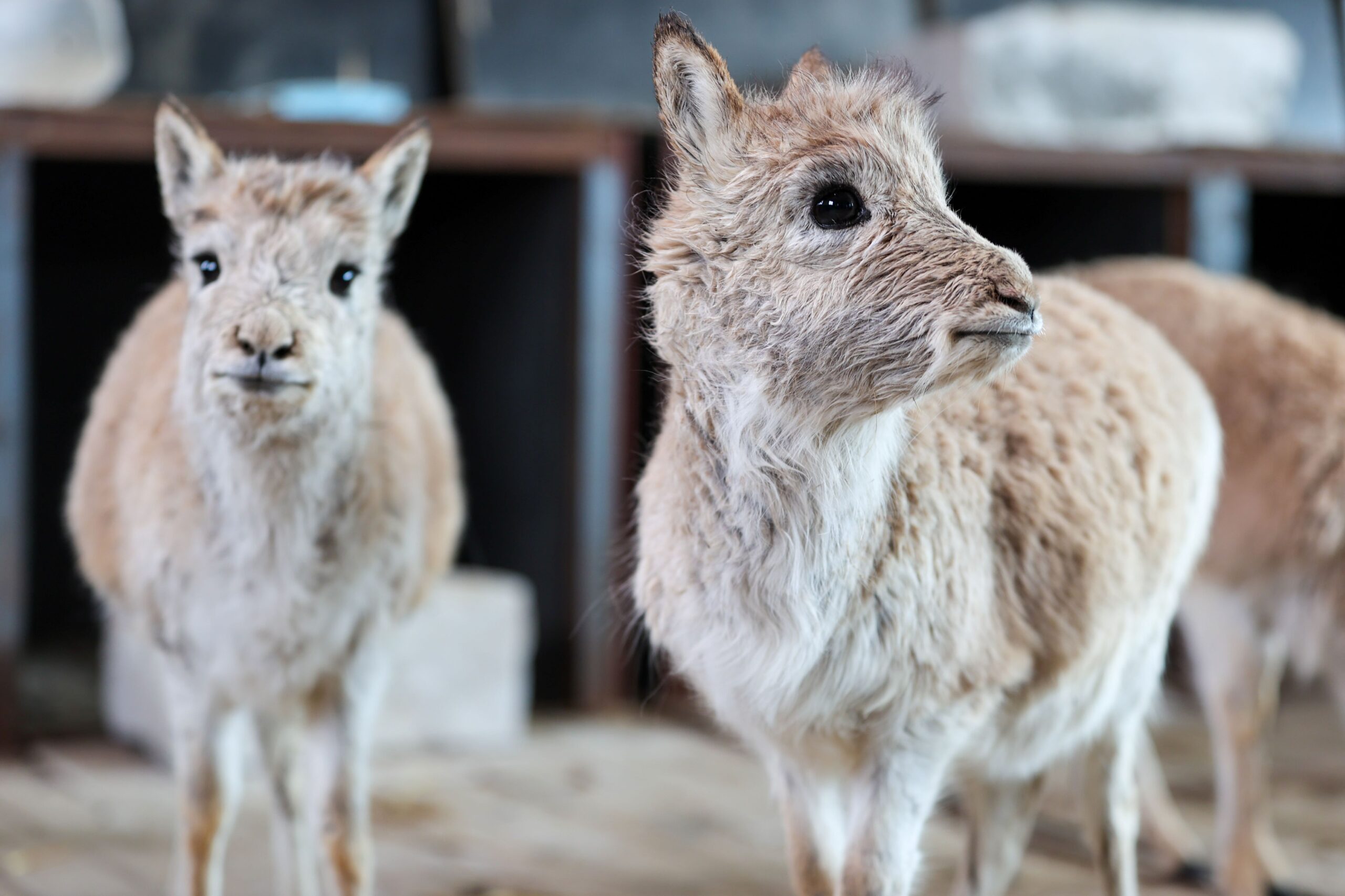

A robot disguised as a Tibetan antelope roams Hoh Xil, China, capturing close-up footage of wildlife without disturbing the herd.
On August 11, the world’s first “robot Tibetan antelope” appeared at Zhuonai Lake in Hoh Xil, Qinghai Province, China. The project represents a novel approach to close-range wildlife observation that minimises disturbance to the animals. It could help protect both Hoh Xil, known as a “no man’s land,” and its iconic species, the Tibetan antelope.

High-Tech Guardian on the Plateau
The robot was built in two parts. The lifelike shell was designed by a creative team led by Liu Yuli. Inside is an X30 quadruped robot developed by DeepRobotics. The X30 can walk across snow, swamps, deserts, and rivers, and is often used in rescue or patrol work in extreme environments. Experts say using robotics and AI in conservation can bring “technological power” to Hoh Xil and offer new tools for global ecological protection.
Hoh Xil is located in the heart of the Qinghai-Tibet Plateau, at an altitude of nearly 5,000 meters. The area is cold, oxygen-poor, and largely untouched by humans. It is home to many rare species, earning it the nickname “Kingdom of Wildlife.” Every summer, tens of thousands of female Tibetan antelopes migrate to Zhuonai Lake and other remote spots to give birth. As a flagship species, the antelope is an important indicator of the plateau’s ecological health.

Closer, Without Disturbance
In addition, the “robot antelope” is highly realistic in appearance. Engineers placed a small camera below its eyes. When the robot slowly approaches a herd, it can record high-quality images and video from a distance of up to 2 kilometres, without disturbing the animals. This breaks the limits of traditional observation, which often requires researchers to keep a long distance or risk disturbing the animals.
According to Liu, the design will allow scientists to study antelope behaviour in more detail and over longer periods. If successful, conservationists could deploy the technology in other wildlife habitats, turning robotic “animals” into new guardians of fragile ecosystems.
Additional reporting by HKCNA.
If you liked this article, why not read: Wild Asian Elephants in Yunnan Pass 300 as Numbers Keep Rising