

Discover how injured wildlife in China is rescued, treated, and released back into the wild through improved care, new technology, and coordinated conservation efforts.
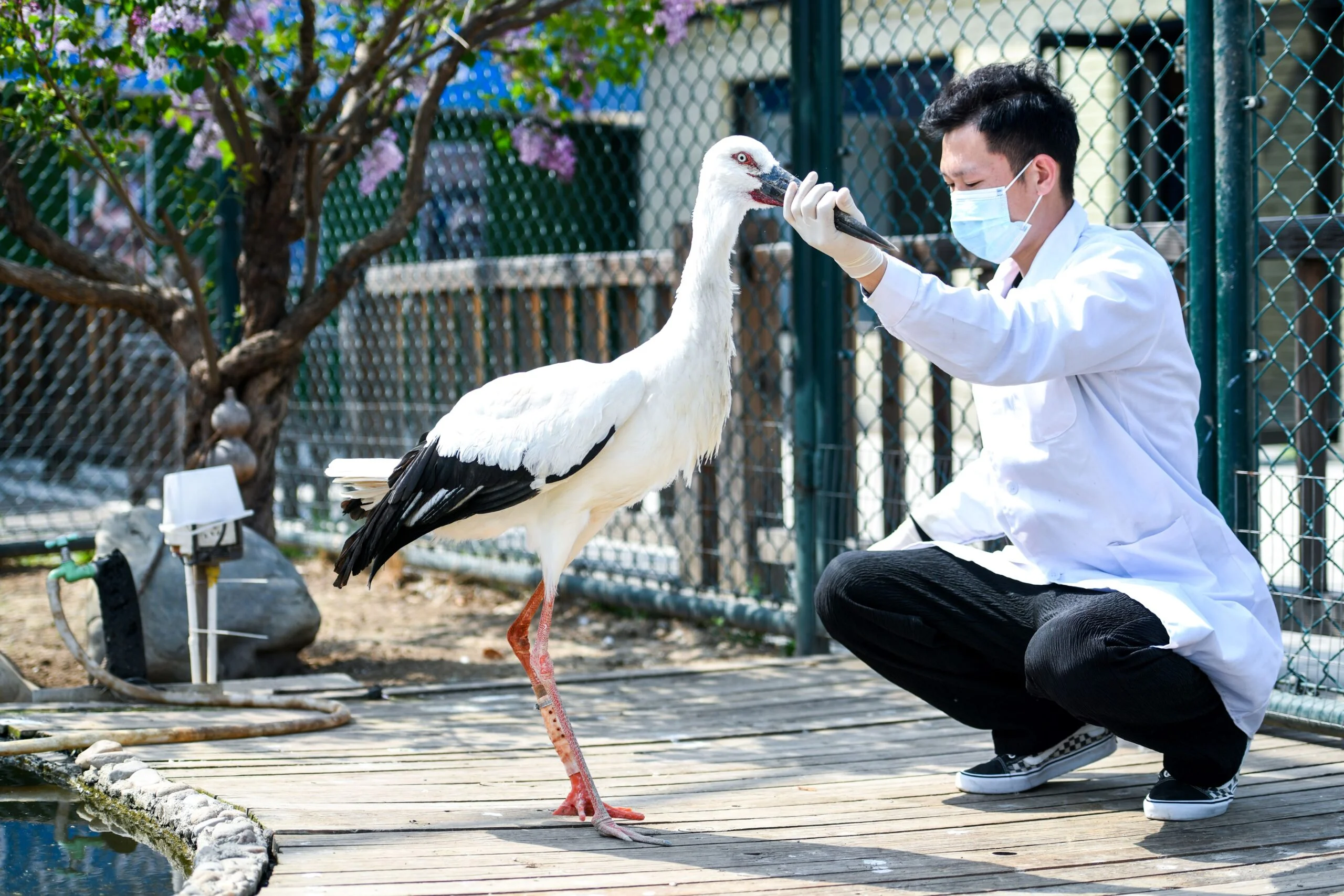
A wounded oriental stork stands still for a moment, then takes a few steady steps. A mechanical limb supports its body. Not long ago, it could not even stand.
Scenes like this are becoming more common. Across China, wildlife rescue is changing. The goal is no longer just survival. It is recovery—and, when possible, a return to the wild.

Better Tools, More Precise Care
At a rescue centre in Tianjin, staff fitted the stork with a new prosthetic limb after part of its leg was removed. Earlier designs only helped the bird stand. They did not hold up in water or during landing.
The new version works differently. It uses resin and silicone. A small shock absorber reduces impact when the bird lands. The team designed it after studying how the stork walks and takes off. The fit is specific to this bird.
The fitting process also changed. Staff covered the bird’s eyes to keep it calm. They avoided anaesthesia and guided it through the process step by step.
Now the stork is in training. It can walk, move faster, and forage in shallow water. If it adapts well, it may return to the wild with a tracking device.
Other species show similar progress. In Qinghai, rescued snow leopards have received MRI scans and eye surgery. Some have been released with satellite collars. The devices send back data on movement and habitat use.
Rescue work now overlaps with research. Each case adds information that can guide future efforts.

From Individual Cases to a Working System
Rescue no longer happens in isolation. It is part of a broader network.
China has built hundreds of rescue institutions. Many follow a similar process: intake, medical care, recovery, behaviour training, and release. The last step depends on more than health. Habitat, food supply, and local populations all matter.
In Beijing, 16 rehabilitated animals were released into a nature reserve this spring. The group included small carnivores and birds of prey. Staff chose the site because the species already live there. Spring offers better food, which improves survival.
Training before release has become standard in some places. Animals relearn how to hunt or avoid danger. Some are monitored after release. Tracking devices help teams follow their movements and adjust methods.
Field stations also play a role. In mountainous areas, rescue sites sit close to natural habitats. Animals recover in conditions that resemble the wild. This shortens the transition back.

Rescue Work Meets Real-World Pressures
Many injuries still come from human activity. Some birds collide with wind turbines. Others lose feeding grounds when water levels change. Nets set up near airports can trap passing birds.
These cases require coordination. Local agencies, airports, and volunteer groups now work together in some cities. They collect injured animals, provide care, and release them when possible.
Public involvement is growing. In Shenyang, a small shelter helps injured migratory birds through the winter. Heated water, simple enclosures, and steady care keep them alive until spring. Some birds recover and leave. Others stay because they cannot survive on their own.
Volunteers run much of this work. Some joined out of interest and stayed. Over time, they learned how to treat wounds and handle fractures. Their network has expanded, and so has public awareness. Illegal trapping, once common, is now more often reported.
The aim remains clear. Rescue teams want animals to return to the wild. Not all can. But when one does, the process comes full circle.
Additional reporting by CNS, China Commet, Beijing Daily.
If you liked this article, why not read: China’s “King of the Snow Mountains” Returns to the Spotlight


