
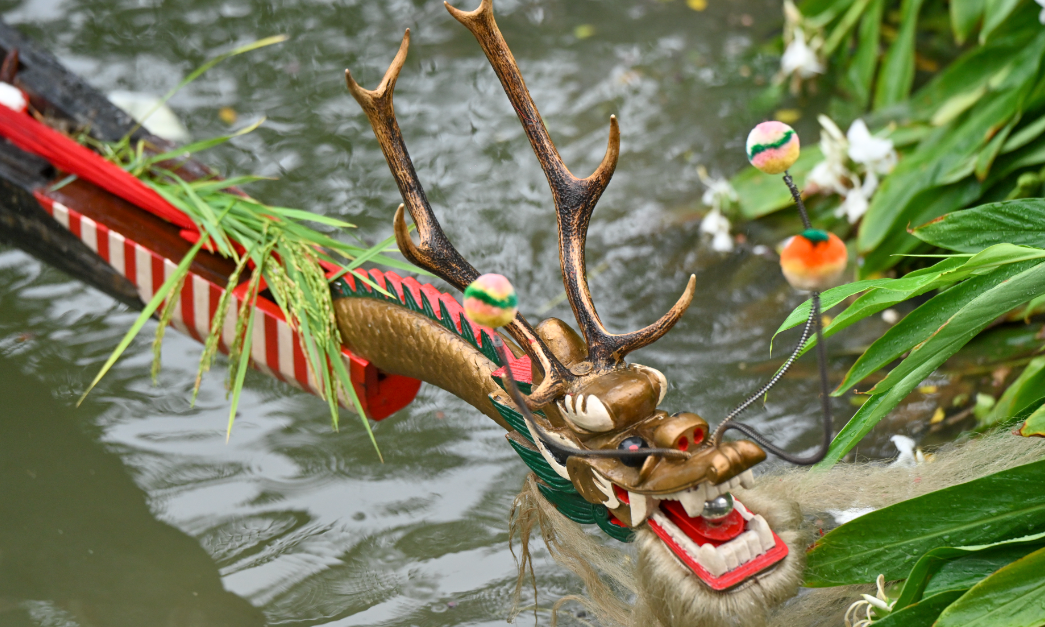

The 594-year-old Yanbu Old Dragon has returned to the water, showcasing a centuries-old preservation tradition and rich cultural heritage.
On June 15th, ahead of the Dragon Boat Festival, China’s oldest surviving dragon boat — the Yanbu Old Dragon — held its traditional “Cai Qing” (traditional dragon boat blessing ritual) ceremony at its preservation base in Yanbu, Foshan, Guangdong Province.
Dating back to the Ming Dynasty, the 594-year-old Yanbu Old Dragon is built with Kapur wood. It measures 36.8 meters in length (excluding the dragon’s head and tail), has 68 seats and weighs around four tons.
The customs associated with the Yanbu Old Dragon were included in the fourth batch of Guangdong Province’s representative list of intangible cultural heritage in 2012. The following year, it was selected as a preservation and promotion project for China’s sports-related intangible cultural heritage.

What Keeps This Old Dragon Boat Intact?
Kapur wood is known for its exceptional resistance to decay and insects. Southern China’s warm, humid climate would normally cause wooden boats stored on land to rot or warp over time. Submerging the dragon boat underwater and burying it in mud isolates it from air, significantly slowing deterioration and ageing.
The secret to the boat’s remarkable longevity lies in both its construction material and preservation method. Kapur wood is dense, durable, and highly resistant to rot, insects, and termites. While it tolerates water and moisture well, prolonged exposure to sunlight can cause cracking. As a result, local people developed the practice of storing the dragon boat beneath the muddy bottom of ponds and waterways.
Constant immersion in muddy water further strengthens the wood. Before the Dragon Boat Festival, villagers raise the boat from the water and repeatedly coat the hull with lard. This not only helps the boat glide more smoothly during races but also protects the wood.
After the festival and dragon boat parades conclude, the Yanbu Old Dragon will be submerged back into silt to rest until the next year.
Can This Ancient Dragon Boat Still Compete?
According to Shao Juxi, a provincial-level inheritor of the Yanbu Old Dragon traditions, the annual “raising the dragon” ceremony marks the official beginning of the Dragon Boat Festival racing season. However, because of the boat’s cultural significance and heritage value, it no longer participates in competitive races. Instead, it appears only in ceremonial parades and exhibition performances.
The “raising the dragon” ceremony is not unique to Foshan. In Pantang Village, Liwan District of Guangzhou, seven dragon boats lie “sleeping” beneath the water. The oldest among them is the Pantang Old Dragon, which has a history of more than 400 years.
There is also a long-standing tradition known as “Dragon Boat Family Visits” between Yanbu and Pantang. Under this custom, the dragon boat communities of the two places visit one another during the Dragon Boat Festival. This friendship, forged through dragon boat culture, has endured for more than 400 years.
Today, the Yanbu Old Dragon has become an important cultural symbol and tourism attraction. Local authorities are leveraging the Yanbu Old Dragon cultural brand to revitalise historic streets, granaries, and other heritage sites, creating new consumer experiences and promoting cultural tourism and economic development.
Written by Sha Liu, additional reporting by CNS and CCTV News.
If you liked this article, why not read: Dragon Boat Festival and Children’s Day Spark Tourism Surge


