
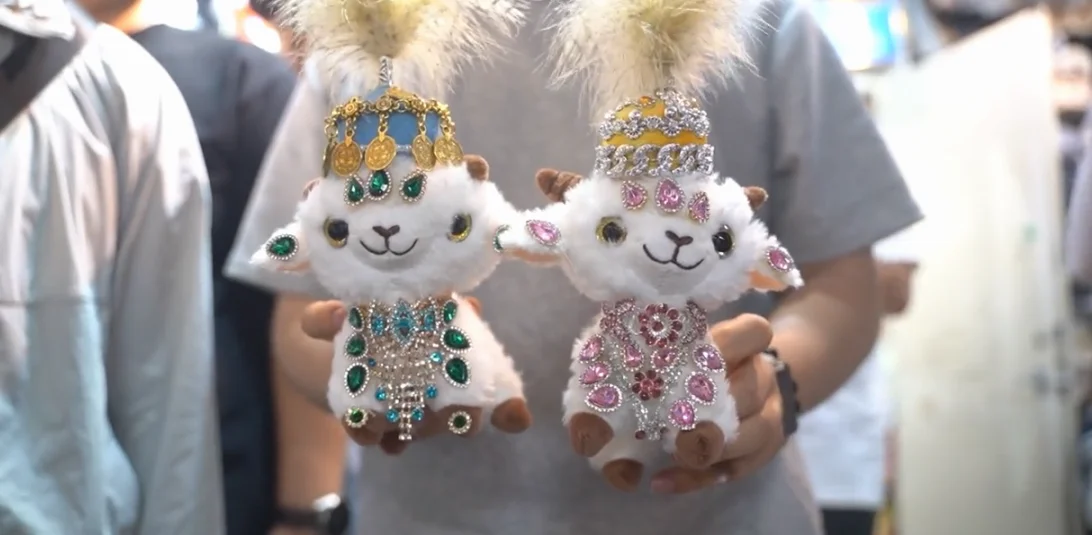

Nicknamed the “Xinjiang Labubu,” these handmade lamb dolls have become one of China’s hottest toy trends.
Labubu has become a global toy sensation, inspiring devoted fans and long queues around the world. In northwest China’s Xinjiang, a locally made plush toy is now drawing similar attention.
Nicknamed the “Xinjiang Labubu,” these handmade lamb dolls have recently become a viral hit across China, attracting visitors from far and wide eager to take one home.
What Are the “Xinjiang Labubu” Lamb Dolls?
The dolls, known locally as “Xinjiang Labubu,” have emerged as one of the year’s most unexpected toy trends.
Featuring large round eyes and soft curly fleece, the lamb dolls are dressed in traditional Atlas silk outfits and wear small hats decorated with colourful feathers and ornamental gems. Shimmering accessories on their chests add to their distinctive look.
At Jinquan Shopping Mall in Urumqi, the stall run by Abdul Amira attracts crowds of customers every day. Many visitors queue for hours to purchase the handmade dolls, while some tourists have reportedly waited as long as two days to secure one.
Part of the appeal lies in the dolls’ customisation options. Customers can choose different hats, accessories and decorative elements, ensuring that every doll is unique.
The stall owner’s friendly personality and sense of humour have also helped fuel the dolls’ popularity.
“I start making the sheep at ten o’clock every day. As soon as I get up and wash my face, I head straight to the stall to work,” Abdul Amira said. “Before the May Day holiday, I accepted online orders after work, but now I’m too busy and have had to stop. I’m delighted to see tourists from all over the country coming to buy my dolls.”

Why Are They So Popular?
People from across China are travelling to Xinjiang to purchase the dolls. Urumqi resident Ms Ma recently ordered a custom wedding-themed lamb doll as a gift for her daughter’s classmate, who is about to get married.
Meanwhile, Mr Liu, who was visiting Urumqi from northeast China on business, bought four dolls at once to take home for relatives and friends.
Visitors like Mr Liu help introduce the dolls to new audiences beyond Xinjiang, expanding their popularity nationwide.
For many locals, the dolls are more than ordinary souvenirs. Their design blends Xinjiang’s cultural traditions with contemporary aesthetics, making them a popular choice for gifts and keepsakes. “Tourism in Xinjiang gets better every year. Visitors come from far away and take our local specialities back home, which helps boost the local economy,” Ms Ma said.
More than just plush toys, the “Xinjiang Labubu” lamb dolls have become a cultural symbol. By combining local craftsmanship, ethnic-inspired design and modern consumer trends, they offer a creative new way for visitors to connect with Xinjiang’s culture.
Written by Sha Liu, additional reporting by CNS and CNR Online.
If you liked this article, why not read: Ancient Chinese Zodiac Figurines Reimagined in the Digital Age


