
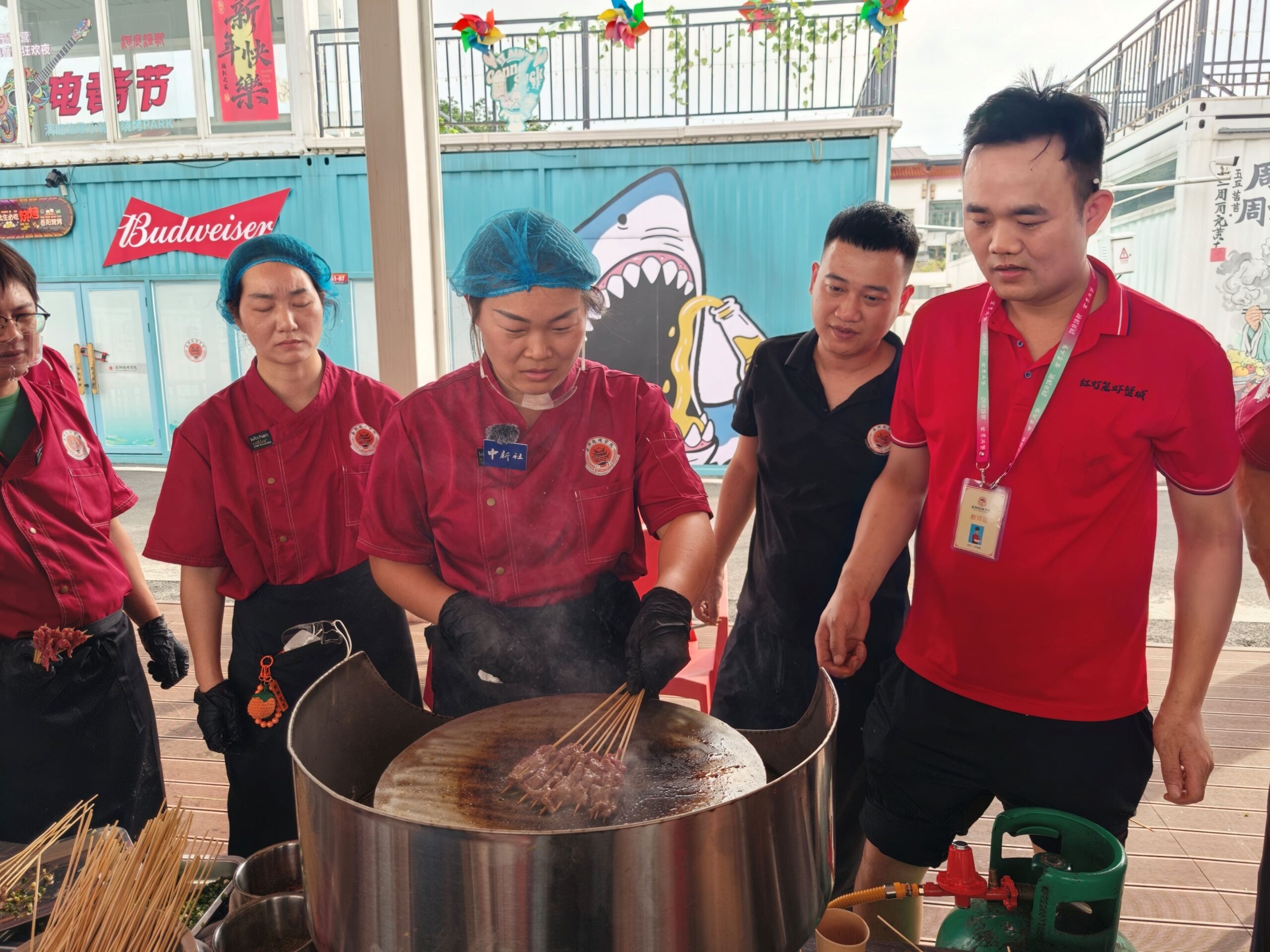

China’s regional food industries are entering vocational education classrooms, linking training with local businesses and workforce needs.
When people think of vocational education, food specialities are not usually the first thing that comes to mind. In China, however, a growing number of schools are building programmes around regional culinary industries, turning local delicacies into subjects of professional training.
One example comes from Yueyang, a city in central China’s Hunan Province known for its barbecue culture. Local vocational programmes now offer training in barbecue cooking, covering not only grilling techniques but also food safety, business operations and industry compliance standards.
The initiative reflects a broader trend in China, where vocational institutions are increasingly aligning their programmes with local industries and labour market needs.

Linking Education with Local Industries
Yueyang is not the only city taking this approach.
In south China’s Guangxi Zhuang Autonomous Region, the Liuzhou Vocational & Technical College has developed a flavour wheel for luosifen, or river snail rice noodles. Using professional terminology and scientific classification systems, the tool helps describe and standardise flavour characteristics that were once largely based on personal perception.
Meanwhile, in Qianjiang, Hubei Province, a college focused on the crayfish industry has established technical standards covering the entire supply chain, from farming and processing to cooking.
These programmes are built around industries that have grown far beyond their local origins. Regional specialities such as barbecue, crayfish and river snail rice noodles now support extensive business networks involving agriculture, food processing, catering, logistics and tourism-related services.
As a result, vocational schools are playing a larger role in providing skilled workers and helping industries develop shared operational standards.

Drawing Interest Beyond China
The model is also attracting attention overseas.
In 2025, a vocational college in Thailand joined an industry-education alliance led by Chinese institutions, including Liuzhou Vocational & Technical College. In Thailand, research and education programmes have also collaborated with universities such as Suan Sunandha Rajabhat University in Bangkok, where scholars study consumer engagement, food branding and market strategies to help local Thai entrepreneurs introduce the spicy and aromatic noodle dish to broader markets and expand its commercial appeal.
Vocational education institutions from countries including Vietnam and Laos have also visited Liuzhou to learn from the model and explore cooperation opportunities.
According to local educators, overseas restaurant operators have begun sending employees to China for training. A barbecue restaurant owner from Vietnam has also arranged for staff to take part in related courses.
In recent years, China has encouraged closer cooperation between schools and industries as part of efforts to strengthen vocational education and practical skills training. Against this backdrop, regional food industries are finding a place in the classroom, creating new links between education, employment and local economic development.
Written by Xueying Zhang, translated by Ronnie Yu.
If you like this article, why not read: 3rd Vocational Skills Competition Showcases Skilled Workforce


