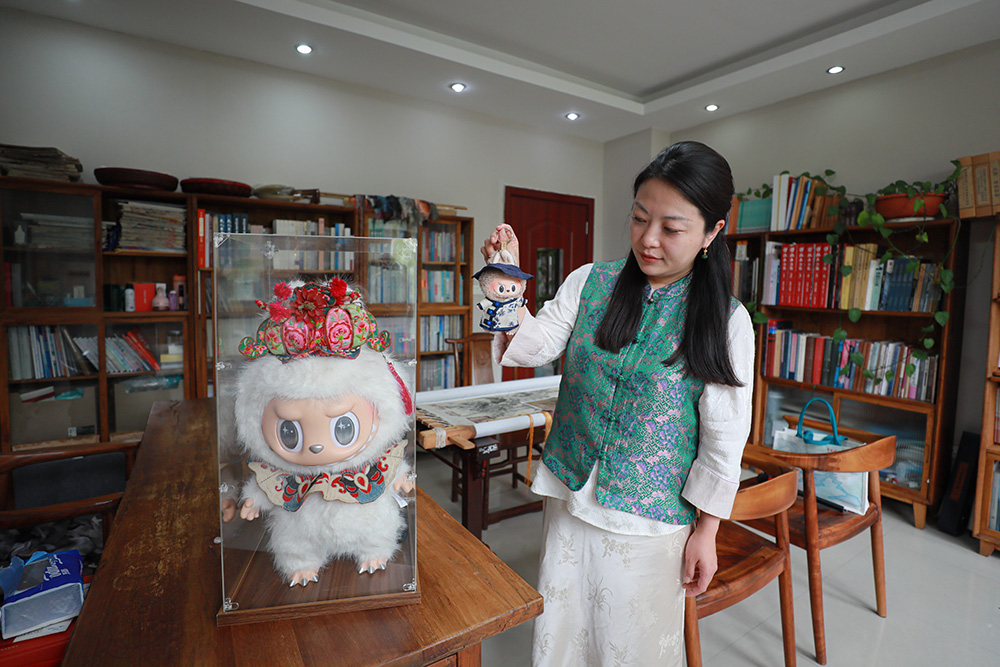

China’s doll-dress economy is booming as young adults spend on miniature fashion for Labubu and other designer toys.
Mini suits, pants, hanfu (traditional Chinese clothing), and Victorian dresses are not children’s clothes or costumes. Instead, they are “doll outfits” that young Chinese adults collect for their figurines.
Moreover, from Disney’s LinaBell to Pop Mart’s Labubu, each viral character has become a fashion phenomenon. Consequently, consumers now call this trend the “doll-dress economy.” Once a niche hobby, the trend is now booming into a new wave of youth spending.
First, Labubu is part of Pop Mart International Group’s blind-box toy lineup. Known for its surprise unboxing and quirky story, it has become a global success. In fact, fans treat these figures as companions and build wardrobes around them.
Next, a search for “Labubu doll clothes” on major e-commerce sites shows thousands of shops. Basics like plaid skirts or hoodies sell for about £1.60 to £4. Mid-tier embroidered hanfu or lined coats range from £11 to £22. Meanwhile, limited pieces or celebrity replica outfits can exceed £22. Collectors pay more for items that are rare and exclusive.
For example, Sharon Han, a 30-year-old office worker in Beijing, buys cowboy jeans for her Labubu. She said, “Dressing and caring for them gives me a sense of ownership. They even match my bags and outfits.”

Furthermore, the craze shows the power of emotional value. Doll clothes offer stress relief, spark social interaction, and provide emotional comfort. Han added that she often meets friends through the hobby.
Similarly, Fang Jiayu from Shanghai began buying doll outfits after trying them for her child. She now buys her own sets and shares photos with friends. Recently, she bought three outfits, each costing more than £12. Many stay-at-home mothers in her area are also passionate about this hobby.
Behind the craze is China’s fast and flexible supply chain. Factories now produce small batches of custom doll clothes quickly. Traditional apparel firms see this as a new growth path. On leading platforms, doll outfits range from a few pounds to over £80. Top sellers often move more than 1,000 items per month.
In manufacturing hubs like Jiangsu and Zhejiang provinces, garment makers now focus on doll clothes. Some even use silk and traditional techniques in miniature form. Thus, many companies shift from low-margin contract work to higher-margin original design.
Sales data confirm the boom. Doll-clothing sales rose by about 117% in 2024 compared with the year before. In May 2025, monthly revenue on one platform topped £880,000.
In Tongxiang, Zhejiang Province, a factory said orders surged this year. Since May 2025, the facility has increased its output daily. Products now sell across China and in overseas markets.
Also, the global designer toy market has more than doubled. It grew from about £16.7 billion in 2020 to £34.4 billion in 2024. It is expected to reach around £42.8 billion in 2025. This wider growth will likely boost the doll clothing sector further.
In one extreme example, a human-sized Labubu sold at auction for over £110,000, highlighting how far the craze has stretched.
Written by Yi Shen, additional report by China Daily, and people.cn
If you like this article, why not read: IKEA China Moves Toward Small Stores Amid Market Shift