
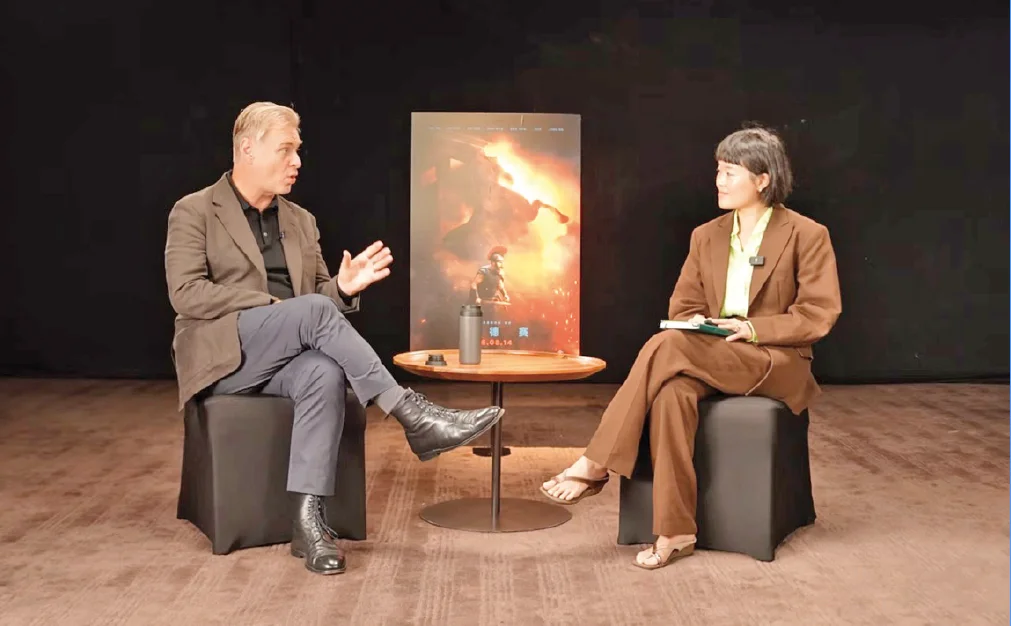

A short conversation between Chinese podcaster Zhong Shu and director Christopher Nolan about The Odyssey went viral online.
A conversation about ancient Greece, Christianity and storytelling was never expected to become an internet hit. But a 15-minute interview between Chinese podcaster Zhong Shu and filmmaker Christopher Nolan has turned into a global discussion.
The interview was recorded in Beijing after the Chinese premiere of Nolan’s latest film The Odyssey on July 30th. As part of Universal Pictures’ promotional activities during Nolan’s visit, Zhong was invited to speak with the director.

The conversation was later brought to an international audience when Canadian journalist Geoff Keighley shared the clip on X on August 1st, calling it a ‘fascinating and smart interview’.
His post quickly attracted around 18 million views, 68,000 likes and more than 7,400 reposts. It turned a relatively niche discussion about classical literature into a worldwide online debate.
Chinese Interview vs American Interview
The interview attracted attention not simply because of Nolan’s fame. It was the question Zhong asked him.
Zhong noted that the idea of atonement — central to Christian theology — has no real equivalent in ancient Greek culture or in Homer’s original Odyssey, yet features heavily in Nolan’s version. ‘Did you Christianise the Odyssey?’ she asked him directly.
Many viewers praised it as an example of a different kind of film interview — one based on research, curiosity and engagement with the ideas behind a work, rather than standard promotional questions.
As the clip spread, many users contrasted Zhong’s interview with the games and viral segments that have become common during Hollywood press tours. One widely shared post summed up the difference by pairing Zhong’s question about the theology of The Odyssey with the imagined prompt: ‘Spin the snack wheel, then read these thirst tweets calling you zaddy.’

An Accidental Invitation
In a later episode of her podcast, Zhong explained that the opportunity came from an earlier podcast episode about How to Read Homer’s Odyssey.
A Universal Pictures staff member happened to be a listener and enjoyed the episode. When the studio was arranging interviews for Nolan’s new film, Zhong was invited because of her background and interest in classical literature.
Nolan’s team had only allotted 15 minutes, but the conversation ran on well past that — helped, perhaps, by the fact that both had a genuine background in classics: Nolan read English literature at University College London, and Zhong has been studying ancient Greek since the age of fifteen.
Zhong later suggested that the short length of the interview may actually have helped it spread online, as viewers were more likely to watch the entire conversation.
Why Did It Resonate Around the World?
For Zhong, the numbers themselves were not what surprised her most. What stood out was who responded.
She said American scholars, PhD students and academics she followed began contacting her to say they had watched the interview. Several professors and public intellectuals also shared the clip or followed her account.
Similar reactions came from audiences in countries including Argentina, India and South Korea.
Zhong said this showed that online culture was surprisingly similar across countries: people often use a single event to discuss broader questions about their own societies. In this case, the interview became a way for audiences around the world to debate the state of modern media.

A Rare Chance for Nolan to Discuss Ideas
Some commentators argued that the interview stood out because it allowed Nolan to talk about subjects beyond the usual promotional material surrounding his films.
Film enthusiast Biswajit Rath said Zhong’s interview gave Nolan more room to discuss history, literature and philosophy. By contrast, Western promotional interviews often return to familiar topics such as IMAX, practical effects and production techniques.
When interviewers move beyond routine talking points, he argued, Nolan often reveals more about his ideas on storytelling and filmmaking.
For Zhong, the interview’s success wasn’t a win for one culture over another. It was a sign, she said, that audiences hungry for patient, thoughtful conversation haven’t gone away — they’ve simply been waiting, quietly, for something better than the noise.
Written by Estelle Tang.
If you liked this article, why not read: July Picks: Reading China Through Different Voices


