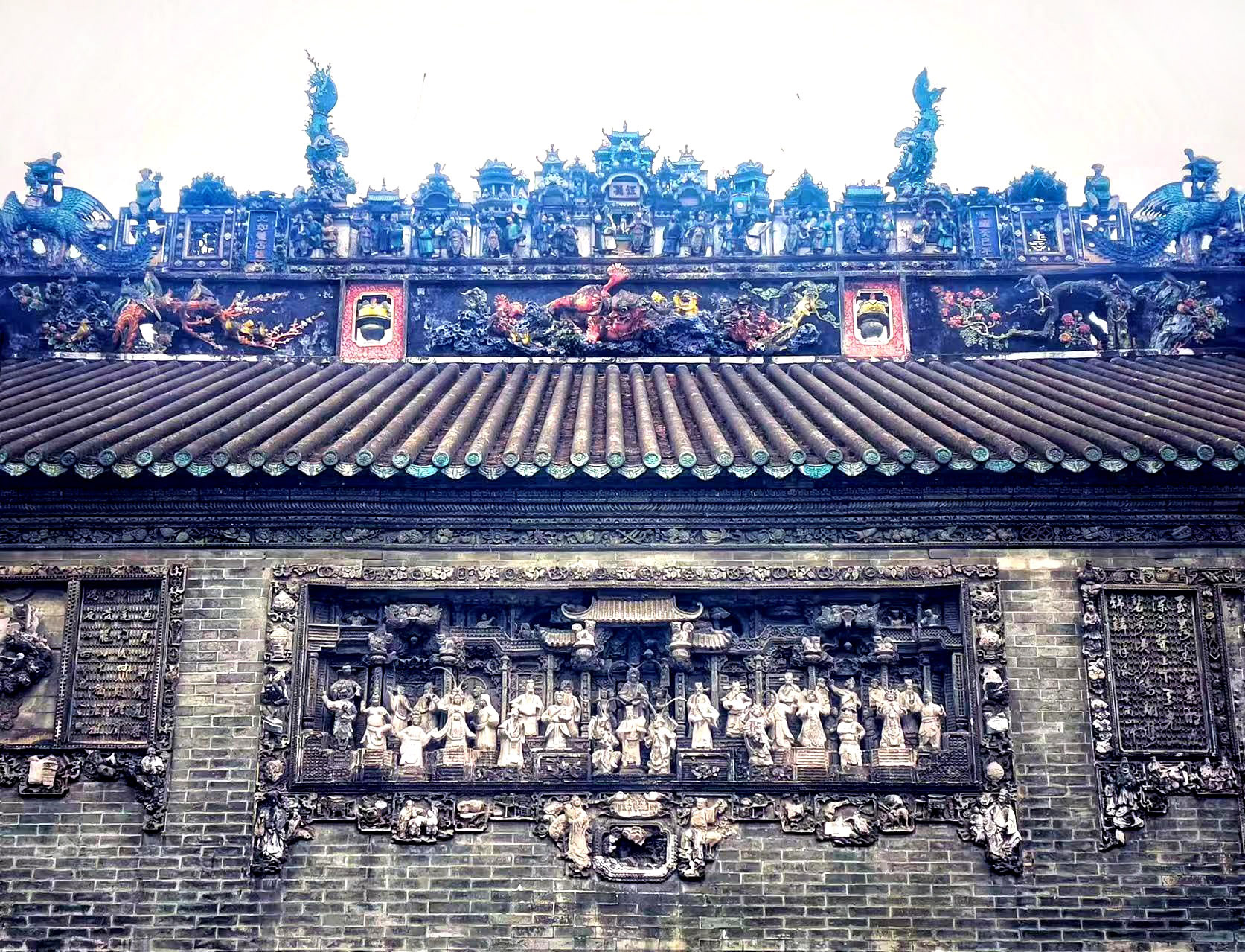

While European life often revolves around the church, many Chinese communities find their heart in the ancestral hall.
In much of Europe, the heart of a city or village is almost always the church. It is the centre of the community—the place for Sunday services, charity work, and life’s major milestones such as weddings and funerals.
In many towns and villages across China, a similar central role has traditionally been played by the ancestral hall (祠堂, cí táng). Unlike churches, which are dedicated to the worship of God, ancestral halls are places where families honour and commemorate their ancestors.
A Place for the Living and the Spirit
The ancient Chinese believed that while the body dies, the soul lives on. The body was laid to rest in a tomb, while the soul was honoured in the ancestral hall. The term 祠堂 emerged during the Han dynasty (202 BC–AD 220), when members of the aristocracy built memorial shrines near their ancestors’ tombs.
By the Song dynasty (960–1279 AD), some officials began incorporating such halls into their residential compounds, creating private family temples.
It was after the Ming dynasty (1368–1644 AD) that ancestral halls truly began to flourish. No longer the preserve of nobles and officials, ancestral halls became common as prominent clans built them in places where family members lived together.

Beyond regular ancestor worship, ancestral halls also functioned as ‘town halls’. People discussed family matters, updated family trees, and held weddings and funerals. It also served as a school for children. A stage often stood opposite the hall, where traditional operas were performed on festival days — not only for the local community, but also as a tribute to ancestors watching from above.
Different Ancestral Halls in South and North
Today, most surviving ancestral halls stand in southern China, particularly in provinces such as Zhejiang, Jiangxi, Hunan, Anhui, Guangdong, and Fujian. Such buildings are rarer in Northern China, largely due to centuries of mass migration and ethnic integration.
One notable exception is Beijing’s Imperial Ancestral Temple (太庙, Tài Miào), the ancestral hall of the imperial family, where emperors once enshrined the spirit tablets of their predecessors.

This ancient concept has been revived in modern Chinese internet culture. The phrase Accompanying the Emperors in the Taimiao (配享太庙)—originally the highest honour a monarch could bestow on a loyal official—is now a popular meme, used to lavishly praise someone for exceptional skill or a monumental contribution.
A Southern Architectural Gem
While these halls are most common in the countryside of Southern China, you can also find grand versions in big cities. The Chen Clan Ancestral Hall (陈家祠, Chén Jiā Cí) in Guangzhou is a famous example.
Completed in 1894, it was funded collectively by the Chen families from 72 different counties across Guangdong. Since it sat in the provincial capital, the hall functioned as an ‘academy’. Clan students stayed there while sitting their imperial exams. Today, it is a protected national monument and museum, famed for its intricate carvings of birds, flowers, and heroes.

The Search for Roots: A Sense of Belonging
According to Taiwanese cultural scholar Xue Renming, ancestral halls are part of a broader understanding of ‘home’ in Chinese society. The rituals of family sacrifice, traditional recipes, and ancestral values provide a profound sense of identity.
Xue’s own family history spans 400 years, tracing back to ancestors who migrated from Fujian to Taiwan. In the 1990s, when travel between Taiwan and the mainland resumed, his clan returned to their ancestral village to reconnect with their lineage.
He recalls a pivotal moment while travelling along the Yellow River. He stopped to touch the water – the river that flows through his clan’s ancient homeland in Shanxi. ‘The moment I touched the water,” he said, “I was overcome with emotion. That was my sense of home.”
Written by Estelle Tang, additional reporting by CNS
If you liked this article, why not read: Yum Cha: China’s Morning Tea Is Making Its Mark in the West