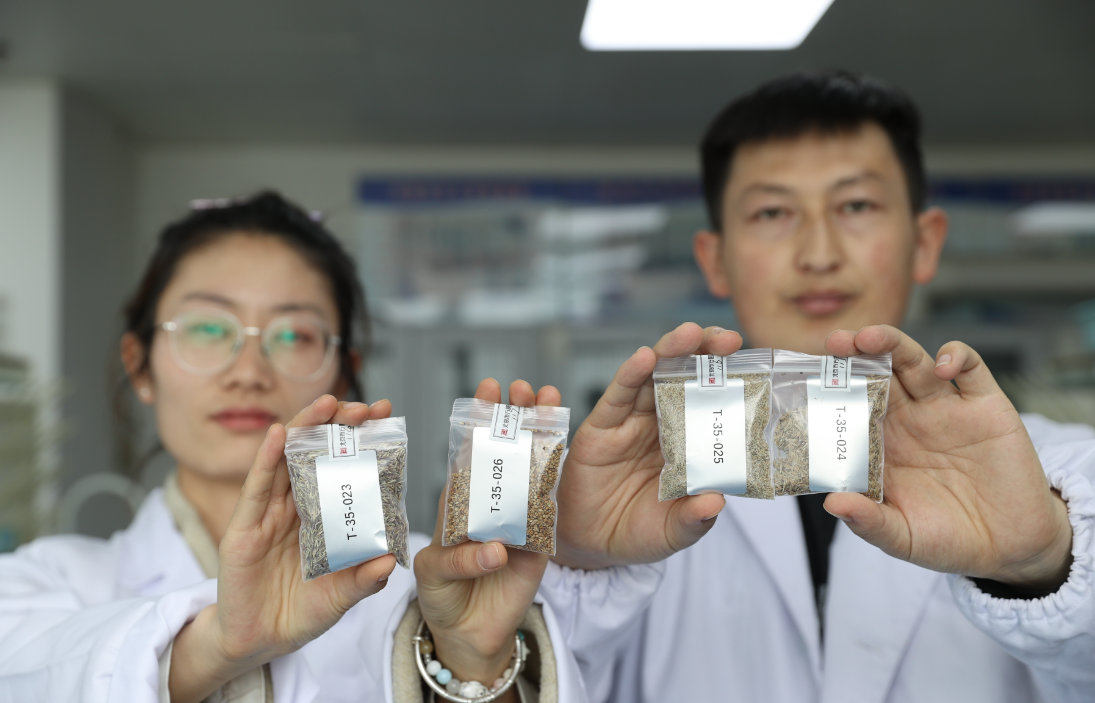

China carried out 31 new space science and application projects to its space station in 2025, covering fields including life sciences, microgravity physics and space technologies.
China’s space station made steady progress in 2025, according to China’s Technology and Engineering Centre for Space Utilisation (CSU) on Jan.7th.
In 2025, China’s space application system carried out 31 new science and application projects in orbit. It delivered about 867.5 kilograms of experimental modules, units and samples to the space station. The system returned 83.92 kilograms of space science experiment samples to Earth. The projects generated more than 150 terabytes of scientific data and resulted in over 50 authorised patents.
Lithium-ion Battery Experiment Conducted
China conducted a novel experiment on the fundamental science of lithium-ion batteries aboard the space station. This experiment aimed to uncover the mechanisms behind battery performance by leveraging the unique conditions of space. Lithium-ion batteries are essential for modern space missions due to their high energy density and reliability.
“The fundamental challenge on the ground lies in gravity,” said the Dalian Institute of Chemical Physics of the Chinese Academy of Sciences. “Gravity is constantly intertwined with electric fields, making it difficult to isolate the influence of gravity on internal battery processes.”
The findings will help improve existing battery systems in orbit and support the design of a new generation of safer, higher-energy-density batteries for future space exploration, the institute added.

China-first and World-first Experiments Delivered
In 2025, China successfully conducted its first-ever mouse space science experiment aboard the space station. The mission established a full-process experimental and life-support system covering ground-based selection, in-orbit breeding and live return.
In a world-first, China also launched experiments on the combined effects of sub-magnetic fields and microgravity on biological systems. These experiments revealed behavioural and genetic changes in animals under a dual space environment.
According to Ba Jin, senior engineer at the CUS, the space application system will also launch two flagship astronomical facilities. One is a survey space telescope designed to conduct studies in cosmology, nearby galaxies and the Milky Way. The other is a high-energy cosmic radiation detection facility aimed at observing cosmic rays and advancing research on dark matter and other extreme cosmic phenomena.
Written by Sha Liu, additional reporting by CGTN and Global Times.
If you liked this article, why not read: China Completes First Astronaut Cave-training Mission