

Shenzhou-21 astronauts share stories from life aboard China’s space station, including a sunflower, an apple and a space garden.
An apple with the words “peace and safety” written on it. A small sunflower growing hundreds of kilometres above Earth. A space garden filled with vegetables, grains and other crops.
These were some of the memories shared by the Shenzhou-21 astronauts after they returned to Earth.
On August 5th, astronauts Zhang Lu, Wu Fei and Zhang Hongzhang met with the media in Beijing for the first time after completing their mission. They shared stories from their 210-day stay aboard China’s space station, including the small things that brought warmth and comfort during their time in orbit.
An Apple Carrying a Wish for Safety
“Among all the fruits that accompanied us aboard the space station, apples stayed with us the longest,” said commander Zhang Lu.
During the Shenzhou-15 mission, Zhang once saved his last apple and gave it to a teammate as a birthday gift. The simple fruit became a reminder of friendship and care among astronauts.
This time, the apple carried a different meaning.
On the day of the Shenzhou-21 launch, ground staff gave the astronauts apples as a wish for a safe journey. When returning to Earth, Zhang brought an apple back from the space station to express his gratitude and good wishes to everyone involved in China’s space program.
He also wrote the words “peace and safety” on the apple.
Zhang said the message represented the shared hope of astronauts: that every mission would be completed safely and China’s space exploration would continue to advance.
A Sunflower Connecting Space and Home
For astronaut Wu Fei, a small sunflower became a special companion during his time in orbit.
Wu brought the plant to space because his daughter’s nickname is “Xiaokui,” which means “little sunflower” in Chinese. He hoped she would grow like a sunflower — positive, optimistic and always growing toward the light.
During the 210-day mission, the sunflower brought a sense of familiarity to the highly structured life aboard the space station.
“Life in the space station is filled with procedures, equipment and data,” Wu said. “That touch of green felt especially precious.”
After work, he would observe the plant’s growth, from its first leaves to its blooming flower. Each small change marked a moment of their journey in space.
During weekly video calls with his family, Wu often showed them how much the sunflower had grown.
He said the plant brought a feeling of home to the entire crew and reminded them of their connection with Earth.
A Space Garden Supporting Future Exploration
Besides scientific experiments, astronaut Zhang Hongzhang also spent time growing plants, writing poems and practising traditional exercises during the mission.
His hobbies helped him relax during the long and demanding stay in space. Zhang Lu once joked that his teammate had turned the space station into a “poetic retreat.”
The crew cared for their space garden after completing daily tasks. They watered plants, added nutrients, trimmed leaves and recorded their growth.
During the mission, they successfully grew more than 10 types of crops, including oats, wheat, sunflowers, carrots, tomatoes, sweet potatoes, mint and lettuce.
The astronauts also carried out several space biology experiments. They achieved China’s first in-orbit cultivation of cherry tomatoes and wheat using an aeroponic system, and completed the country’s first closed-environment in-orbit breeding experiment with mice.
These experiments helped researchers study how plants and living organisms develop in space, while also supporting future technologies for long-duration space missions.
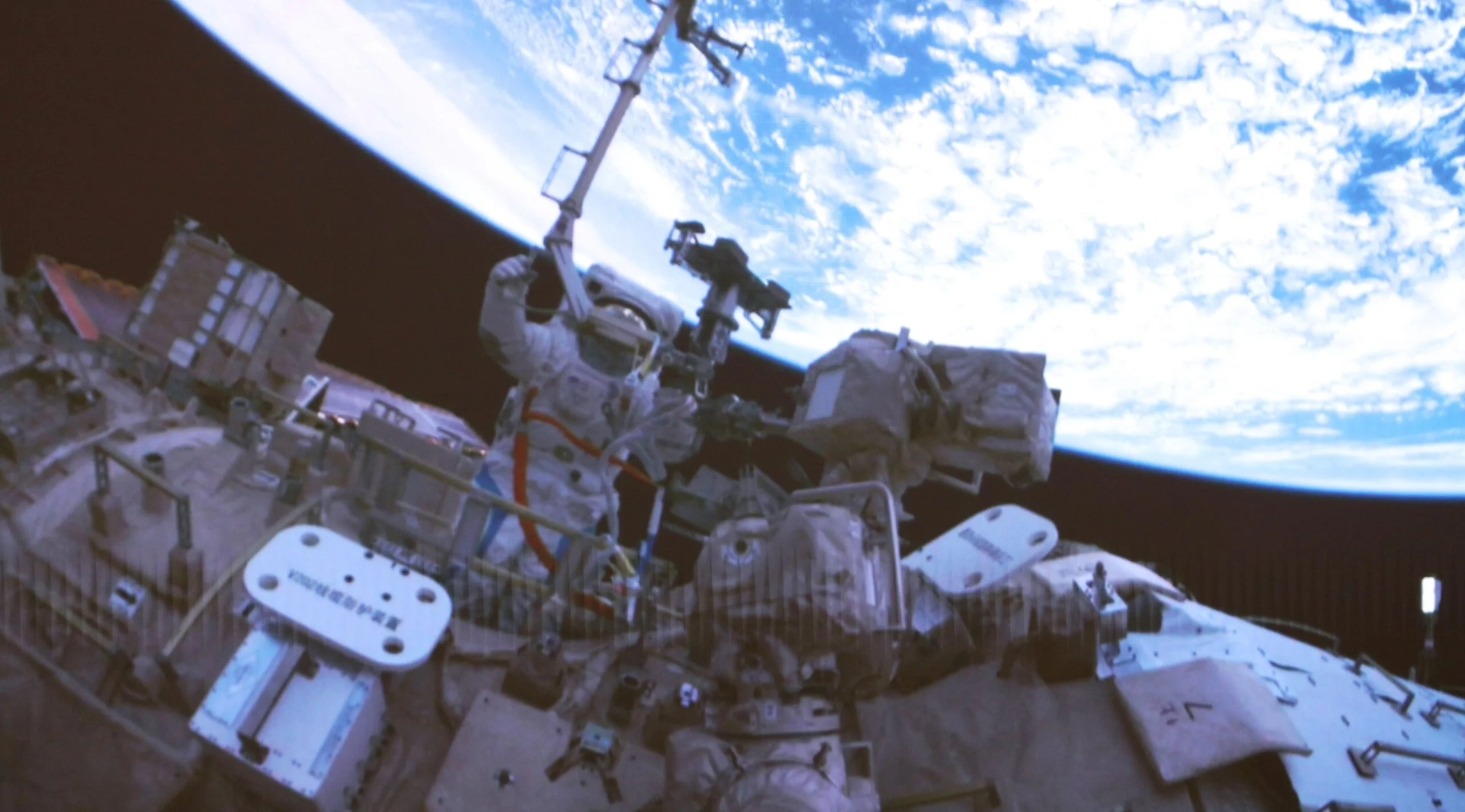
During their mission, the crew completed three extravehicular activities and carried out tasks including space station maintenance and safety checks.
For the astronauts, the apple, sunflower and space garden were more than personal memories. They reflected the astronauts’ everyday experiences in orbit and the personal connections they carried with them from Earth.
Additional reporting by HKCNA, CNS.
If you liked this article, why not read: Shenzhou-21 Crew Inspects Capsule, and Installs Protection Devices During A Spacewalk


