

From solar-powered fish farms to electric boats and battery factories, Ningde is building a clean-energy ecosystem across industries.
In Ningde, a coastal city in southeast China, clean-energy technology is becoming part of everyday life.
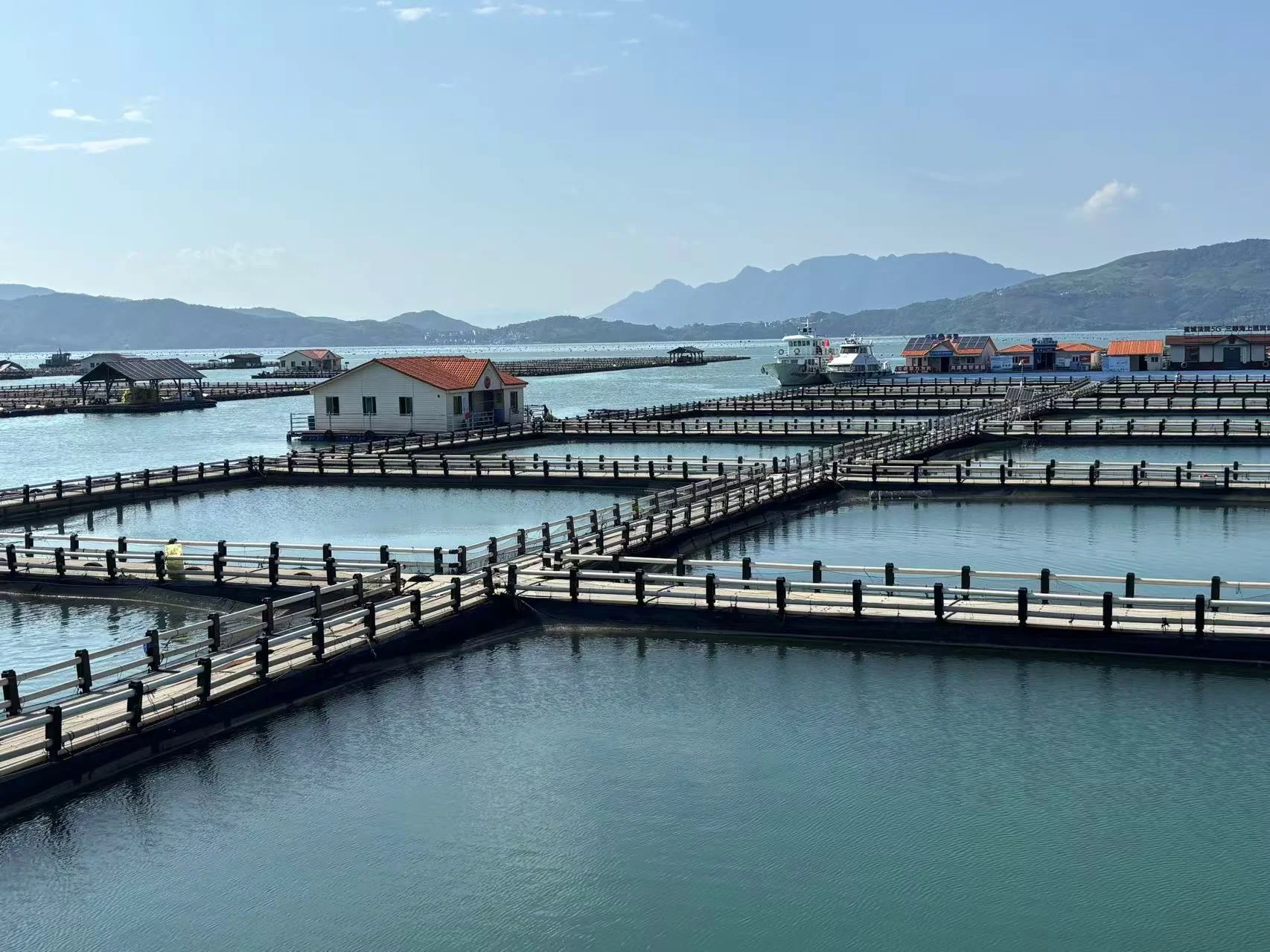
One afternoon in Baijiwan, Sandu’ao Bay, solar panels floated on the sea near fish farms. Energy storage equipment blinked beside the fish-farming rafts. After dark, an electric sightseeing boat moved quietly across Donghu Lake, offering views of the city at night.
These scenes show how new energy is moving beyond factories and into local industries and daily life.
Powering Fish Farms and Electric Boats
Ningde is known for its large yellow croaker, a fish widely farmed in the waters of Sandu’ao Bay. At the fish farms in Baijiwan, a pilot project combines solar power, wind power, energy storage, charging facilities and digital energy management.
The project has 58.88 kilowatts of solar capacity and generates about 70,000 kilowatt-hours of electricity a year. Its energy storage system can store 200 kilowatt-hours of electricity.
According to Yang Yun, who oversees the project, the system can keep the fish farms running for 10 days to two weeks during periods of continuous rain. He compared the storage system to a “power bank” for the fish farms.
The system also reduces the need for diesel generators and subsea cables, helping cut the risk of pollution in the surrounding waters. It uses energy storage equipment from Contemporary Amperex Technology Co., Ltd. (CATL), a battery maker headquartered in Ningde.
The same shift can be seen on the water.
At night, the reporter took a ride on the Donghu Star, an electric sightseeing boat powered by CATL lithium batteries. Unlike conventional fuel-powered boats, it moved with little noise or vibration.
The boat is the first pure-electric sightseeing vessel in China equipped with a straight-wing rudder and propeller system and certified by the China Classification Society under its Green Ship-3 designation.
Because it uses electric propulsion, the boat produces no exhaust emissions and avoids the risk of fuel leaks. Its two battery packs can be switched between uses, and the boat can also recharge at a service station on the water.
A full charge allows it to travel for five to six hours. Compared with a conventional fuel-powered boat, it is expected to save about 30 tonnes of fuel and cut carbon emissions by about 100 tonnes a year.
Together, the fish farms and the electric boat offer a simple picture of how clean-energy technology is being used in Ningde: not only to make batteries, but also to power local businesses and transport.

Inside a Battery Factory
Ningde is also home to one of the world’s best-known battery makers, CATL.
On August 6th, the reporter visited CATL’s HZ base in Ningde. After putting on shoe covers and passing through the visitor route, I came into view of the highly automated production lines.
The factory uses automated processes for coating, cell winding, laser welding and AI-based visual inspection. On average, one battery cell comes off the production line every minute. Daily output reaches about 50,000 finished units.
Quality control runs through the entire process. More than 40,000 inspection sensors are installed along one production line, while the entire factory has more than 7,000 quality-control points.
The factory also reflects CATL’s continued investment in research and development. Staff members said the company has obtained more than 60,000 patents, equivalent to an average of about 17 new patents a day.
At CATL’s headquarters exhibition hall, several technologies show how battery development is moving into different applications.
One modular battery system is designed to fit different vehicle models and can complete a battery swap in 99 seconds. A sodium-ion battery continued to operate in a demonstration at minus 40 degrees Celsius, with a light and charging port working normally.
A full-scale model of a condensed-matter battery was also on display. Staff members said the technology had completed a test flight on an electric aircraft, while a vehicle version had also been released.
CATL has ranked first globally in power-battery shipments for nine consecutive years and in energy-storage battery shipments for five consecutive years, according to the company. It also has 20 battery plants worldwide that have achieved carbon neutrality in their core operations.

Beyond One Company
CATL’s presence has also helped shape a local network of suppliers and equipment makers.
Less than five kilometres from CATL’s headquarters is Sikeqi Intelligent Equipment Co., Ltd., which supplies equipment for battery production. The two companies began working together in 2016.
Zheng Ting, general manager of the company’s marketing centre, said Sikeqi initially handled welding work for production lines. It has since grown into one of CATL’s largest suppliers of complete production-line integration.
CATL initially gave Sikeqi opportunities to take part in equipment research and development. As its technical capabilities grew, Sikeqi began supplying some of its own technologies to CATL.
Today, CATL orders account for about 40 per cent of Sikeqi’s total orders. The company also supplies China Innovation Aviation, EVE Energy and overseas customers.
Zheng said overseas orders are gradually increasing. The company expects them to account for about a quarter of its annual revenue this year and is using a Hong Kong subsidiary to develop international markets.
In Ningde, therefore, the clean-energy industry can be seen at several levels. Solar panels and energy storage support fish farms. Electric boats are changing local tourism. Highly automated factories produce batteries. At the same time, equipment makers and other suppliers are growing around the battery industry.
From fish farms to battery factories, clean-energy technology is becoming part of the city’s industries and everyday life.
Additional reporting by HKCNA.
If you liked this article, why not read: China’s Battery Pioneer Chen Liquan on Building an Industry


