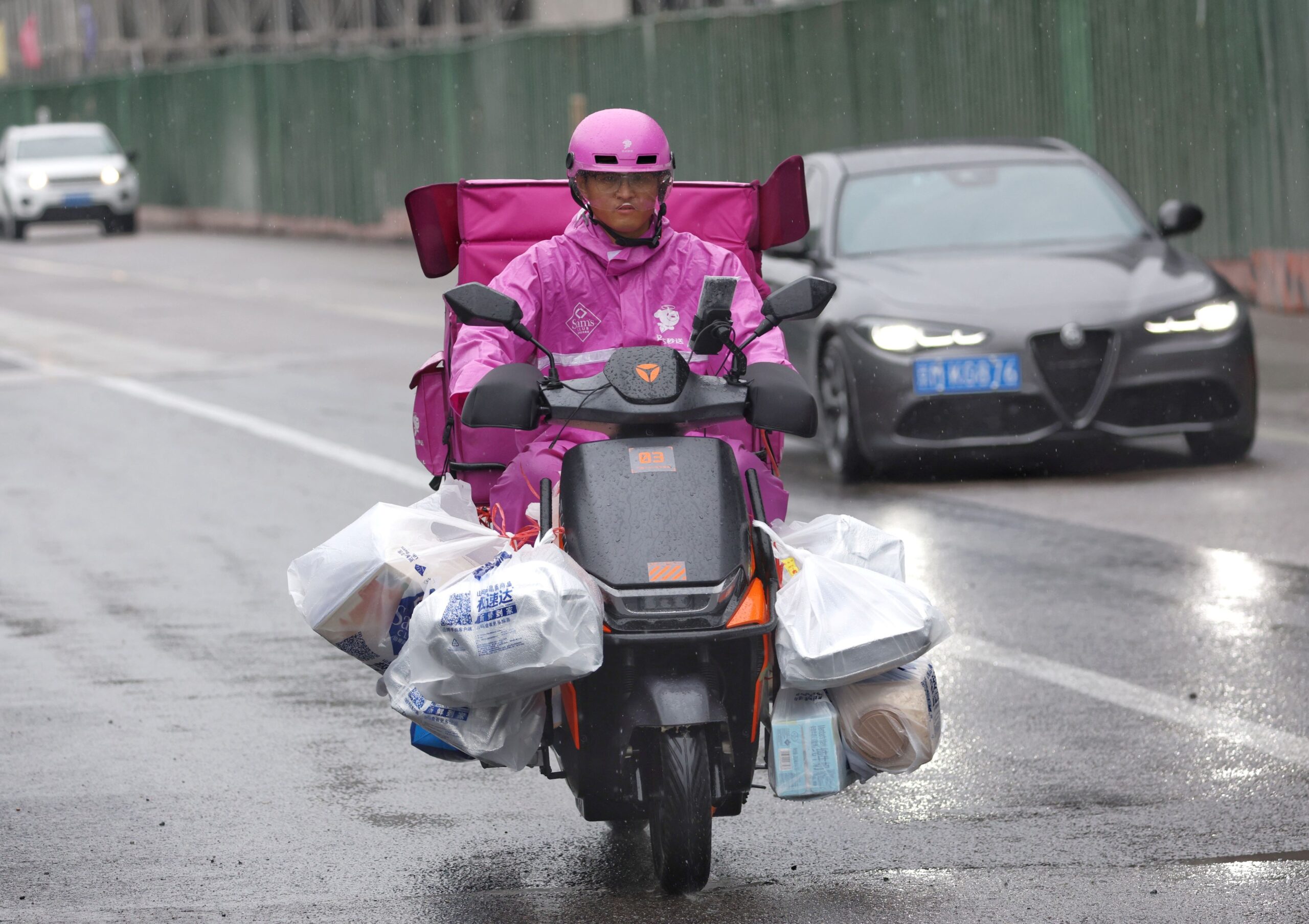

China’s food delivery giants JD, Meituan, and Ele.me end late-delivery fines, easing pressure on millions of couriers and promoting safer work.
China’s major food delivery platforms are changing how they manage couriers. JD Delivery announced that it has started pilot programs in 25 cities, including Shenzhen, Nanjing, Harbin, and Wuhan, to end cash fines for late deliveries. Instead, couriers will now lose “service points” rather than money when an order is delayed.
The new system shifts from punishment to encouragement. JD says the goal is to improve riders’ work experience and help them deliver safely without the pressure of heavy penalties. “We want riders to feel more supported while keeping high service quality,” a JD spokesperson said.
To make courier work safer and more sustainable, JD has also launched several support programs. These include extra subsidies during extreme weather, a fund for riders’ children, a reward plan for positive community actions, and rest stations known as “courier care hubs.” The company is also improving insurance coverage and says it will expand the new policy nationwide after reviewing pilot results.
Other platforms are following similar paths. Ele.me recently began testing a “service score” system in cities such as Nantong, Changzhou, Jieyang, and Jingdezhen. Meituan said it will fully remove late-delivery fines by the end of this year. In some cities, Meituan has already used a system that deducts or adds points based on delivery punctuality.
Industry observers say these changes mark a turning point for China’s gig economy. Time penalties have long been a major source of stress for couriers. While strict rules once ensured efficiency, they also raised safety concerns. The new policies from JD, Ele.me, and Meituan show a growing focus on worker rights and a more human-centred approach to managing delivery services in China.
Additional reporting by HKCNA, 21jingji.com
If you liked this article, why not read:China’s Flash Delivery: 30-Minute Orders Transform Retail