
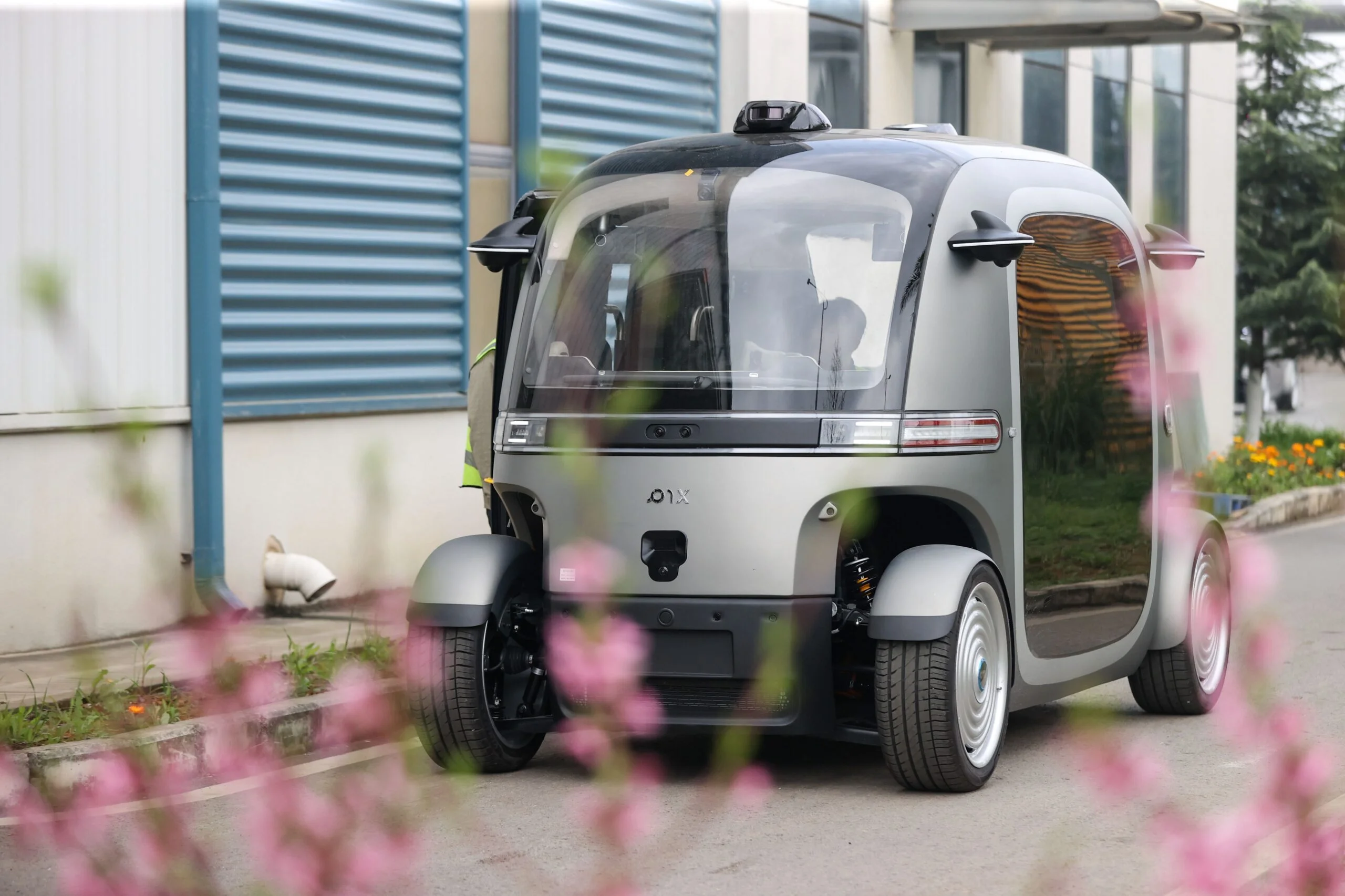

AI and automation are transforming China’s logistics network, from driverless trucks at ports to smart delivery systems and real-time digital freight platforms.
At a major port in eastern China, a driverless truck carries a container across the terminal. Sensors and cameras guide its movement. At the same time, a cloud-based system manages dispatch in real time. As the truck approaches a crane, it stops at the exact position for loading.
This is no longer a test. It is becoming part of daily operations across China’s logistics network.
From Smart Ports to Digital Highways
China’s freight system runs at huge scale. In 2025, road transport handled 43.29 billion tonnes of cargo. That accounts for more than 70 per cent of total freight volume. Because of this scale, even small efficiency gains can make a big difference.
To improve efficiency, digital freight platforms now use algorithms to match trucks, routes and cargo. At a logistics dispatch centre, tens of thousands of highway routes have been mapped into a digital system. On large screens, each truck appears as a moving data point. Its location and status are updated in real time.
As a result, companies can reduce empty runs and cut waiting times. In the past, staff had to monitor shipments around the clock. Now, automated systems track each order and flag potential delays early. Processing time for a single shipment has dropped from minutes to seconds.
Solving the “Last Mile” Challenge
Long-distance transport forms the backbone of the economy. However, last-mile delivery connects goods to everyday life. This segment has long faced rising labour costs and worker shortages.
Now, driverless delivery vehicles offer a new solution. They can plan routes flexibly and operate throughout the day. As a result, they help ease pressure on urban delivery networks.
Industry data shows that about 32,600 driverless delivery vehicles were sold in China in 2025. The number is expected to exceed 100,000 in 2026. Companies are already using these vehicles in campuses, residential communities and industrial parks. In some cases, they are also being tested on public roads.
These vehicles handle routine tasks such as parcel transfers and grocery deliveries. As deployment expands, they are becoming a more common part of daily life.
Policy Support and Growing Adoption
At the same time, policy support is accelerating the shift toward smarter logistics. Earlier this year, Chinese authorities released a plan to support leading logistics companies and strengthen supply chain services. The plan encourages the use of advanced technologies and supports the development of smart ports and transport hubs.
It also promotes the integration of technologies such as big data, the Internet of Things, artificial intelligence, blockchain and 5G.
Adoption is already underway. Data shows that artificial intelligence has reached a penetration rate of more than 37 per cent in China’s logistics and supply chain sector. As digital tools continue to spread, a more connected and efficient logistics network is taking shape.
Written by Ronnie Yu, additional reporting by CNS.
If you liked this article, why not read: China Targets AI “Virtual Humans” in New Rules to Protect Minors


