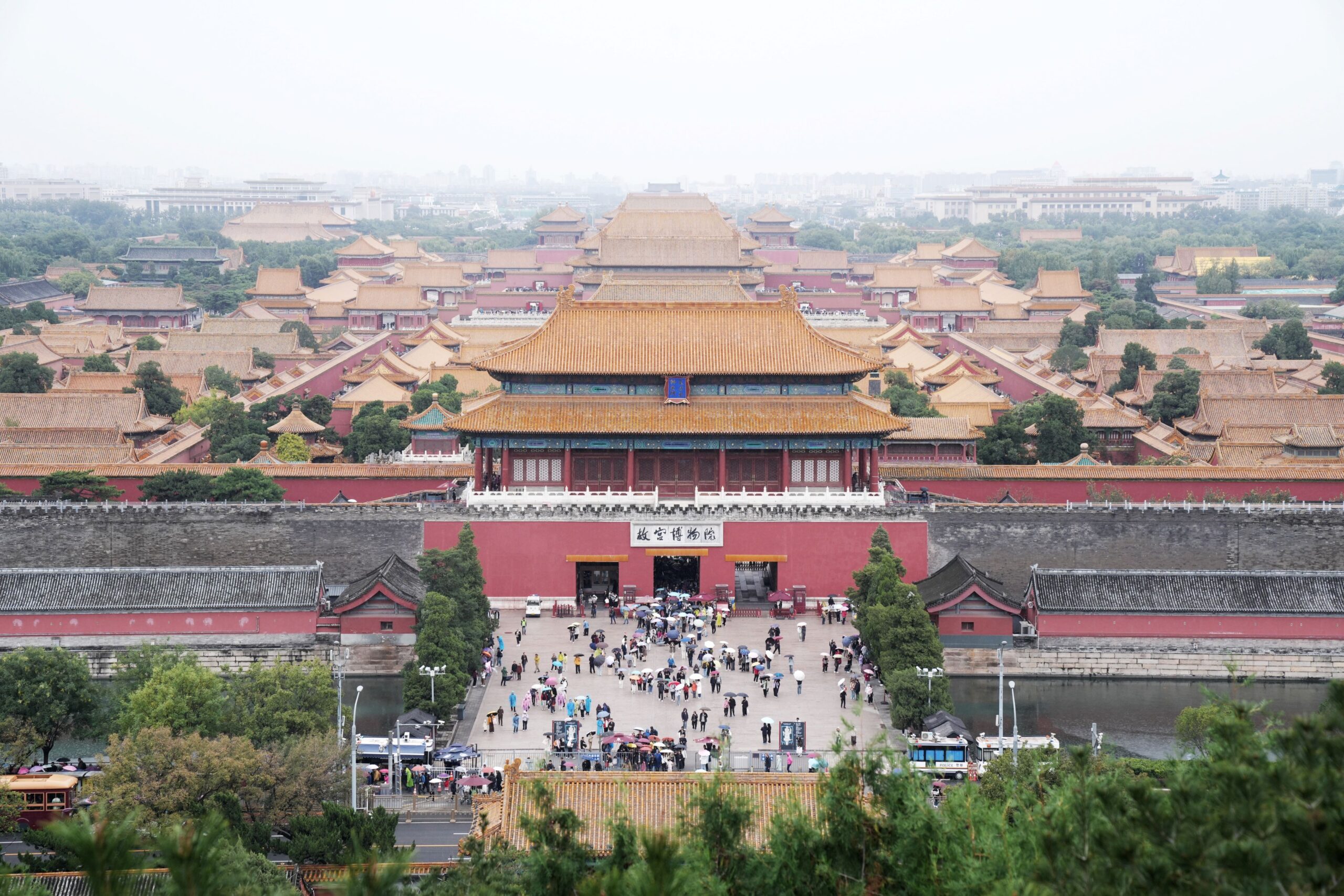

The Palace Museum in Beijing celebrates its 100th anniversary, showcasing a century of heritage preservation, cultural innovation, and digital transformation.
Beneath the golden roofs and vermilion walls of Beijing’s Forbidden City, a century-old story continues to unfold — one that bridges imperial grandeur with digital imagination. On October 10, 2025, the Palace Museum marks its 100th anniversary, celebrating a century of safeguarding China’s cultural treasures while reinventing how the world experiences them.

From “Palace” to “Museum”
The word “Gugong,” or “Former Palace,” carries both history and transformation. On October 10, 1925, the Palace Museum officially opened its gates, turning the once-forbidden imperial complex of the Ming and Qing dynasties into a public museum. “Palace” represents what is preserved; “Museum” symbolises the mission of stewardship and study.
The first great inventory of national treasures began soon after the museum’s founding and lasted until 1930. It recorded over one million cultural relics and established the idea that China’s cultural heritage belongs to the people. Since then, generations of curators have continued to safeguard and document the growing collection.
As of September 2025, the Palace Museum houses 1.95 million artefacts. To mark the centennial, the museum opened a major exhibition titled “A Century of Stewardship: From the Forbidden City to the Palace Museum” at the Meridian Gate Gallery. From nearly two million artefacts, 200 were carefully selected to tell stories of loss and return, preservation and renewal.
Among the highlights:
- Bo Yuan Tie, the only surviving authentic calligraphy work bearing the signature of a Jin Dynasty master, was purchased by the state in 1951.
- Five Oxen, China’s oldest surviving paper painting, returned to the museum in 1958 and was restored after years of damage.
- Along the River During the Qingming Festival, one of China’s most famous scrolls, came back to the museum in the same year.
As curator Xu Wanling said, “Every time Along the River During the Qingming Festival is displayed, it tells a new story. Today, it stands as a symbol of the museum’s hundred-year journey.”

Opening the Gates Wider
When the museum first opened in 1925, visitors could only enter a few halls, including the Palace of Heavenly Purity and the Palace of Earthly Tranquillity. Before 2014, less than half of the Forbidden City was accessible. Over the past decade, new sections such as the Palace of Compassion and Tranquillity, Palace of Longevity and Good Health, and the city walls have been restored and opened. Today, 80% of the palace grounds are open to the public.
The long-awaited reopening of the Hall of Mental Cultivation is planned for this year, while the museum’s new Northern Branch—featuring 12 exhibition halls—is under interior construction and expected to open next year. More national treasures will soon meet the public eye.
Beyond Beijing, the Palace Museum has expanded its presence across China:
- The Gulangyu Foreign Cultural Museum of the Forbidden City opened in Xiamen in 2017.
- The Hong Kong Palace Museum became a cultural landmark in 2022.
- The Centre of Preservation and Transmission for Cultural Heritage of the Palace Museum in Macao, launched in 2024, supports heritage protection in the Greater Bay Area.
From the heart of Beijing to the coasts of southern China, the Palace Museum is building a cultural network that connects tradition with global dialogue.

The Forbidden City Digital Twin
The Palace Museum is also embracing technology to preserve and share its treasures. Over the past 20 years, it has digitised more than one million artefacts and architectural elements.
Since 2019, its online Digital Archive has made over 100,000 high-definition images available to the public. In the future, AI tools will allow users to search artefacts by style, period, or personal interest.
Meanwhile, the Forbidden City Digital Twin Project recreates nine core areas of the palace in virtual form. Viewers can experience the Forbidden City’s shifting skies, seasonal light, and intricate halls from anywhere in the world.
Deputy Director Zhu Hongwen said, “Digital technology allows protection and openness to advance together. Visitors can see the artefacts—and step inside their stories.”
From Heritage to Shared Future
In a century, the Palace Museum has changed from an imperial residence into one of the world’s most visited museums. It welcomes over ten million visitors each year and stands as both a World Cultural Heritage Site and a living example of how ancient civilisations can thrive in the digital age.
As it enters its second century, the Palace Museum continues its dual mission: to protect China’s cultural treasures and to share them with the world. Through innovation, openness, and collaboration, it keeps writing new stories.
Written by Chen Wang, additional reporting by CNS, Xinhua.
If you liked this article, why not read: New Reason to Visit the Palace Museum: Qianlong Garden Is Open