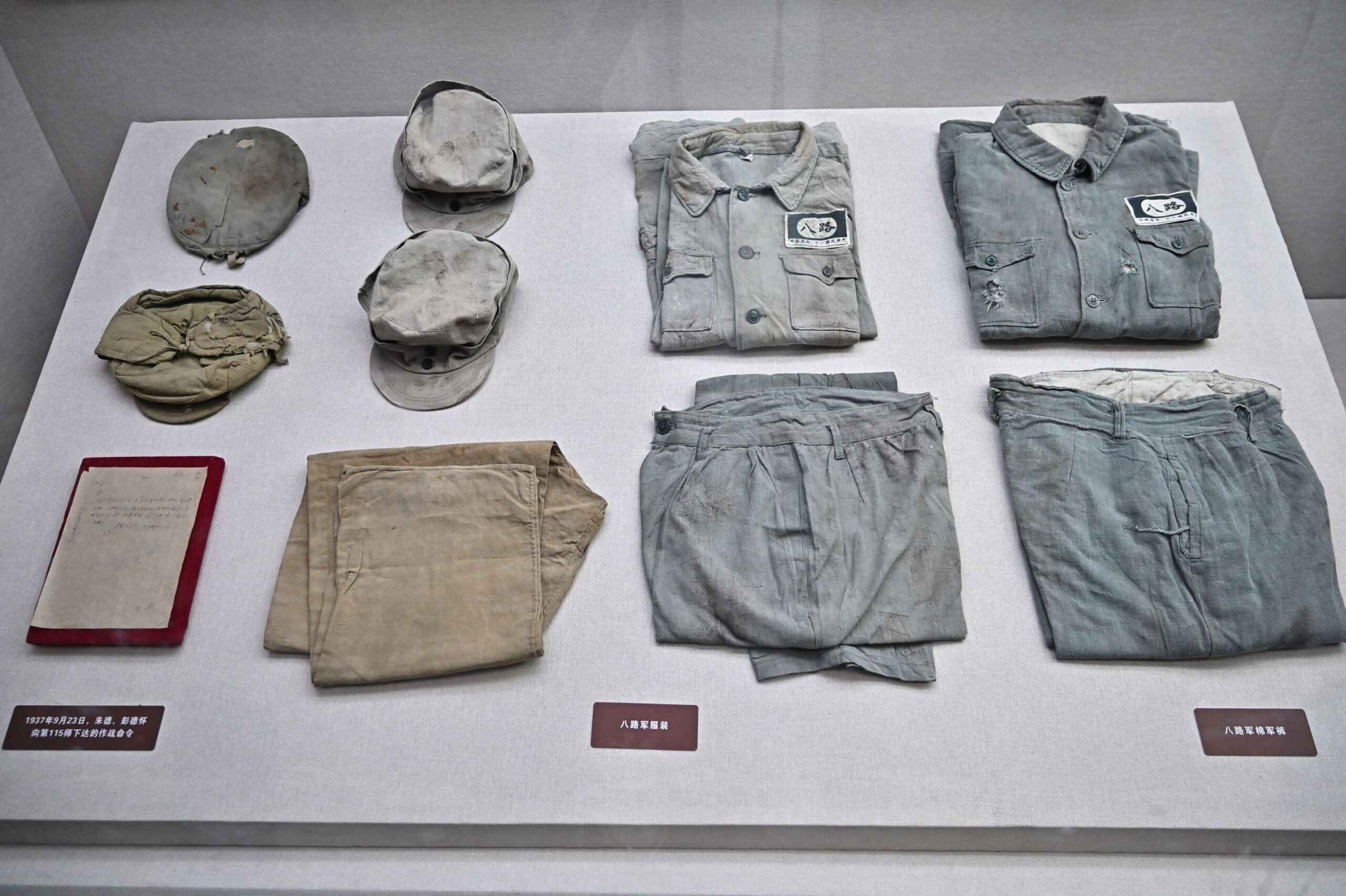

In 1937, Chinese forces won their first major victory against Japan at Qiaogou, marking a turning point in China’s resistance.
On 25 September 1937, gunfire and shouting echoed through the narrow valley of Qiaogou in Lingqiu County, Shanxi Province. The 115th Division of the Eighth Route Army ambushed Japan’s elite 5th Division. By the end of the day, more than 1,000 Japanese soldiers had been killed, nearly 100 vehicles destroyed, and large quantities of weapons seized. Chinese forces suffered over 600 casualties, but the victory was decisive.
This clash, known as the Pingxingguan Battle, was the first major Chinese victory since Japan’s invasion of China earlier that year. It shattered the myth of Japanese invincibility and marked a turning point in China’s resistance.

Unequal Arms, Determined Resistance
Inside the Pingxingguan Victory Memorial Hall, a chart shows the stark imbalance: 3,821 Chinese rifles faced 9,476 Japanese firearms, 24 tanks, 262 vehicles, and nearly 6,000 horses.
The Eighth Route Army chose the high ground northeast of the pass. They utilised the narrow mountain roads and natural cover to establish ambush points. These carefully selected positions enabled Chinese troops to strike effectively despite being outnumbered and outgunned.
Contemporary foreign reports noted that the battle demonstrated a new approach in Chinese resistance: defenders were taking the offensive for the first time, a significant shift in tactics during the early stages of the war.

From Gunfire to Village Voices
Today, the hills of Qiaogou are quiet. The former battlefield has become a hub for rural revitalisation. Near the old Laoye Temple site, the “Pingxingguan Post Station” street now features traditional crafts, such as tiger-head pillows and wheat-straw paintings.
Across the valley, the “People’s Commune Canteen” serves local specialities, including millet dumplings and oat flour pies. Each year, over 7,000 visitors come to taste these dishes, explore the crafts, and walk the same paths where soldiers once fought.
Visitors can also view relics at the memorial hall, including photographs, maps, and displays that compare Chinese and Japanese weaponry, offering a vivid sense of the challenges faced during the battle.
From defiance in the mountains to the vibrant life of today’s villages, Qiaogou tells a story of resilience that continues to inspire both locals and international visitors.

Written by Chen Wang, additional reporting by CNS.
If you like this article, why not read: Cheung Chau: The Small Island with a Wartime Secret