
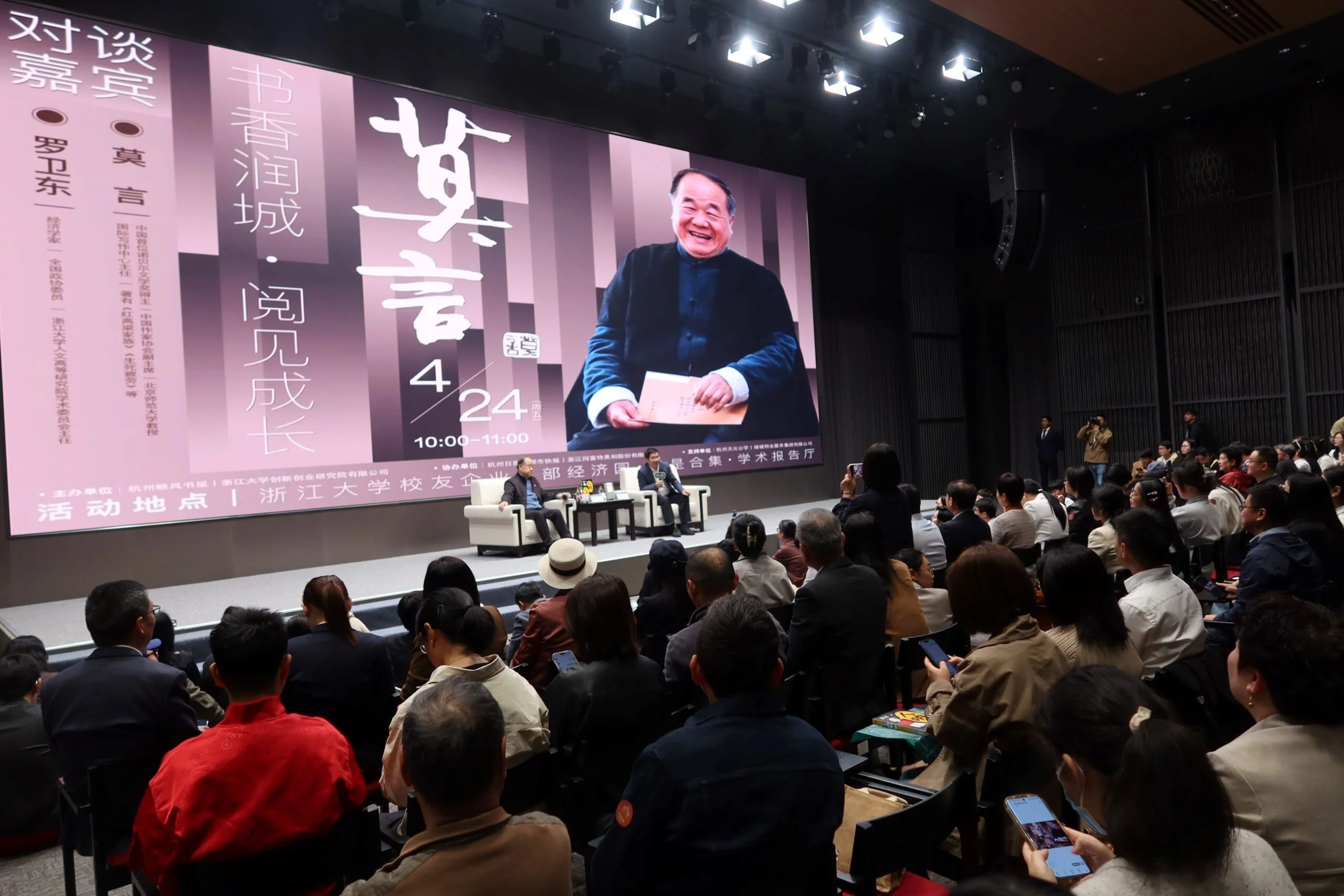

Nobel laureate Mo Yan reflects on why stories are getting shorter, from flash fiction to short video culture, and how digital reading is reshaping literature.
At a recent literary event in Hangzhou, Nobel Prize-winning author Mo Yan reflected on a question that increasingly defines modern literature: what happens to storytelling in an age of fragmented attention?
He began with something simple. Short stories, novellas, and novels, he said, all follow the same basic logic. They all rely on language as an art form. They all need stories. And they all depend on characters that feel alive. The difference, he added, lies not in essence but in scale.
Still, scale matters.
Mo belongs to a generation of writers shaped by a fairly clear literary progression: short fiction first, then novellas, and finally the novel. Some writers stayed in one form. Others moved across all three. In his case, the craft underneath never really changed, even as the forms did.
However, he also admitted something more complicated. Writing long novels today, he said, can feel like “a kind of burden on the reader.” The comment landed lightly, but the idea behind it was serious.
Even so, he did not dismiss the long novel. On the contrary, he argued that every era needs a few major long works. These books, he suggested, become markers of their time. They carry a kind of cultural weight that short forms cannot replace. And still, he said, he continues to think about a new long novel—though when it will take shape remains uncertain even to him.
In recent years, however, his writing has moved in another direction: toward shorter forms.
His 2020 collection, A Late Bloomer, gathered medium and short stories. His latest collection, People, goes even further. Some pieces are extremely brief. One story contains just 71 Chinese characters. He calls this form “flash fiction,” and connects it to the tradition of classical Chinese sketch narratives, such as Strange Tales from a Chinese Studio. These texts, he said, in his view, quietly demonstrate that brevity can still carry depth.
At the same time, Mo turned to the present. The rise of short video platforms has changed how people read, watch, and think. He described himself as both a victim and a beneficiary of this shift. He often scrolls through short videos, sometimes with frustration. But then he reframes the habit. Instead of rejecting it, he tries to turn it into material.
In other words, he looks for stories inside the noise.
This approach has shaped his recent work. He said at least half of the stories in People were written after short video culture became dominant. In his view, literature can move at the same speed as digital life. “You can read my stories like you scroll through short videos,” he suggested. “Some take only seconds. Others take a few minutes. Either way, they fit into the rhythm of modern attention.”
He then extended the idea further. Rural life, he explained, still feeds his imagination. It provides images, material, and memory. Fields, crops, and seasonal labour all remain part of his creative foundation. But he also emphasised change. Rural China has transformed, and literature must transform with it in ways that are still unfolding.
In the end, his reflections return to a simple tension: literature still needs depth, but readers now live in speed.
And between those two forces—depth and speed—contemporary storytelling continues to reshape itself without really settling the question of what comes next.
Additional reporting by CNS.
If you liked this article, why not read: Mo Yan Brings His First Stage Play “Crocodile” to Hong Kong


