

Multinational companies are expanding partnerships with Chinese firms to boost innovation, strengthen supply chains and reach global markets.
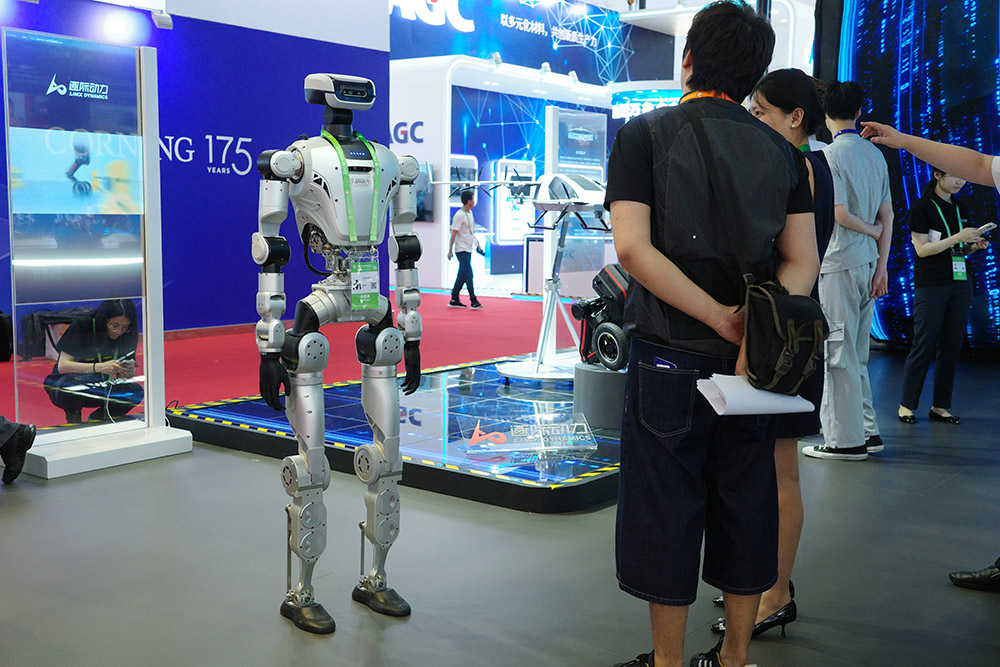
“Supply chains also create shared success.” Companies at the 4th China International Supply Chain Expo have reinforced this message through their partnerships.
According to China News Service, multinational companies and their Chinese partners have demonstrated the value of close collaboration.

L’Oréal has tackled complex inventory management through its Suzhou Intelligent Fulfilment Centre, the company’s first intelligent operations hub worldwide. Even during major shopping events such as the 618 Festival, the centre processes up to 7,000 direct-to-consumer parcels per hour. It also completes 99% of orders within 48 hours.
Many Chinese start-ups support this highly efficient system. Zhenzhen Lan, President of Public Affairs for L’Oréal North Asia and China, said these companies help build the supply chain while using L’Oréal’s global network to expand overseas. As a result, more Chinese innovations have evolved into global solutions.

Wang Hao, President of Greater China at Siemens Healthineers and a member of its Global Leadership Committee, highlighted another example. Siemens Healthineers works with leading Chinese medical institutions to develop tailored solutions for diseases and clinical challenges that are common in China. The company also uses its global network to introduce successful Chinese innovations to international markets.
Many foreign-invested companies believe that competitiveness comes not only from individual businesses but also from strong industrial collaboration. Imaura Takehide, Chairman of Sumitomo Electric Asia (Shenzhen) Limited, said partnerships with Chinese supply chain companies help businesses respond faster to market demand and improve both products and services.

This collaborative approach also combines global resources with local expertise. Yin Zheng, Executive Vice President of Schneider Electric and President of China and East Asia, said the company works with China Energy Construction and Power Construction Corporation of China to develop projects in the Middle East and Southeast Asia. These partnerships provide advanced energy infrastructure for local communities. Schneider Electric also works with Contemporary Amperex Technology Co., Ltd. and Star Charge to bring China’s advanced energy storage and EV charging technologies to Europe and other global markets.
Chen Jiayuan, CEO of Louis Dreyfus Company North Asia, said the company contributes a global sourcing network, integrated value-chain capabilities and deep agricultural expertise. Chinese partners contribute strong knowledge of local markets and customer needs. Together, they strengthen the connectivity, stability and resilience of agricultural and food supply chains in China and around the world.
Openness and inclusiveness remain essential to building supply chains that deliver shared success. The partnerships showcased at the Expo span manufacturing, services, technology, standards and international markets. They show that supply chains have moved beyond simple buyer-supplier relationships. Companies now build more integrated ecosystems through open cooperation. Businesses no longer act as isolated links in a chain. Instead, they create mutual benefits and drive sustainable growth together.
If you liked this article, why not read: Why Global Brands Are Flocking to China’s Hainan Expo


