
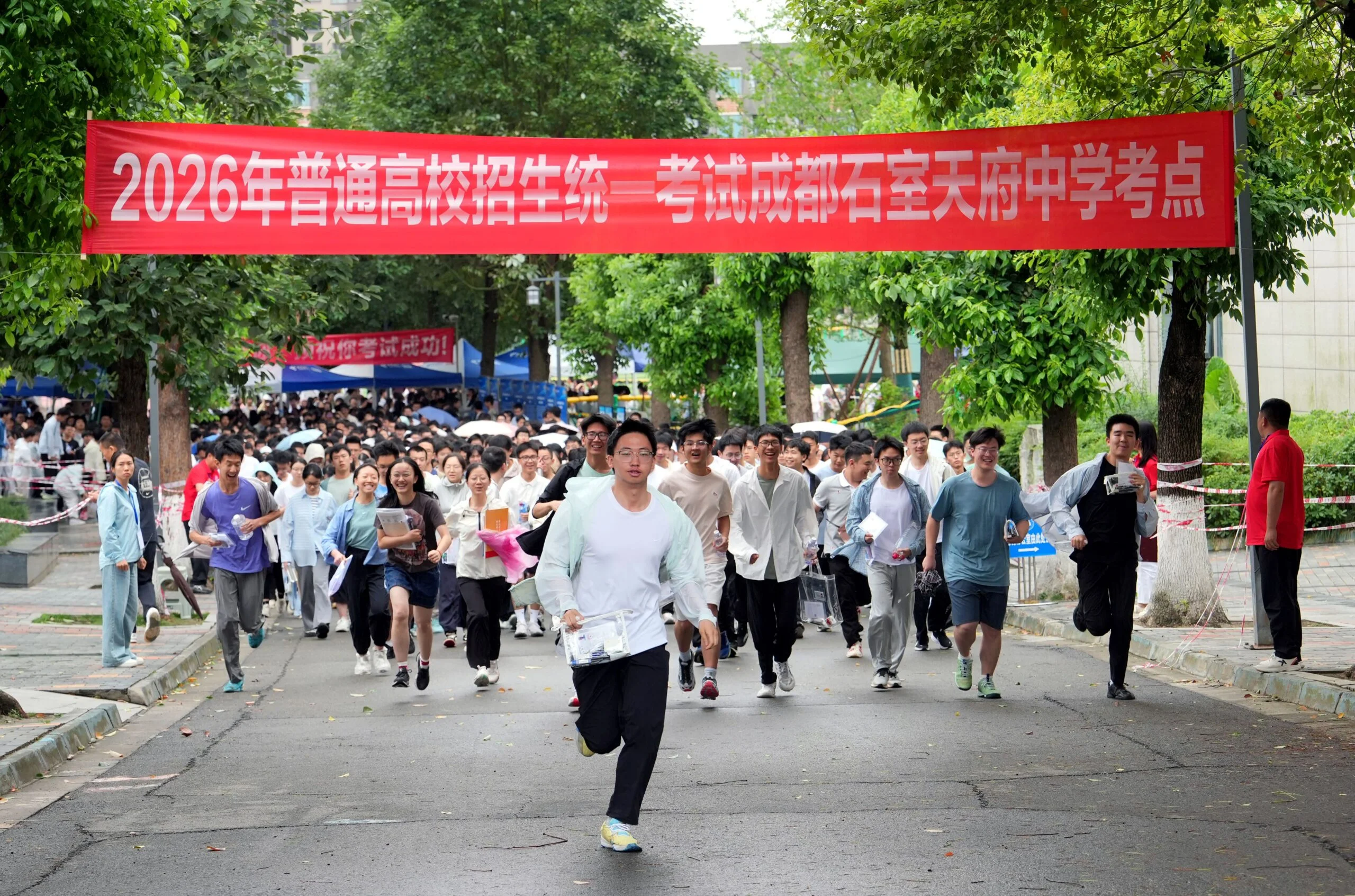

China’s 2026 gaokao begins with 12.9 million students. New AI-related majors, changing assessment priorities and stronger anti-cheating measures highlight shifts in China’s education system.
China’s national college entrance examination, known as the gaokao, began on June 7th, with 12.9 million students taking part this year.
As one of the world’s largest standardised exams, the gaokao remains a major milestone for students and families across China. This year, however, attention extends beyond the exam itself. New university majors, changing assessment priorities and stronger anti-cheating measures reflect how China’s education system is adapting to the AI era.

New Majors Target Future Talent
China has continued to expand access to higher education while improving the quality of undergraduate programs. This year, 38 new majors were added to the national catalogue of undergraduate disciplines, allowing approved universities to begin recruiting students through the 2026 admissions cycle.
Many of the additions reflect emerging industries and technological innovation. Among the new programs are Embodied Intelligence and Brain-Computer Science and Technology. Both combine knowledge from multiple disciplines and focus on AI-related fields.
Experts say the new majors offer students more options while helping universities better align talent training with economic and social needs. The changes also signal a growing emphasis on interdisciplinary learning, creativity and practical problem-solving skills.
Meanwhile, education authorities have warned students not to rely on AI-generated predictions or so-called exam “gurus” who claim they can predict test questions. Officials say the gaokao increasingly focuses on critical thinking and problem-solving rather than memorisation and test-taking tricks.

A Stronger Focus on Fairness
At the same time, authorities have strengthened measures to protect the integrity of the examination.
Across the country, exam centres have upgraded security systems to prevent increasingly sophisticated forms of cheating. AI-assisted monitoring, intelligent security screening devices and full wireless signal shielding have been introduced in many locations. Special measures have also been put in place to guard against the misuse of emerging technologies, including smart glasses and other electronic devices.
Education experts note that maintaining fairness has become even more important as new technologies create both opportunities and risks for the examination system.
In addition, efforts to improve accessibility continue. More than 14,000 candidates with disabilities received accommodations during this year’s exam. Specially prepared Braille test papers were also provided for seven blind students in five provincial-level regions.
Furthermore, authorities have prepared about 21,000 backup examination rooms nationwide to deal with extreme weather and other emergencies, helping ensure the exam proceeds smoothly.
For millions of students, the gaokao remains a gateway to higher education. This year’s exam also reflects China’s efforts to prepare students for emerging industries while ensuring fairness.

If you liked this article, why not read: China’s Gaokao Comes with Major Changes


