
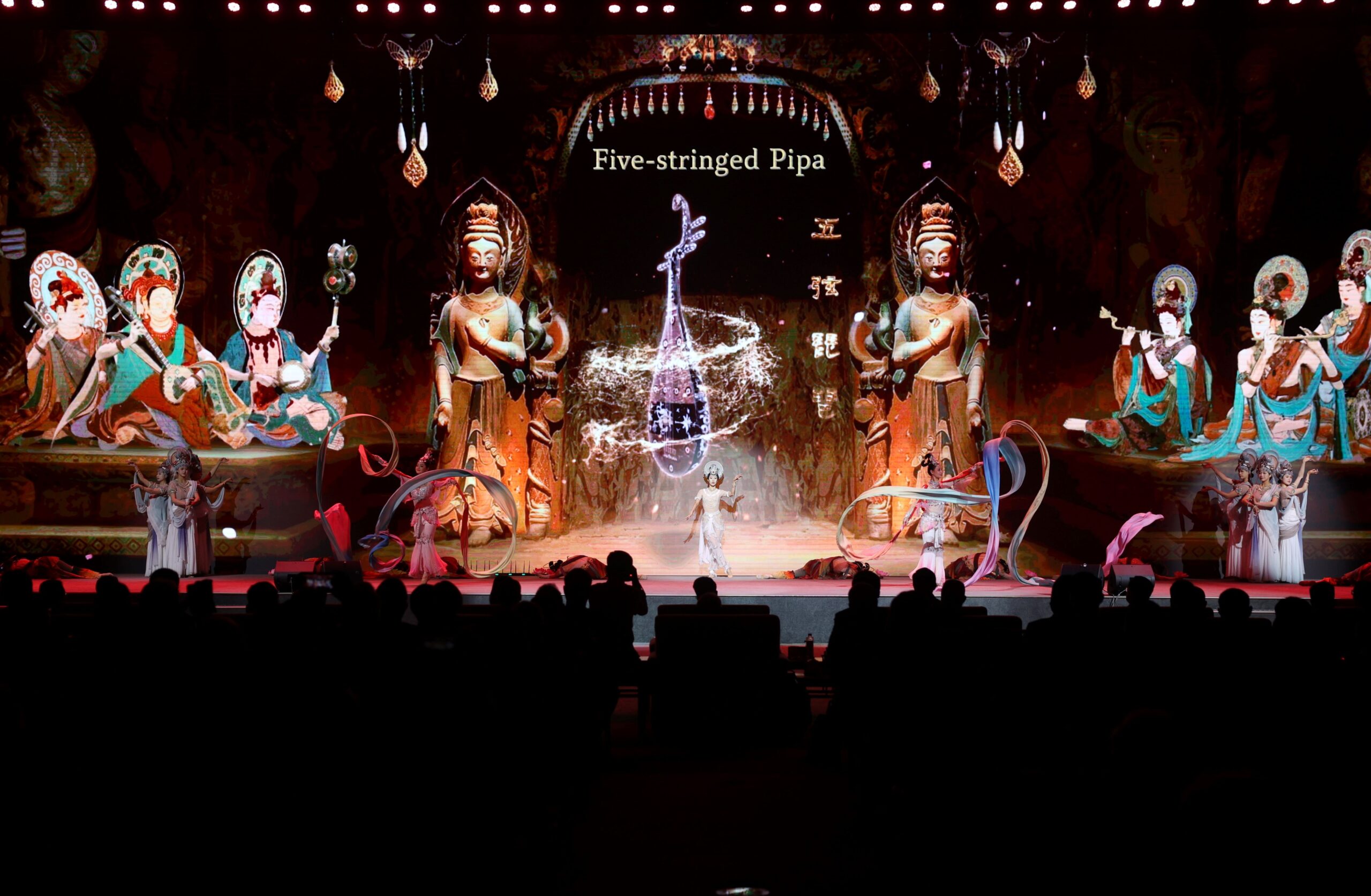

Scholars from nearly 70 countries gather in Dunhuang for the Third World Conference of Sinologists, exploring dialogue among civilisations, cultural exchange, and shared global challenges along the Silk Road legacy.
Scholars, translators, and cultural researchers from nearly 70 countries gathered in Dunhuang on June 3rd for the Third World Conference of Sinologists. The ancient Silk Road city in northwest China once again became a meeting point for ideas, history and cultural exchange. This year’s theme focused on “pooling the wisdom of civilisations to jointly address challenges of our times,” with over 300 participants taking part in discussions and activities.
At the opening ceremony, Mulatu Teshome Wirtu, former president of Ethiopia and a Sinologist, said Sinology belongs to the world. He stressed that it represents a shared intellectual heritage of humanity. He also encouraged Sinologists to act as messengers between civilisations. In his view, academic exchange can strengthen understanding, especially among countries in the Global South, and support broader cooperation in a changing world.
Sinologists from Europe also shared their perspectives. Tiziana Lippiello, rector of Ca’ Foscari University of Venice, noted that civilisations do not always need direct contact to influence each other. Instead, they can meet through imagination, curiosity, and knowledge across time. She pointed to the historical awareness between ancient China and the Roman Empire as an example, suggesting that dialogue between civilisations can grow even without direct interaction. For her, Dunhuang offers a symbolic space where such encounters become visible.
In addition, French Sinologist and translator Agnès Belotel-Grenié traced the long history of Chinese studies in France. She pointed to the early admiration of Chinese political thought by Enlightenment thinkers such as Voltaire. She also highlighted the influence of Confucian ideas, especially the concept of harmony in diversity, which continues to shape intellectual exchange between China and France today.
Beyond the opening session, the conference continues with thematic forums and academic discussions. Participants explore topics such as the global significance of Chinese modernisation, the peace-oriented values of Chinese civilisation, the historical development of Sinology, and the contemporary relevance of traditional Chinese philosophy.
Additional reporting by CNS, Xinhua.
If you liked this article, why not read: Nicolas Standaert: What are the factors affecting mutual understanding between Europe and China?


