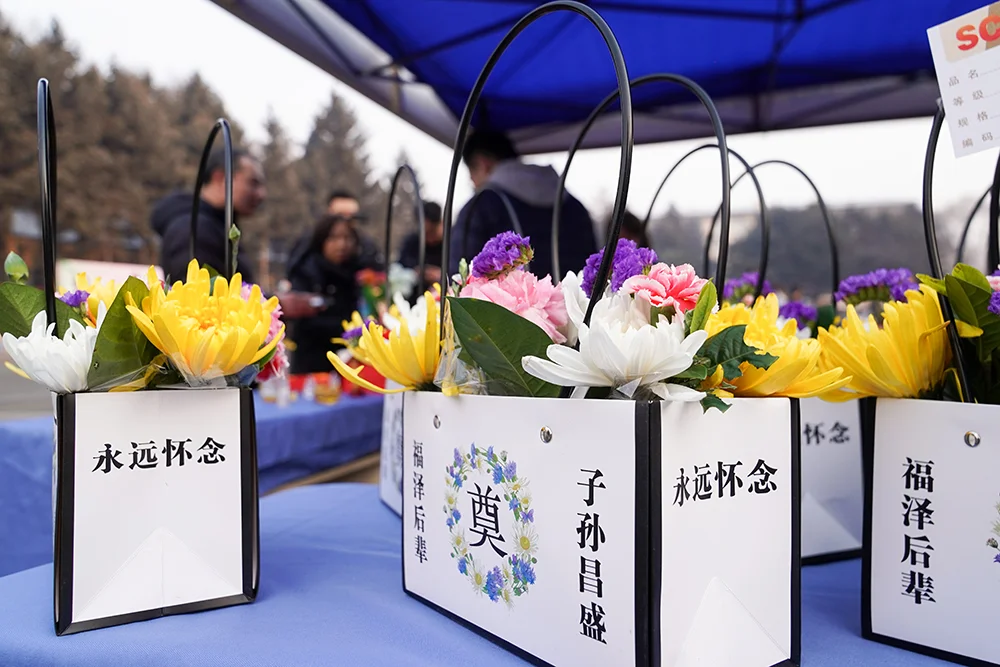

From ibuprofen to small snacks, young Chinese are embracing modern, creative ways to converse with historical figures during tomb-sweeping.
During this year’s Qingming Festival, young people visited the tombs of historical figures. But they used various modern items instead of traditional incense and joss paper money, sparking a heated discussion on the “fancy sacrificial sweeping” behaviour.
New Way of History Understanding
Recently, young people placed lots of ibuprofen in front of Cao Cao’s tomb, hoping to ease the severe headaches that troubled him all his life. Cao Cao is a prominent Chinese warlord, politician, and poet of the late Eastern Han Dynasty. He is famed for chronic headaches.

In front of Huo Qubing’s tomb, there are piles of snacks—this is because people feel sorry that the young general died too early and never got to enjoy the simple joys of life. Huo Qubing is a distinguished military genius in the Western Han Dynasty. He achieved remarkable victories against the Xiongnu but passed away at a young age, making people feel deep regret.
And near Zhuge Liang’s memorial, high-speed rail tickets are left, wishing he could take modern transportation and no longer suffer from long journeys for his military campaigns. Zhuge Liang is a legendary strategist and chancellor of Shu Han during the Three Kingdoms period. He was famous for his wisdom and exhausting military marches.
In front of Zhang Juzheng’s tomb, haemorrhoid ointment is prepared, showing sympathy for the reformer who worked so hard that he fell ill but still kept governing. Zhang Juzheng is the most powerful Grand Secretary of the late Ming Dynasty. He launched sweeping reforms to revive the declining empire.
In fact, these behaviours are not new phenomena in China. Staff at the Cao Cao Gaoling Relic Museum said that people come to deliver ibuprofen every day. Many come to pay their respects during Qingming. These medicines are sorted and kept by staff, and expired drugs will be destroyed.
“Love Letters Across Time”
These offerings are in line with the lives of historical figures, reflecting young people’s understanding of history. Shared via short videos and social media, these offline tributes strike an emotional chord and inspire imitation, creating a viral wave of participation.
Without rigid rules or barriers, these empathetic acts turned commemoration into an inclusive, relatable cultural trend. It enabled historical figures to shed their halo and become vibrant individuals with joys, sorrows, pains, and troubles.
These unusual offerings show that today’s young Chinese no longer see historical figures as cold names or rigid stereotypes. Instead, they look beyond historical records to their humanity and hardships, forging an emotional connection across time.
Ibuprofen, snacks, high-speed rail tickets, ointment — these offerings are like “love letters across time” written by young people to history. They serve as a unique way for the youth to converse with the past, reconcile with themselves, and connect with the times.
Written by Sha Liu, additional reporting by CNS.
If you liked this article, why not read: Why More Chinese Families Are Choosing Sea Burials