
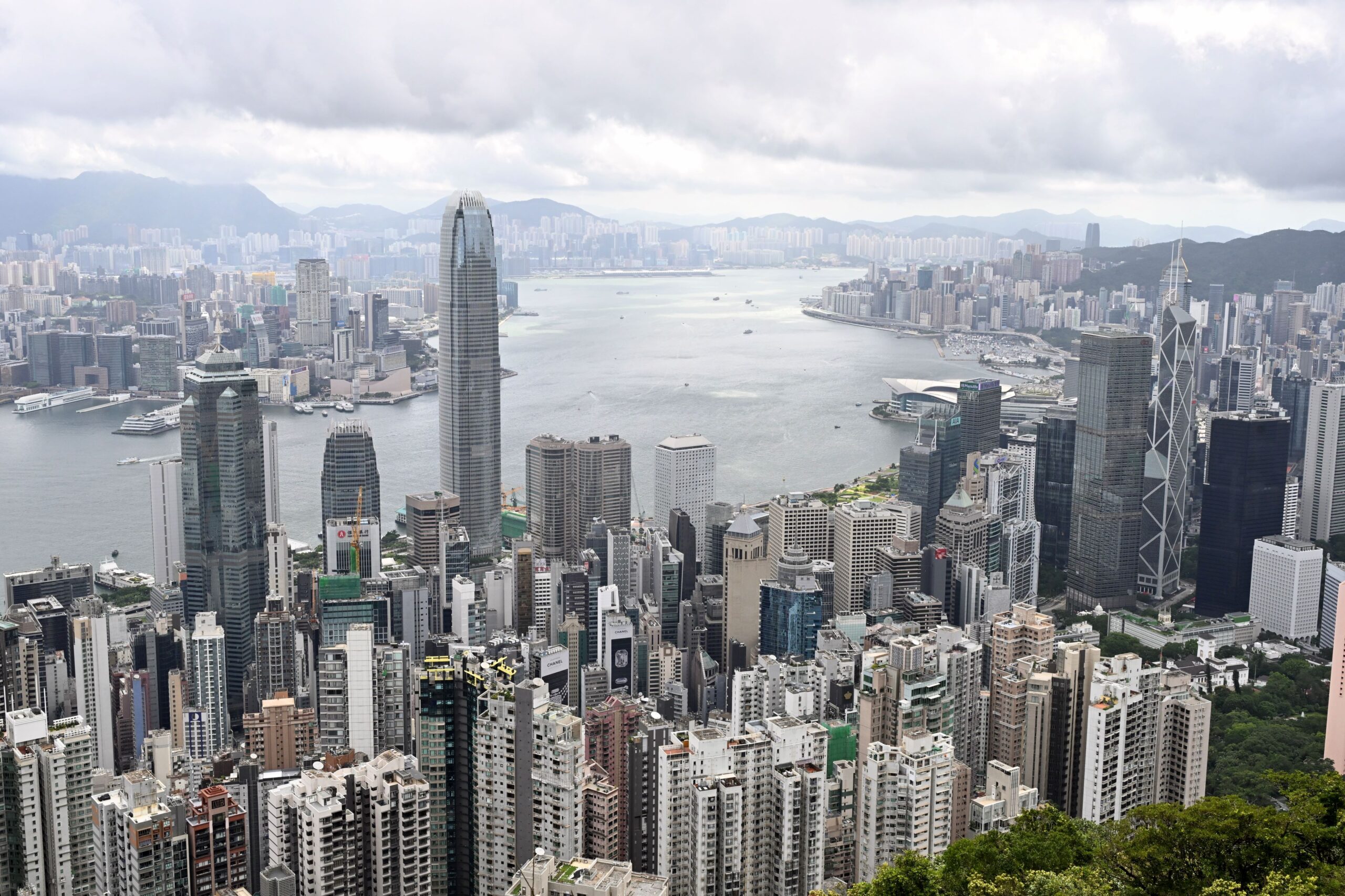

Hong Kong has unveiled its first five-year plan for 2026–2030, focusing on future growth, the Northern Metropolis, innovation and Greater Bay Area cooperation.
Hong Kong Chief Executive John Lee unveiled the city’s first five-year development plan on Sept. 16th. It sets out priorities for economic growth, innovation, regional cooperation and people’s livelihoods from 2026 to 2030.
The First Five-Year Plan for Economic and Social Development of the Hong Kong Special Administrative Region (2026–2030) is the city’s first comprehensive five-year plan. It sets 105 indicators across different areas. It also outlines measures to strengthen Hong Kong’s four major centres, develop the Northern Metropolis, deepen cooperation in the Guangdong-Hong Kong-Macao Greater Bay Area and expand international cooperation.
The plan also aims to strengthen Hong Kong’s existing roles in finance, shipping and trade. At the same time, it puts greater emphasis on innovation and technology and the attraction of high-calibre talent.

Northern Metropolis to Reshape Hong Kong’s Northern Development
A major focus of the plan is the Northern Metropolis, a large-scale development area along Hong Kong’s northern boundary with Shenzhen.
Covering about 300 square kilometres, or roughly one-third of Hong Kong’s total land area, the Northern Metropolis is planned to bring together housing, universities, innovation and technology, industry and green spaces.
The government plans to make more than 900 hectares of sites ready for development between 2026 and 2031. These sites are expected to support more than 70,000 housing units and about 1 million square metres of economic floor space.
When fully developed, the Northern Metropolis is expected to accommodate about 2.5 million people and provide around 650,000 jobs.
The plan also calls for faster development of the San Tin Technopole, the Northern Metropolis University Town and the Hong Kong Park of the Hetao Shenzhen-Hong Kong Science and Technology Innovation Cooperation Zone.
In addition, university developments in San Tin, Hung Shui Kiu and Ta Kwu Ling will support closer links between education, research, technology and industry. The San Tin University Town, for example, will focus on areas including medicine, life and health technology, artificial intelligence and robotics.
The government has also set out transport projects to support the development. These include the Northern Link Spur Line and the Hong Kong section of the Hong Kong-Shenzhen Western Rail Link. Kwu Tung Station on the East Rail Line is scheduled to open in 2027, while Hung Shui Kiu Station on the Tuen Ma Line is scheduled to open in 2030.

Closer Links with the Greater Bay Area
Meanwhile, the plan places greater emphasis on Hong Kong’s links with the Guangdong-Hong Kong-Macao Greater Bay Area.
The approach covers both infrastructure and cooperation mechanisms. On the infrastructure side, the government plans to improve cross-boundary rail links and connections between the Northern Metropolis and Hong Kong International Airport.
The plan also calls for closer alignment of rules and mechanisms, including mutual recognition of professional qualifications. At the same time, it proposes measures to make cross-boundary travel and services more convenient.
For example, the redeveloped Huanggang Port will adopt a new “collaborative inspection and joint clearance” arrangement. The government also plans to improve cooperation in areas such as healthcare, elderly care, education, culture, sports and tourism.
In technology, Hong Kong plans to strengthen links between its research institutions and technology companies in other Greater Bay Area cities. The Hetao Shenzhen-Hong Kong Science and Technology Innovation Cooperation Zone will serve as one of the main platforms for cooperation, particularly with emerging industry clusters in Shenzhen.
The plan also looks beyond the Greater Bay Area. Hong Kong aims to strengthen international cooperation in areas including trade, professional services, innovation and technology, culture and talent.

Technology, Talent and New Industries
Another major part of the plan is the development of innovation and technology.
Hong Kong plans to advance three major innovation and technology parks under a “north-central-south” spatial layout, together with five key research and development institutions. These platforms will support collaboration among universities, research institutions and businesses.
The plan also identifies life and health technology, artificial intelligence and robotics, microelectronics, new energy, advanced manufacturing and new materials as key areas.
At the same time, Hong Kong aims to strengthen its role as an international hub for high-calibre talent. The plan includes measures to attract international researchers and professionals, promote cooperation between universities and overseas institutions, and develop the “Study in Hong Kong” brand.
Innovation spending is another target. Total domestic expenditure on innovation activities stood at 1.63 per cent of GDP in 2024. The government aims to raise the ratio to 3 per cent after 2030.
Beyond technology and industry, the five-year plan also covers culture, sports and tourism. Hong Kong plans to develop an International Arts and Culture Exchange Centre and promote closer integration between culture, sports and tourism. The government expects the value added of the cultural and creative industries to reach HK$170 billion by 2030, with employment reaching 228,000.
Taken together, the plan sets out a development framework for the next five years. The Northern Metropolis, innovation and technology, Greater Bay Area cooperation and international connections are among its main areas of focus.

If you liked this article, why not read: Lindsay Varty: Discovering Hong Kong Through Its Everyday Stories


