
China is advancing its “AI+” strategy to boost industry, while experts highlight growing risks in AI safety, governance and social impact.
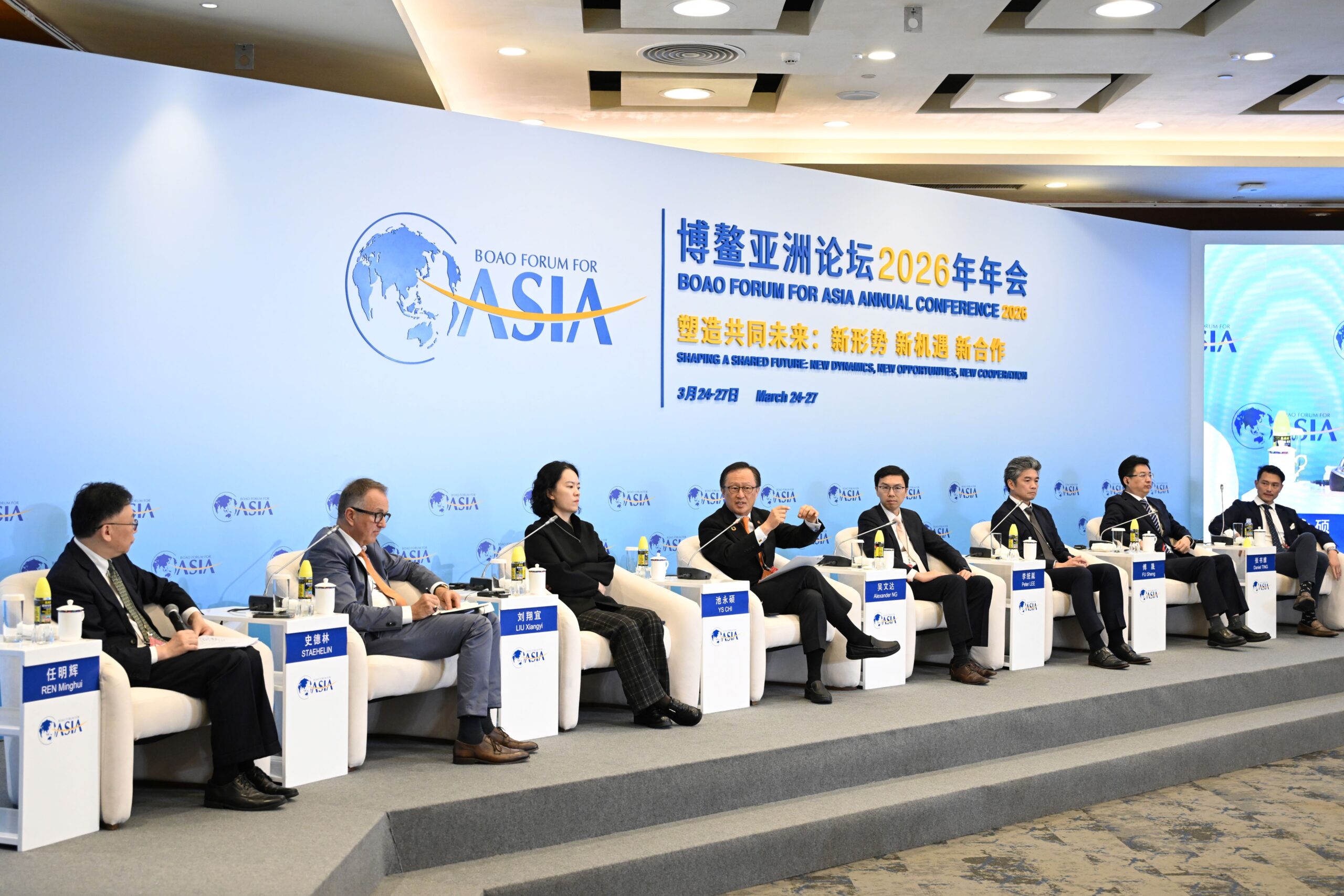
The Boao Forum for Asia, held in Hainan, has brought fresh attention to how artificial intelligence is reshaping industries—and raising new concerns.
At a sub-forum on “AI+ Industrial Transformation,” Zhang Yaqin, an academician of the Chinese Academy of Engineering, outlined three major shifts in AI development. AI is moving from generative systems to autonomous agents. It is expanding from information intelligence to physical and biological domains. And it is evolving from a standalone technology into a force that reshapes entire industries through “AI+.”
These changes signal a deeper transition. AI is no longer just a tool. It is becoming an active system capable of making decisions and carrying out tasks.
Rising Adoption, but Also Growing Risks
Interest in AI is surging across China. Both companies and consumers are eager to try new applications, said Yu Xiaohui, president of the China Academy of Information and Communications Technology (CAICT).
This enthusiasm is fueling the digital economy. But it also brings new risks.
Yu said his institute detected safety concerns as early as February, but delayed issuing a warning after underestimating the public response. He stressed that early disclosure is critical, even when technologies still hold strong potential value.
Experts say the risks go beyond technical failures. Sam Dawes from the University of Oxford identified three global challenges: malicious use, system accidents, and social disruption.
He said that when AI agents start talking to each other, the outcome can be unpredictable.
Governance Urgency Meets Structural Change
As AI evolves, governance frameworks are struggling to keep pace.
Zhang called for clear accountability. Each AI agent should be linked to a responsible entity, he said, and systems should not be allowed to replicate themselves autonomously. He also warned of a data crisis: if AI generates 65 per cent of online content, polluted data could undermine future model training.
At the same time, the innovation landscape has shifted. Before 2014, universities led the development of advanced AI models. Today, about 90 per cent come from major tech companies. Industry has become the main driver, while regulation lags.
Jiang Xiaojuan, president of the Chinese Society of Industrial Economics, highlighted the need for balanced development. She proposed three standards for “good AI”: it should be reasonable, practical, and socially beneficial. While AI boosts growth and efficiency, it may also concentrate wealth. Governments, she said, must step in when market forces alone fail to ensure fairness.
China is already signalling its direction. This year’s government work report calls for expanding smart manufacturing, improving AI governance, and strengthening employment support.
As AI accelerates, the challenge is no longer whether to adopt it—but how to balance efficiency, safety, and fairness in a rapidly changing world.
Written by Ronnie Yu, additional reporting by HKCNA.
If you liked this article, why not read: Robots Take Centre Stage at 2026 ZGC Forum Annual Conference