
You’ve heard of the one-man band; now meet the one-person company—where AI provides the orchestra for a new generation of solo entrepreneurs.
In early 2024, Sam Altman suggested that artificial intelligence could soon make it possible for a single person to build a billion-dollar company — an idea that, at the time, still sounded like bold Silicon Valley speculation.
The idea was simple but radical: one person, a computer and a suite of AI tools could handle what once required a team of a dozen or more—everything from product development and marketing to customer support.
Yet over the past two years, that vision no longer seems so far-fetched. As AI technology rapidly advances, a new kind of start-up is beginning to take shape in cities across China: the “one-person company”, often referred to as an OPC.
Solo, but Not Alone
At a startup community in Hangzhou designed specifically for solo founders, 24-year-old Wang Xinyi pulls a strip of paper from a chubby, frog-shaped device. “Look,” she says, “it just spat out its latest ‘imperial decree’.”
The printout reads, in mock-imperial Chinese: “Your Majesty, things to conquer today: 1. Finalise the hardware circuit diagram. 2. Contact the supply chain. 3. Launch the Chinese New Year sticker pack. Please tick each off as you conquer them.”
The device — a desktop AI companion nicknamed Ribbit — is her main project. It won the top prize at a Hangzhou hackathon in January and is now moving rapidly from prototype to production.

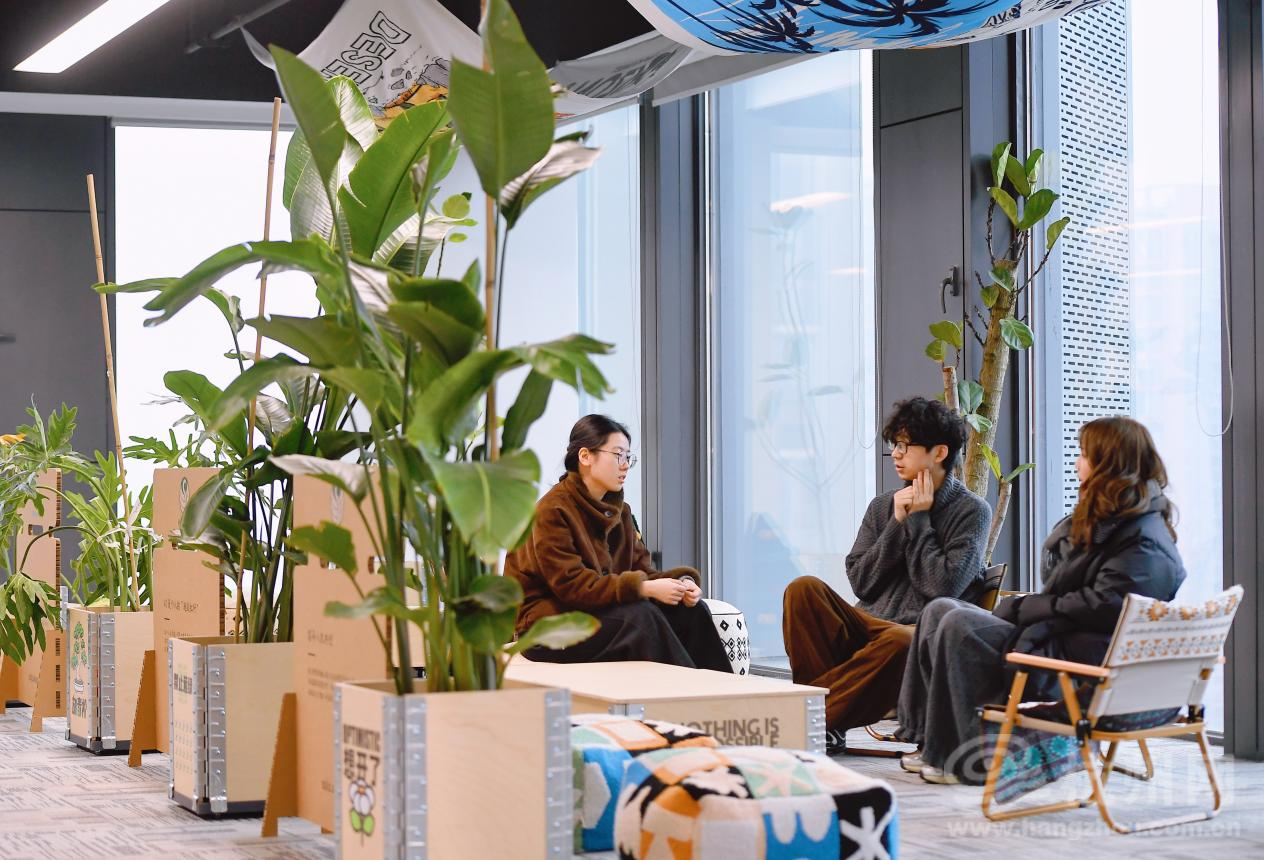
The community where she works occupies about 1,200 square metres of open space provided by local authorities. Inside, people from different professional backgrounds run their one-person companies.
“The hardest part of starting a company alone isn’t exhaustion; it’s isolation,” Wang says. Here, however, she has found something closer to a support network. “I’m one of the youngest members, and everyone is very encouraging. They give practical advice. Even though I’m technically on my own, it feels like there’s a whole team behind me.”
That sense of companionship has shaped her product. Ribbit is designed for young working professionals. “I believe true companionship should be tangible,” she says. “It’s about having a physical note that tells you: Don’t worry, the tasks are broken down. Just take it one step at a time.”
One brain, One AI, Two million yuan
Across the hall, Tang Jinzhou, a former developer at a major tech firm, is filming a video about his solo venture. He runs an AI learning platform entirely on his own, handling everything from coding to promotion.
“I don’t need staff,” he tells the camera. “My brain directs the AI, and the AI does the work.”
His lean operation is already paying off. In January, Tang secured a contract worth 2 million yuan (approximately £220,000).
Nearby, Wan Xing sits with headphones on, fine-tuning an AI-generated melody for the Chinese New Year. Her AI music platform has users around the world. “The advantage of a one-person company,” she says, “is that the decision-making chain is incredibly short. A user gives feedback today; they might see the update tomorrow.”

From Hangzhou to Beijing: A National Trend
This shift toward micro-entities is gaining traction nationwide. Dozens of communities designed specifically for one-person companies have appeared across China, including in Beijing, Shanghai, Shenzhen, Suzhou, Nanjing and Hangzhou.
At an AI start-up community in Zhongguancun, Beijing’s Silicon Valley, entrepreneur Su Kui — a Peking University graduate who previously worked at a major tech company — has developed an AI-powered animation tool. Less than a year after launch, it has attracted more than 6,000 registered users worldwide. The platform has already introduced a paid subscription model.
Luo Weihong, a national legislator and municipal official in Hangzhou, believes that one-person companies do more than lower the barriers and risks of starting a business. With AI handling many routine tasks, a single founder can respond quickly to niche demands that larger companies might overlook.
OPC vs Freelancing: What’s the Difference?
However, skeptics wonder if this is simply a rebrand of “freelancing.”
The distinction lies in the support structure. Unlike traditional freelancers, these solo founders are backed by “professional assistants.” Incubators partner with accounting firms, legal teams, and banks to provide the back-end infrastructure a corporation would normally have.
To help solo founders keep costs down, local governmentsare providing a variety of support. At “Zero Gravity,” an OPC-focused community in Shanghai, founders can work rent-free for up to three years, paying a monthly service fee of just 90 yuan (approximately £ 10). In the Pudong New Area, the government is further lowering the tech barrier by offering newly registered solo firms up to 300,000 yuan in free computing power credits.
Written by Estelle Tang. Additional reporting by CNS, Xinhua, Hangzhou.com.cn, 21st Century Business Herald.
If you liked this article, why not read: AI Boom Helps China Top Global Billionaire Ranking