
Hong Kong theatre troupe brings David Hare’s Skylight to Beijing in Cantonese, starring Tse Kwan-ho and Wang Wan-zhi, exploring love, loss, and social class in a fresh cross-cultural adaptation.
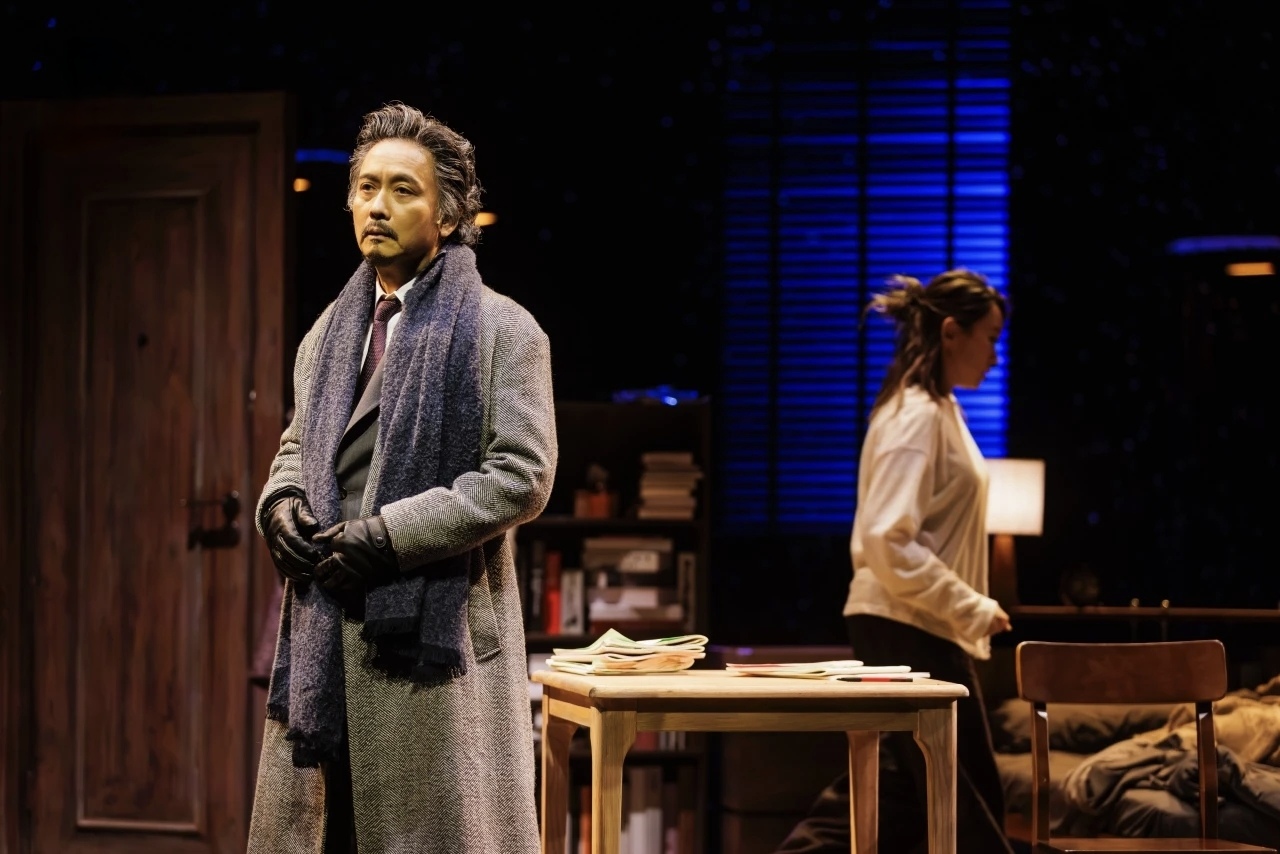
From January 16th to 18th, a Hong Kong theatre troupe brought David Hare’s acclaimed play Skylight to Beijing’s Tianqiao Performing Arts Centre, performed entirely in Cantonese. The two-hour, dialogue-heavy drama stars Hong Kong film actors Tse Kwan-ho and Wang Wan-zhi, winning full-house applause despite the challenging language.
Skylight follows Tom, a successful catering tycoon, who visits his former lover Kyra after his wife’s recent death. Kyra now teaches at a middle school and lives a simple life. Their reunion sparks intense conversations about love, past regrets, social class, and personal values. As the dialogue unfolds, both re-examine their relationship and their understanding of happiness. Since its 1995 premiere at London’s National Theatre, the play has been celebrated as a thought-provoking classic.
Crossing Borders Through Performance
Wang Wan-zhi, a Hong Kong Film Award winner for Best Supporting Actress, not only stars as Kyra but also translates the script into Cantonese. She aimed to preserve the sharpness of the original while making the dialogue resonate with modern audiences. “Kyra’s resilience is a gentle pushback against materialism,” she explained.
Tse Kwan-ho, whose stage career includes a Golden Horse Award for Best Actor, brings Tom to life with both depth and subtle humour. Early in rehearsals, he consulted an English teacher to understand Tom’s indirect speech, realising it mirrors the character’s reluctance to confront his own emotions. Their dedication underscores the artistry required to adapt a British classic into Cantonese.
Islands of the Heart
Director Roy Szeto describes the play as a portrait of “islands” — characters isolated by their own struggles. Tse offers a lighter interpretation: “Even if we are all islands, we can still care for ourselves without inner conflict.”
The Cantonese adaptation proves that Hare’s story of love, loss, and self-reflection resonates across cultures. Beijing audiences, despite fast-paced Cantonese dialogue, were captivated by the performers’ skill and the play’s enduring themes.
Additional reporting by Ying Ni.
If you like this article, why not read: Nezha Musical Superbly Brings Chinese Mythology to a London Stage