
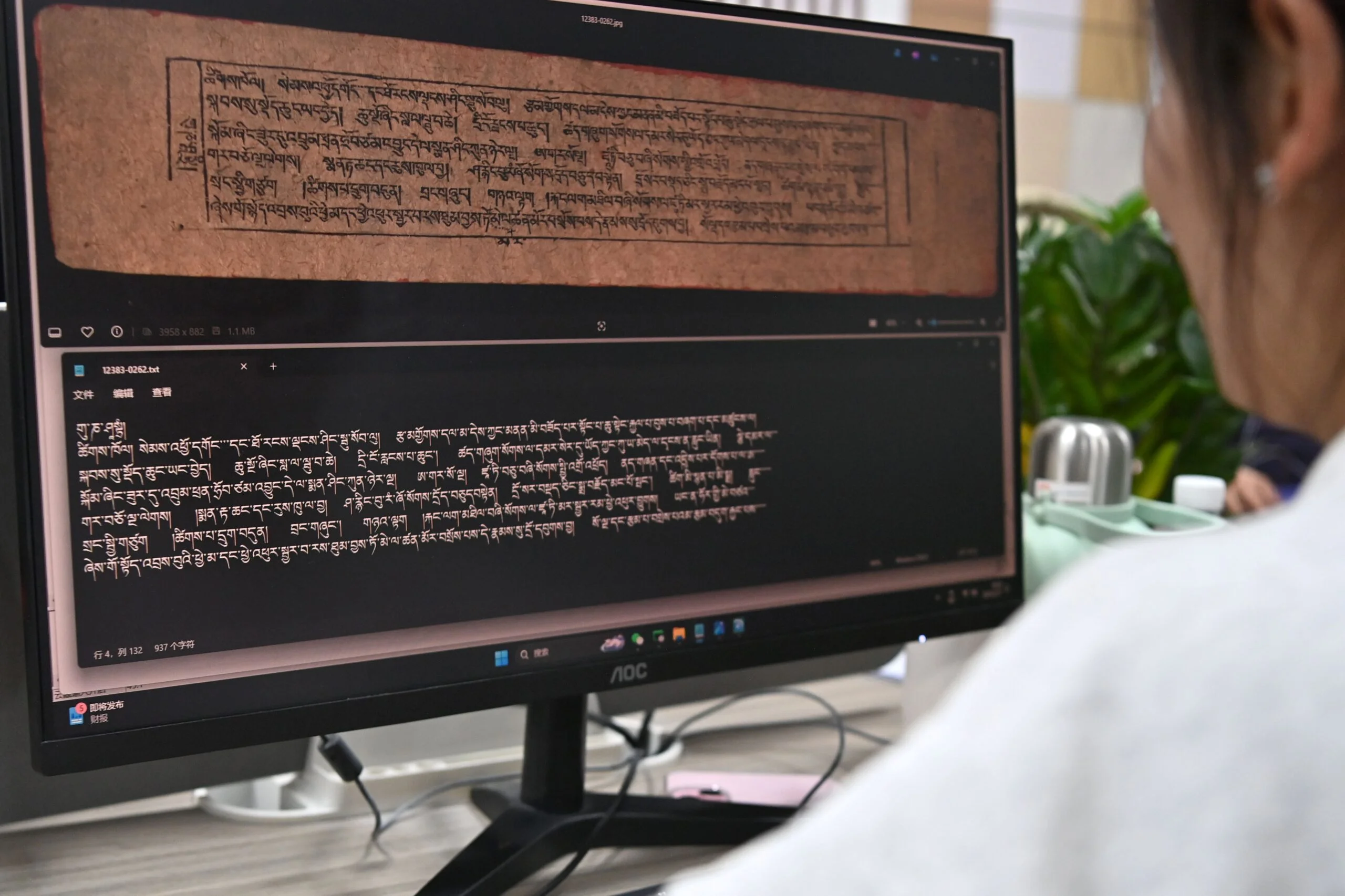

More than 2.2 million pages of Tibetan ancient texts have been digitised in China, supporting the preservation, study and sharing of a 1,300-year-old literary heritage.
Tibetan ancient texts dating back more than 1,300 years are being preserved through a growing programme of collection, research and digitisation in China.
Tibetan script was created in the 7th century. The texts cover a wide range of subjects, including religious works, historical records, inscriptions, folk manuscripts and art-related documents.
These materials are held in different parts of China, including Tibet, Qinghai, Sichuan and Gansu. They include printed texts, manuscripts and inscriptions.
Today, protecting these materials involves more than preserving the original copies. Digitisation is helping researchers collect and organise materials from different collections.
Digitising Millions of Pages
The China Tibetology Research Centre has worked with a number of institutions that hold Tibetan ancient texts.
According to CNS, the centre has completed the independent collection and integration of digital resources covering more than 5,000 volumes, or over 2.2 million pages. The materials come from areas with rich Tibetan-language collections, including Tibet, Qinghai, Sichuan and Gansu.
The work also includes the survey, organisation, collation and academic study of ancient texts.
The aim is to further integrate Tibetan ancient-text resources across China and develop a unified and open digital platform for sharing, according to Zhaluo, deputy director-general of the China Tibetology Research Centre.
The centre also plans to continue academic exchanges and promote research findings through published papers and books.
From Preservation to Research
The China Tibetology Research Centre has made the rescue, collection, organisation, research and publication of Tibetan ancient texts a major part of its work since it was established in 1986.
Two major national cultural projects have involved extensive work on Tibetan texts.
The collated edition of the Tibetan Buddhist Canon took more than 20 years to complete. More than 200 scholars worked on the texts, checking them character by character. The collection contains 232 volumes and 4,570 works.
Another project, Encyclopaedia of China: Tibetan Volume, plans to include more than 1,000 Tibetan works. A total of 354 volumes have been published.
These projects bring together the preservation of ancient texts and long-term academic research. They also provide a basis for studying different versions of Tibetan works and newly identified materials.
Qinghai, where the latest national forum on the organisation and study of Tibetan ancient texts was held, is one of the major areas for Tibetan-language documents.
Monasteries including Kumbum Monastery and Rongwu Monastery preserve large collections of Tibetan texts. Handwritten manuscripts passed down among local communities, as well as inscriptions and documents found in the region, are also important sources.
Connecting with International Research
The study of Tibetan ancient texts has also involved international cooperation.
In 2004, the China Tibetology Research Centre signed a cooperation agreement with the Austrian Academy of Sciences. The two sides have worked on the collation and study of Sanskrit palm-leaf manuscripts preserved in the Xizang Autonomous Region.
The cooperation has resulted in the publication of 28 volumes in a series on Sanskrit texts from the Xizang Autonomous Region.
The latest forum, held in Xining on September 19th and 20th, brought together 33 universities, research institutes, museums, archives and publishing organisations from eight provincial-level regions.
Scholars discussed historical materials on interaction and exchange among different ethnic groups, archives and documents related to Tibet, Dunhuang Tibetan manuscripts, the Gesar epic, Tibetan inscriptions and Thangka art.
They also examined different editions of Tibetan texts, recent results from the national survey of ancient texts and newly discovered materials.
If you liked this article, why not read: DeepZang Brings Tibetan Language into the AI Age


